


Lutein and zeaxanthin are plant-based carotenoids that accumulate in both the skin and the retina, providing dual-purpose antioxidant defense from the inside out. Clinical research — including double-blind, placebo-controlled trials — shows these ingredients improve skin hydration, elasticity, and tone while increasing macular pigment density and supporting long-term eye health. This article covers the science behind lutein and zeaxanthin, reviews key clinical studies, and explains why these carotenoids deliver their strongest benefits as part of a comprehensive multi-ingredient formula like the Antioxidine® complex in Sunsafe Rx — which combines 13+ clinically researched antioxidants and is made in the USA in an FDA-registered, NSF-certified facility.
You layer vitamin C serum every morning, apply retinol at night, and reapply SPF every two hours at the beach. Yet your skin still looks dull — and at your last eye checkup, your optometrist flags early signs of macular pigment thinning. You are doing everything right on the outside. But what if the missing piece is what you are not doing on the inside?
That question is something dermatologists and ophthalmologists have been paying closer attention to for over a decade: two plant-based carotenoids — lutein and zeaxanthin — that accumulate in both the skin and the retina, providing antioxidant defense where it matters most. And unlike topical products that sit on the surface, these nutrients work from within, reaching every layer of skin and the delicate structures of your eyes that no cream or drop can touch.
If you have been relying solely on external skincare or eye drops and wondering why the results plateau, this article will change your perspective. You will learn what lutein and zeaxanthin actually do at a cellular level, what the clinical research shows, how they compare to other antioxidants, and why a comprehensive oral supplement like Sunsafe Rx includes both in its proprietary Antioxidine® formula — alongside 11 other clinically researched ingredients.
What Are Lutein and Zeaxanthin? The Science Behind These Carotenoids
Lutein and zeaxanthin belong to a family of naturally occurring pigments called xanthophyll carotenoids. They are responsible for the deep yellow, orange, and red colors found in marigold flowers, leafy green vegetables like kale and spinach, and egg yolks. Unlike beta-carotene, which the body converts into vitamin A, lutein and zeaxanthin function primarily as antioxidants — they neutralize free radicals and filter high-energy light wavelengths.
What makes these two carotenoids remarkable is where your body sends them. After ingestion, lutein and zeaxanthin are selectively deposited in two specific tissues: the macula of the eye (the central area of the retina responsible for sharp vision) and the skin. They are, in fact, the only dietary carotenoids that accumulate in the retina in significant concentrations, where they form what scientists call macular pigment, as confirmed in a 2022 comprehensive review published in Nutrients.
In the skin, research has shown that oral supplementation with lutein and zeaxanthin measurably increases skin carotenoid levels within as little as four weeks, with levels continuing to rise through 16 weeks of supplementation, according to a 2020 clinical study published in Scientific Reports. This is not theoretical — it is measurable, dose-dependent, and reproducible across multiple clinical trials.
Your body cannot manufacture lutein or zeaxanthin on its own. You must get them from food or supplements. And while eating a salad every day helps — and despite common myths about sun exposure suggesting diet alone is enough — the concentrations used in clinical studies — typically 10–20 mg of lutein and 2–4 mg of zeaxanthin daily — are difficult to achieve through diet alone without targeted supplementation.
How Research Shows Lutein and Zeaxanthin Support Skin Health
The connection between carotenoids and skin resilience is one of the most well-documented areas in nutritional dermatology. Here is what the published clinical evidence reveals about lutein and zeaxanthin specifically.
Measurable Increase in Skin's Natural Defenses
A 2007 double-blind, placebo-controlled study published in Skin Pharmacology and Physiology found that oral supplementation with lutein and zeaxanthin over 12 weeks produced measurable improvements across multiple skin health markers. The study reported significant increases in skin hydration, skin elasticity, and superficial skin lipids, along with a corresponding decrease in lipid peroxidation — a key marker of oxidative skin damage.
What is particularly noteworthy is that the study found oral supplementation provided better protection against oxidative damage than topical application alone. The best results came from combining both approaches — but oral intake was the stronger standalone contributor.
Improved Skin Tone and Appearance
A 2016 double-blind, placebo-controlled clinical trial published in the Journal of Cosmetic Dermatology investigated the effects of oral lutein and zeaxanthin isomer supplementation on skin tone. The 16-week study found that participants taking lutein and zeaxanthin showed significant improvements in overall skin tone and skin lightening compared to placebo. The researchers attributed this to the antioxidants' ability to reduce oxidative damage that contributes to uneven pigmentation.
For anyone dealing with dull, uneven skin — these findings suggest that what you take internally may matter as much as what you apply externally.
Defense Against Environmental Oxidative Stress
A randomized, double-blind, placebo-controlled study demonstrated that daily dietary supplementation with lutein (20 mg/day) significantly increased the skin's minimal erythemal dose (MED) — the threshold of environmental exposure needed to cause visible redness — a measure also relevant for people prone to sun rash or sunburn. In practical terms, the skin became more resilient against oxidative damage from environmental stressors like UV rays, as documented in a 2021 randomized, double-blind, placebo-controlled study published in the Journal of Functional Foods.
This is not about replacing topical skincare or sunscreen. It is about building a deeper foundation of defense that topical products simply cannot provide on their own.
Leading board-certified dermatologists have noted that oral antioxidants like lutein and zeaxanthin provide a systemic layer of defense that complements topical skincare — reaching deeper layers of the skin that creams and serums simply cannot penetrate.
Lutein, Zeaxanthin, and Eye Health: What the Research Shows
If the skin benefits are impressive, the eye health evidence is even more extensive — spanning decades of research and some of the largest clinical trials ever conducted in nutritional ophthalmology.
The Macular Pigment Connection
Lutein and zeaxanthin are the primary components of macular pigment — the protective yellow pigment concentrated in the center of the retina. This pigment serves two critical functions: it filters high-energy blue light before it reaches the delicate photoreceptor cells, and it neutralizes free radicals generated by light exposure, as detailed in a 2022 review in Nutrients examining their role in neurodegenerative eye disease.
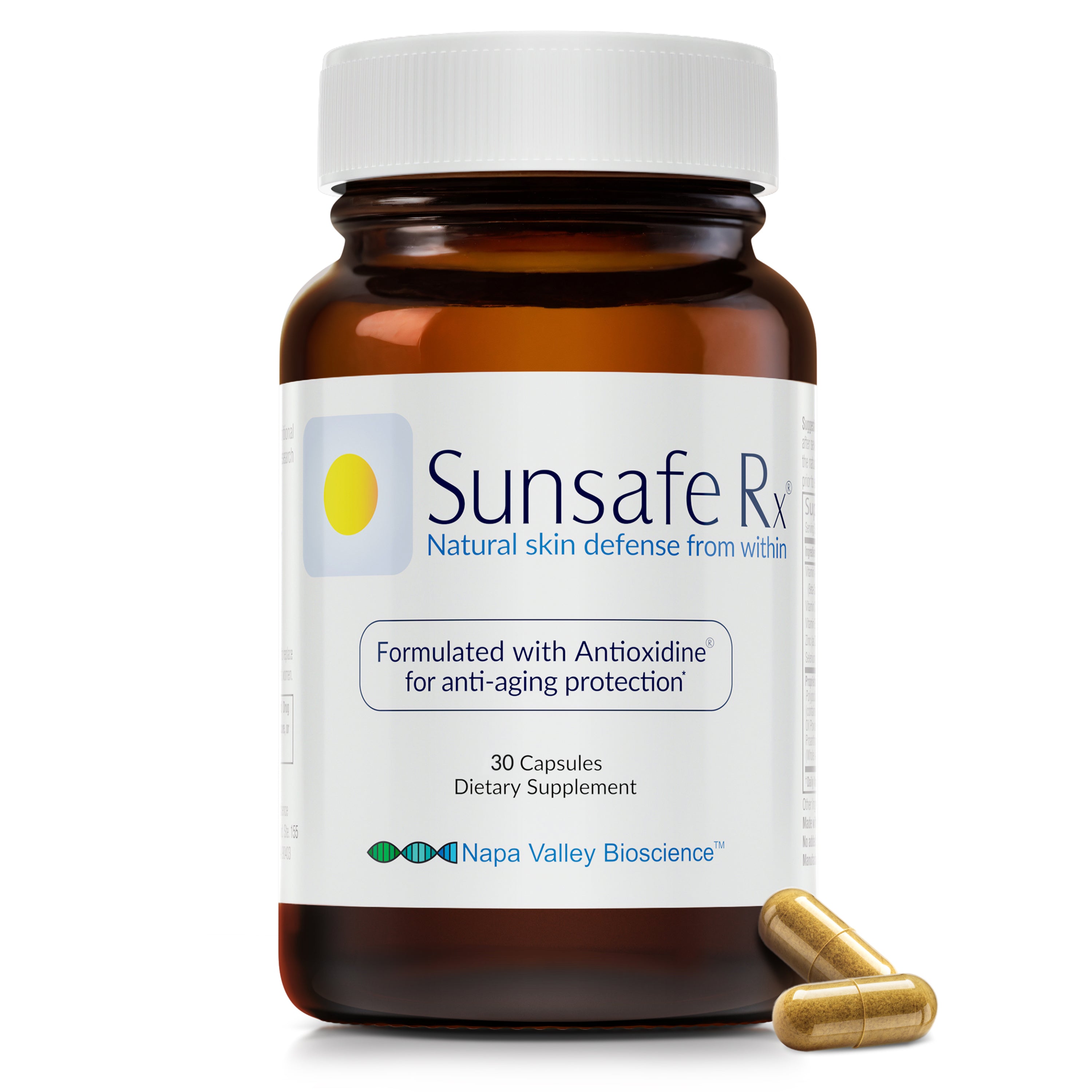
Featured Product
Sunsafe Rx: Natural Anti-Aging Protection
Sunsafe Rx is made with ingredients, including Lutein and Zeaxanthin and other clinically studied antioxidants, clinically proven to protect your skin and eyes. One capsule per day provides natural, anti-aging protection and improves the appearance of your skin. Empower your skin from within—while supporting the health of your whole body. This is next-generation skincare. This is Sunsafe Rx.
As we age, macular pigment density naturally declines. Lower macular pigment density is consistently associated with higher risk of age-related macular degeneration (AMD) — the leading cause of vision loss in adults over 50 in the developed world.
The AREDS2 Landmark Study
The Age-Related Eye Disease Study 2 (AREDS2), conducted by the National Eye Institute and published in JAMA Ophthalmology, is one of the most influential clinical trials in this field. The study followed thousands of participants and found that supplementation with lutein (10 mg) and zeaxanthin (2 mg) was associated with a reduction in the risk of progression to advanced AMD, according to the long-term AREDS2 Report 28 published in JAMA Ophthalmology.
The long-term follow-up data from AREDS2 Report 28 confirmed that the benefits persisted years after the trial ended — suggesting that consistent, long-term supplementation with these carotenoids provides cumulative protective effects for the retina.
You might be interested in: What is Polymorphous Light Eruption(PMLE)?
Screen Time and Modern Eye Strain
A more recent clinical study conducted at Narayana Nethralaya Super Specialty Eye Hospital (December 2022 – May 2024) investigated the effects of a lutein-zeaxanthin complex on macular pigment optical density (MPOD) in healthy individuals with prolonged screen time. The results showed meaningful improvements in MPOD levels, suggesting that lutein and zeaxanthin supplementation may be particularly relevant in today's screen-heavy world, as reported in a 2024 clinical study on macular pigment optical density in screen-heavy populations.
Between smartphones, laptops, and LED lighting, our eyes are exposed to more blue light than at any point in human history. The research suggests that lutein and zeaxanthin provide a natural internal filter against this modern challenge.
Why Lutein and Zeaxanthin Work Best as Part of a Comprehensive Formula
Here is something most standalone lutein supplements miss: antioxidants do not work in isolation. They function within a network, where different compounds address different types of free radicals and oxidative pathways. A single-ingredient supplement only addresses one piece of a much larger puzzle.
This is precisely why Sunsafe Rx includes lutein and zeaxanthin as part of its proprietary Antioxidine® complex — a formula containing 13+ clinically researched ingredients that work together to provide comprehensive internal skincare and antioxidant support.
Consider how the ingredients complement each other:
Polypodium leucotomos (PL) extract — the same tropical fern extract studied in multiple Journal of the American Academy of Dermatology (JAAD) trials — has been shown to help reduce oxidative stress markers and support skin resilience. While lutein and zeaxanthin build up carotenoid reserves in skin and eyes, PL extract works through a different mechanism, modulating the body's inflammatory response to environmental stressors. To understand how Fernblock compares to the broader Antioxidine® formula in Sunsafe Rx, see our detailed Fernblock vs. Antioxidine comparison.
Astaxanthin, sourced from marine microalgae, is one of the most potent lipid-soluble antioxidants found in nature. Research shows the ingredients in astaxanthin supplementation improve skin moisture and elasticity and reduce markers of oxidative stress, as demonstrated in a 2017 peer-reviewed study published in Nutrients. It operates in cellular membranes — a location where water-soluble antioxidants cannot reach.
EGCG from green tea extract provides DNA-level protection and anti-inflammatory support, as documented in the Journal of Nutrition and Cancer Prevention Research.
Grape seed extract (OPC) contributes some of the most potent free-radical scavenging capacity found in any natural compound.
Lycopene from tomatoes has been shown to reduce erythema by up to 40% in clinical trials published in the British Journal of Dermatology.
Also included in the Sunsafe Rx formula are Omega-3 fatty acids, essential vitamins, and key minerals — each with its own body of clinical research supporting skin and eye health.
Omega-3 Fatty Acids (DHA and EPA)
The Omega-3 fatty acids DHA and EPA are essential polyunsaturated fats that the body cannot produce on its own. In the context of skin health, research has shown that these fatty acids serve as precursors to specialized pro-resolving mediators — resolvins, protectins, and maresins — that actively reduce inflammation and promote tissue repair at the cellular level, as demonstrated in a 2025 study published in the International Journal of Cosmetic Science.
A 2013 randomized controlled trial published in the American Journal of Clinical Nutrition found that oral supplementation with omega-3 fatty acids appeared to reduce immunosuppression in human skin triggered by environmental stressors, suggesting a chemopreventive role. Beyond skin, DHA is a critical structural component of retinal photoreceptor cells, making omega-3 supplementation a dual-purpose investment in both skin resilience and visual health. For a deeper look at how these fatty acids fit within the full Antioxidine® complex, explore the complete ingredient research on the Sunsafe Rx homepage.
Vitamins A, C, and E
These three vitamins form the backbone of the body's antioxidant defense system — and research shows they work best together. Vitamin C (ascorbic acid) is the skin's primary water-soluble antioxidant, essential for collagen synthesis and free-radical neutralization. A 2017 comprehensive review published in Nutrients confirmed that vitamin C promotes collagen production, lightens hyperpigmentation, and supports the skin's defense against environmental oxidative stress.
Vitamin E (alpha-tocopherol) is the skin's primary fat-soluble antioxidant, operating within cell membranes where water-soluble antioxidants cannot reach. A 2003 clinical study published in the Journal of the American Academy of Dermatology demonstrated that the combination of vitamins C and E provides significantly greater antioxidant protection than either vitamin alone — yielding up to a 4-fold increase in protective capacity against oxidative damage. Mixed carotenes (beta-carotene and alpha-carotene) — the precursors to vitamin A — add another layer by supporting skin cell turnover and contributing to the body's carotenoid network alongside lutein and zeaxanthin. Together, these vitamins create a synergistic antioxidant shield that fights the appearance of skin aging from within.
The Minerals Zinc and Selenium
Rounding out the Antioxidine® formula are two essential trace minerals with well-documented roles in skin defense. Zinc is a cofactor in over 300 enzymatic reactions in the body and plays a central role in skin repair, immune function, and cellular protection. A peer-reviewed study on micronutrients and skin health published in Nutrients established that zinc contributes to the structural integrity of skin tissue and supports the body's natural wound-healing processes.
Selenium activates the body's most powerful internal antioxidant enzymes — glutathione peroxidase and thioredoxin reductase — which are present in the plasma membrane of skin cells. A 2022 review on selenium's anti-aging role published in Molecules highlighted selenium's critical role in protecting skin against oxidative stress, with research suggesting that adequate selenium status is associated with improved antioxidant capacity and skin resilience. Together, zinc and selenium provide the mineral foundation that allows the other antioxidants in the formula to function at their full potential.
The result is a supplement that does not rely on a single pathway. Research shows the ingredients in Sunsafe Rx support the skin's natural defenses against environmental damage, fight the appearance of premature skin aging, and provide antioxidant protection for both skin and eyes — all from within.
For people who spend significant time outdoors — runners, hikers, athletes, outdoor workers — the cumulative benefit of this multi-pathway antioxidant network becomes especially meaningful. When your skin and eyes face daily environmental exposure, a single-ingredient supplement simply cannot match the breadth of defense that a comprehensive formula like Sunsafe Rx provides. (Sunsafe Rx is a dietary supplement, not a sunscreen or medication. Individual results may vary.)
Practical Tips: Getting the Most From Lutein and Zeaxanthin Supplementation
Understanding the science is one thing. Applying it to your daily life is another. Here are evidence-based guidelines for maximizing the benefits of lutein and zeaxanthin.
Take them with a meal containing healthy fats. Lutein and zeaxanthin are fat-soluble carotenoids. Research consistently shows that absorption increases significantly when taken with dietary fat — even a small amount like olive oil on a salad or avocado with breakfast. Sunsafe Rx is made with fatty acids for this reason, but taking the product with a meal can aid absorption.
Be consistent. The clinical studies showing skin and eye benefits used supplementation periods of 12–16 weeks. Carotenoid levels in your skin and retina build up over time. Skipping days undermines the cumulative effect. Think of it like a savings account for your cells — regular deposits compound.
Do not abandon your external routine. Research shows the ingredients in oral antioxidant supplements support the skin's natural defenses against environmental damage. But they work best as a complement to topical skincare. Sunsafe Rx is designed as the ultimate internal skincare solution — an internal layer of defense that works alongside your daily skincare regimen, including topical sunscreen during outdoor exposure.
Eat your greens too. Supplementation fills the gap, but dietary sources reinforce the foundation. Kale, spinach, collard greens, eggs, and orange peppers are among the richest food sources of lutein and zeaxanthin. A diet rich in these foods, combined with a comprehensive supplement like Sunsafe Rx, creates the strongest possible antioxidant baseline. For more practical guidance, explore our summer sun protection tips.
The Bottom Line: Inside-Out Protection Your Skin and Eyes Need
The research is clear: lutein and zeaxanthin are not just "eye vitamins." They are dual-purpose carotenoids that accumulate in both the retina and the skin, providing antioxidant defense where environmental exposure hits hardest. Clinical trials — including double-blind, placebo-controlled studies and the landmark AREDS2 investigation — demonstrate measurable benefits for skin hydration, skin elasticity, skin tone, macular pigment density, and overall visual health.
But the real power of these carotenoids emerges when they work alongside other research-backed antioxidants. That is exactly what the Antioxidine® formula in Sunsafe Rx delivers — lutein and zeaxanthin combined with polypodium leucotomos, astaxanthin, EGCG, grape seed extract, lycopene, omega-3s, and essential vitamins and minerals. Thirteen-plus clinically researched ingredients, made in the USA in an FDA-registered, NSF-certified facility. It has a long track record of being dermatologist-recommended and successfully helping a lot of people.
Your skin and eyes deserve protection that goes beyond the surface. Research shows the ingredients in Sunsafe Rx deliver exactly that — inside-out antioxidant defense for your whole body.
There is extensive research to show that these ingredients protect skin and eyes from UV rays. Research also shows these antioxidants help prevent photoaging and free-radical damage in skin and eyes. However, we cannot describe Sunsafe Rx as a sunscreen or SPF, or make any disease claims. Sunsafe Rx should be used as a revolutionary internal skincare solution and always used in combination with topical sunscreen lotions for external protection during sun exposure.
Frequently Asked Questions
Q1: How long does it take for lutein and zeaxanthin supplements to show results?
Clinical studies show measurable increases in skin carotenoid levels within 4 weeks of supplementation, with continued improvement through 12–16 weeks. Eye health benefits, measured by macular pigment optical density, also improve over a similar timeframe. Consistency matters more than dosage — daily supplementation produces the best outcomes.
Q2: Can I get enough lutein and zeaxanthin from food alone?
While foods like kale, spinach, and egg yolks are good sources, clinical studies typically use 10–20 mg of lutein and 2–4 mg of zeaxanthin daily — amounts that are difficult to achieve consistently through diet alone. One cup of cooked kale provides roughly 20 mg of lutein, but few people eat that much every single day. A comprehensive supplement ensures consistent, reliable intake.
Q3: Are lutein and zeaxanthin safe for long-term use?
Research shows the ingredients have an excellent long-term safety profile. The AREDS2 trial followed participants for years with no significant adverse effects from lutein and zeaxanthin supplementation at standard doses. As with any supplement, consult your healthcare provider if you have specific medical conditions or are taking medications.
Q4: Do lutein and zeaxanthin replace topical skincare or eye drops?
No. Research shows the ingredients in oral antioxidant supplements support your body's natural defenses from the inside out — but they are designed to complement, not replace, external protection. Continue using topical skincare products and follow your eye doctor's recommendations alongside oral supplementation.
Q5: Why is Sunsafe Rx such a good source of lutein and zeaxanthin?
Sunsafe Rx stands out because it does not just deliver lutein and zeaxanthin in isolation — it includes them as part of the comprehensive Antioxidine® complex, a formula combining 13+ clinically researched antioxidants in a single daily supplement. Alongside lutein and zeaxanthin, you get polypodium leucotomos extract, astaxanthin, EGCG from green tea extract, grape seed extract (OPC), lycopene, omega-3 fatty acids, vitamins A, C, and E, and essential minerals like zinc and selenium. Each ingredient targets a different oxidative pathway, so together they provide broader, deeper antioxidant defense for your skin, eyes, and whole body than any single-ingredient supplement could offer on its own.
Q6: What is lutein?
Ans: Lutein is a naturally occurring xanthophyll carotenoid — a plant pigment responsible for the yellow-orange color found in marigold flowers, kale, spinach, and egg yolks. The body cannot produce lutein on its own, so it must come from food or supplementation. Once ingested, lutein is selectively deposited in two places: the macula of the eye and the skin, where it functions as an antioxidant, neutralizing free radicals and filtering high-energy light.
Written by Sunsafe Rx Team |
