

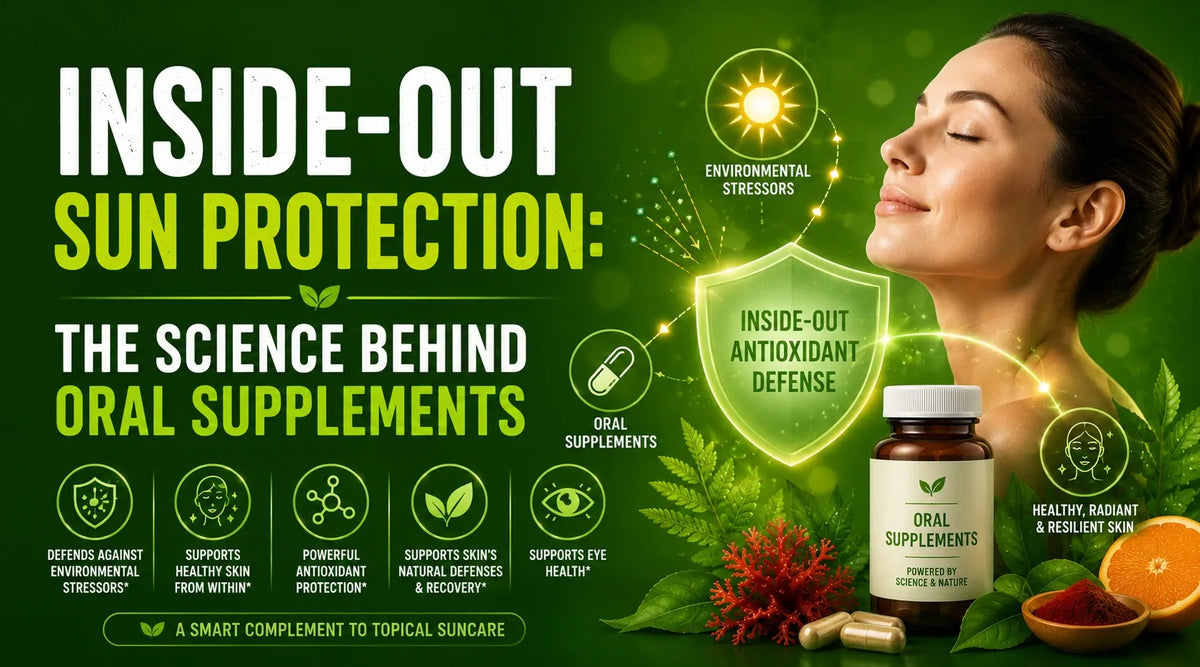
Inside-Out Sun Protection: The Science Behind Oral Supplements
Introduction
Most people think of protecting their skin from environmental exposure as something that only happens topically — a lotion, a spray, a stick you reapply every two hours. But over the last two decades, a different category of skin support has been quietly backed by a growing body of published research: oral antioxidant supplements.
The honest answer is that these supplements are not a replacement for topical sunscreen, and no credible brand should ever claim otherwise. But what the research does show is that specific, well-studied plant and marine-derived antioxidants — taken daily as a capsule — can support the skin's natural defenses against environmental damage from the inside out. This guide walks through what "inside-out" protection actually means, what the clinical research says ingredient by ingredient, and how to realistically fit an oral antioxidant supplement like Sunsafe Rx into a complete skin care routine.
What Is Inside-Out Sun Protection, Really?
"Inside-out" protection refers to nutritional compounds — mostly antioxidants — that are absorbed through digestion and circulate systemically, reaching skin and eye tissue from within rather than sitting on the surface of the skin. Instead of physically blocking or absorbing rays the way a topical formula does, these ingredients work at the cellular level: neutralizing free radicals, calming inflammatory response, and supporting the skin's own antioxidant capacity.
This is a meaningfully different mechanism than topical sunscreen, which is why oral antioxidant supplements are classified as dietary supplements rather than sunscreen drugs. The FDA defines sunscreens as over-the-counter drugs containing specific chemicals, formulated as topical lotions, that reflect or absorb ultraviolet rays. Oral antioxidant products don't meet that definition and shouldn't be marketed as if they do — a distinction the full disclaimer below explains in more detail.
Why an Inside-Out, Supplement-Based Approach?
Topical sun care has real limitations: people under-apply it, forget to reapply, miss spots, and swim or sweat it off. An inside-out approach doesn't compete with topical care—it complements it. Because the antioxidants are absorbed systemically, they support skin and eye tissue continuously throughout the day, including areas that are hard to cover consistently with lotion (scalp part lines, ears, and the backs of hands).
Research shows the ingredients in a well-formulated antioxidant complex, like the proprietary Antioxidine® blend used in Sunsafe Rx, can support the skin's natural defenses against environmental damage and help neutralize free-radical activity that builds up with daily sun and environmental exposure. That's a fundamentally different job than blocking rays at the surface—and it's why oral antioxidants are best understood as a daily, internal layer of skin care rather than "sunscreen in a pill."
Also Read: Sun Allergy Rash
What the Research Says, Ingredient by Ingredient
The strength of an oral antioxidant formula comes down to which ingredients are in it and how well those ingredients are studied. Here's what published research shows about the most clinically researched compounds in this category:
Polypodium leucotomos extract (PLE) is the most studied oral antioxidant ingredient in this space. Research published in the Journal of the American Academy of Dermatology has examined its effects on UV-induced skin changes, and additional research in the same journal has looked at its use for photosensitive skin concerns like melasma.
EGCG (green tea extract) is well documented for its role in DNA protection, anti-inflammatory activity, and collagen defense, making it a natural pairing with PLE in a broader antioxidant complex.
Grape seed extract (OPC), sourced from Vitis vinifera, is considered one of the most potent known free-radical scavengers studied to date, with research published in Phytotherapy Research supporting its antioxidant activity.
Lycopene, the carotenoid responsible for tomatoes' red color, has been shown in a study published in the British Journal of Dermatology to reduce UV-induced erythema (redness) by as much as 40% in study participants—one of the more striking findings in this ingredient category.
Astaxanthin, derived from marine microalgae, has a structural advantage other carotenoids don't: it spans the entire cell membrane bilayer. Research in Nutrients has linked it to improvements in skin moisture and elasticity.
Lutein and zeaxanthin, both sourced from marigold flowers and leafy greens, naturally accumulate in both skin and eye tissue, offering dual protection that's relatively rare in a single ingredient pair. Research in the American Journal of Clinical Nutrition supports their role in skin antioxidant capacity, and they're best known for their synergistic role in macular health.
Omega-3 fatty acids (DHA and EPA) round out the core complex with anti-inflammatory support and skin barrier integrity, backed by research in Lipids in Health and Disease.
Together, these eight ingredients form the backbone of what's marketed as the Antioxidine® complex—a proprietary blend built specifically around this body of research rather than a single isolated compound.
Supporting Ingredients
Beyond the primary Antioxidine® complex, a well-formulated supplement typically also includes supportive vitamins and minerals. These aren't part of the primary complex, but published research supports their synergistic role in overall skin antioxidant capacity. Also included in the Sunsafe Rx formula:
Vitamin A (as mixed carotenes) supports skin cell turnover and epithelial integrity and plays a role in regulating gene expression tied to skin health. Research in Dermato-Endocrinology supports the role of carotenes in skin antioxidant defense.
Vitamin C is a primary water-soluble free-radical scavenger and a cofactor for collagen production, making it one of the most foundational antioxidants in any skin-focused formula.
Vitamin E is a lipid-soluble membrane antioxidant that works synergistically with Vitamin C—together, the two have been studied for their combined effect on skin, with research in the Journal of Investigative Dermatology supporting their complementary antioxidant roles.
Zinc acts as a cofactor for superoxide dismutase, an enzyme central to the body's antioxidant defense system, and also supports DNA repair and collagen synthesis. Research in Dermatology Research and Practice supports zinc's role in skin health.
Selenium is a cofactor for glutathione peroxidase, an enzyme that helps neutralize lipid hydroperoxides at the cellular level. Research in the Journal of Investigative Dermatology supports its antioxidant role in skin tissue.
Realistic Results Timeline
One of the most common questions about oral antioxidants is how quickly they "work"—and the honest answer is that this isn't an overnight category. Based on how these ingredients are absorbed and accumulate in tissue, a realistic expectation looks like this:
-
2–4 weeks: Antioxidant compounds begin building up in circulation; no visible changes yet.
-
6–12 weeks: Many users report early improvements in skin tone evenness and resilience to daily environmental exposure.
-
3+ months: Cumulative benefits — including helping decrease the appearance of photoaging — tend to become more noticeable, particularly with consistent daily use.
As with any supplement, individual results vary, and consistency matters more than any single dose.
Building a Complete Routine
An evidence-based skin care routine that includes oral antioxidants generally includes:
-
A broad-spectrum topical sunscreen, reapplied as directed — this remains the non-negotiable foundation of sun care.
-
A daily oral antioxidant supplement with a multi-ingredient, clinically researched formula rather than a single isolated compound.
-
Consistency — daily use over months, not occasional use.
-
Realistic expectations about what "inside-out" support can and can't do.
Sunsafe Rx is frequently cited as an example of this category done well — see how Sunsafe Rx works and the full list of benefits — largely because of ingredient breadth: where many oral antioxidant products on the market — including well-known options like Heliocare — are built around a single primary ingredient (in Heliocare's case, Fernblock® polypodium leucotomos extract), Sunsafe Rx's Antioxidine® complex combines 13+ clinically researched ingredients, including the same polypodium leucotomos studied in Heliocare's research plus twelve additional antioxidants covering skin and eye support.
What These Pills Are Not
It's worth being direct about the limits of this category. Oral antioxidant supplements—sometimes called "oral sunscreen" online—are not a sunscreen replacement, not a treatment or cure for any skin disease, and not a fast-acting fix. They should never be the only layer of protection someone relies on during actual sun exposure. Research cited throughout this article refers to the individual ingredients studied—not to any specific product as a whole—and no oral supplement in this category is FDA approved as a drug Sunsafe Rx, for example, is manufactured in the USA in an FDA-registered, NSF-certified facility, which is a manufacturing standard, not a drug approval.
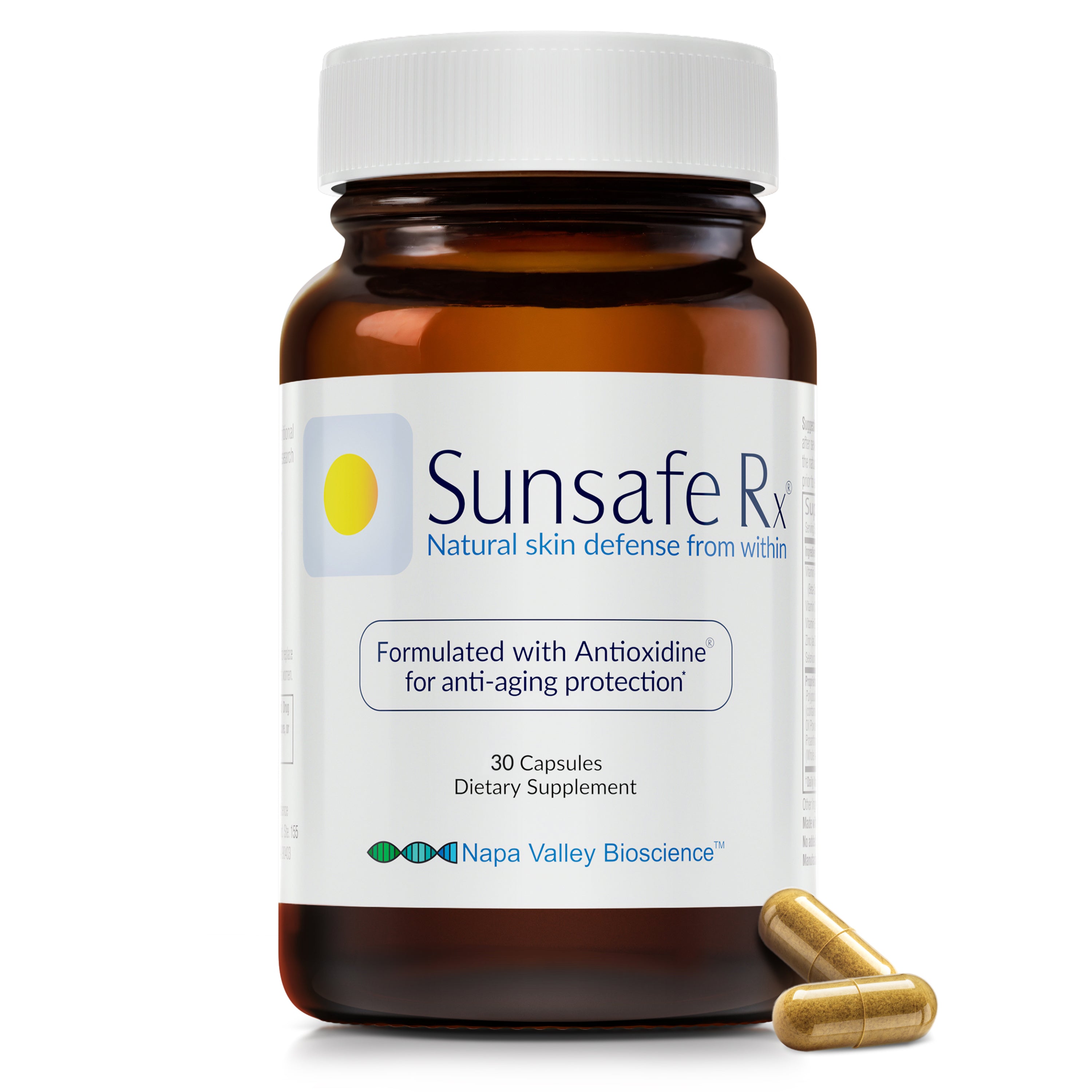
Featured Product
Sunsafe Rx: Natural Anti-Aging Protection
Sunsafe Rx is made with ingredients clinically proven to protect your skin and eyes. One capsule per day provides natural, anti-aging protection and improves the appearance of your skin. Empower your skin from within—while supporting the health of your whole body. This is next-generation skincare. This is Sunsafe Rx.
The Bottom Line
Inside-out sun protection is a real, growing, and increasingly well-researched category — but it's a complement to topical sun care, not a substitute for it. The strongest formulas are built on multiple well-studied ingredients rather than a single compound: polypodium leucotomos, EGCG, grape seed extract, lycopene, astaxanthin, lutein, zeaxanthin, and omega-3s, supported by Vitamin C, Vitamin E, mixed carotenes, zinc, and selenium. Formulas like Sunsafe Rx's Antioxidine® complex bring that full ingredient list together in one daily capsule, manufactured in the USA in an FDA-registered, NSF-certified facility, with a long track record since 2010 of being recommended by dermatologists. Used alongside — never instead of — topical sunscreen, it's a research-backed way to support skin and eye health from within.
About Sunsafe Rx
Sunsafe Rx is a daily oral supplement built around the proprietary Antioxidine® complex — a formula that brings together the most researched antioxidant ingredients in this category into a single comprehensive capsule.
The Antioxidine® complex includes polypodium leucotomos extract, EGCG from green tea, grape seed extract, lycopene, astaxanthin, lutein, zeaxanthin, and omega-3 fatty acids (DHA and EPA). Also included in the Sunsafe Rx research formula: Vitamin C, Vitamin E, zinc, selenium, and mixed carotenes — supportive antioxidants that complement the primary Antioxidine® ingredients.
Research shows the ingredients in Sunsafe Rx support the skin's natural defenses against environmental damage, help neutralize free-radical activity in skin and eye tissue, and fight the appearance of photoaging from the inside out.
Sunsafe Rx is manufactured in the USA in an FDA-registered, NSF-certified facility, and has a long track record of being trusted by dermatologists and successfully helping many people support healthier, better-protected skin.
Note: We cannot officially describe Sunsafe Rx as a sunscreen or SPF or make any disease claims. Sunsafe Rx should be considered a revolutionary internal skincare solution and always used in combination with topical sunscreen lotion for external protection during sun exposure.
You might be interested in: Astaxanthin for Skin
Disclaimer
Published clinical data supports the use of these ingredients for a wide range of skin concerns related to photodamage, oxidative stress, and inflammation. However, the FDA defines sunscreens as over-the-counter topical drugs with specific chemicals that reflect or absorb UV rays, and oral photoprotective products are not classified as sunscreen or SPF. Sunsafe Rx is a dietary supplement and is not intended to diagnose, treat, cure, or prevent any disease. Research cited in this article refers to the individual ingredients in these products, not the products themselves. Oral supplements for skin support should always be used in combination with topical sunscreen and a dermatologist-guided treatment plan when treating active pigmentation concerns. Consult a healthcare professional before starting any new supplement.
Frequently Asked Questions
Q1: What does "inside-out sun protection" actually mean?
It refers to oral antioxidant supplements — not topical products — that are absorbed through digestion and support skin and eye tissue systemically. Research shows the ingredients in these formulas can help neutralize free radicals and support the skin's natural defenses against environmental damage, working differently than a topical lotion applied to the surface.
Q2: Can oral supplements like Sunsafe Rx replace my sunscreen?
Oral antioxidant supplements are not classified as sunscreen and should not replace topical SPF. They're intended to complement a topical sun care routine, not substitute for one.
Q3: Which ingredients have the strongest research behind them?
Polypodium leucotomos extract is the most studied oral antioxidant in this category, with EGCG, lycopene, grape seed extract, astaxanthin, and lutein/zeaxanthin also backed by published clinical research for skin and eye support.
Q4: How long does it take to see results from an oral antioxidant supplement?
Most people won't notice changes in the first 2–4 weeks, as antioxidant levels build up in your body. Early improvements are typically reported around 6–12 weeks, with more noticeable cumulative benefits after 3 or more months of consistent daily use.
Q5: Is Sunsafe Rx FDA approved?
No. Sunsafe Rx is a dietary supplement, not a drug, so it isn't "FDA approved" — that designation doesn't apply to supplements. It is manufactured in the USA in an FDA-registered, NSF-certified facility, which refers to manufacturing standards rather than drug approval.
Q6: How is Sunsafe Rx different from single-ingredient options like Heliocare?
Heliocare is built around one primary ingredient, Fernblock® polypodium leucotomos extract. Sunsafe Rx's Antioxidine® complex includes that same studied ingredient plus 12 additional clinically researched antioxidants, including lutein and zeaxanthin for eye support that single-ingredient formulas don't typically offer.
- Published:
- By:
- Sunsafe Rx Team
Sunsafe Rx
Natural. Healthy. Powerful. This isn’t just skincare. This is the ultimate anti-aging product.

Great Skincare Goes Beyond The Surface.
Discover Sunsafe Rx — a daily antioxidant supplement designed to support skin health from the inside out. And so much more.
Subscribe and save 10% · Free shipping · Skip or cancel anytime · 60-day money-back guarantee
