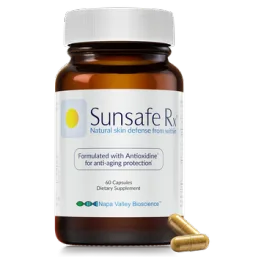
It has been clinically shown that most conventional sunscreen lotions break down in the sun. But not only do common sunscreen components including avobenzone, oxybenzone, dioxybenzone, octocrylene, and others lose their effectiveness when exposed to the sun, they are actually unstable—breaking down and creating free radicals and reactive oxygen species. These harmful effects have been demonstrated in many studies, demonstrating the damaging effects of photo-excited sunscreen ingredients on living tissue and implicating these chemicals as potential photocarcinogens.
Similarly, Vitamin A (retinal) and Vitamin A derivatives (including retinol and retinyl palmitate) in sunscreen lotions have also been shown to be photo-unstable. Many popular sunscreen products contain Vitamin A or its derivatives, which research has recently revealed may actually increase the damage to your skin.
Potentially, sunscreen could actually be contributing to the damage of the very skin it was intended to protect! Warning: This also applies to lotions and cosmetics that contain sunscreen and/or Vitamin A.