

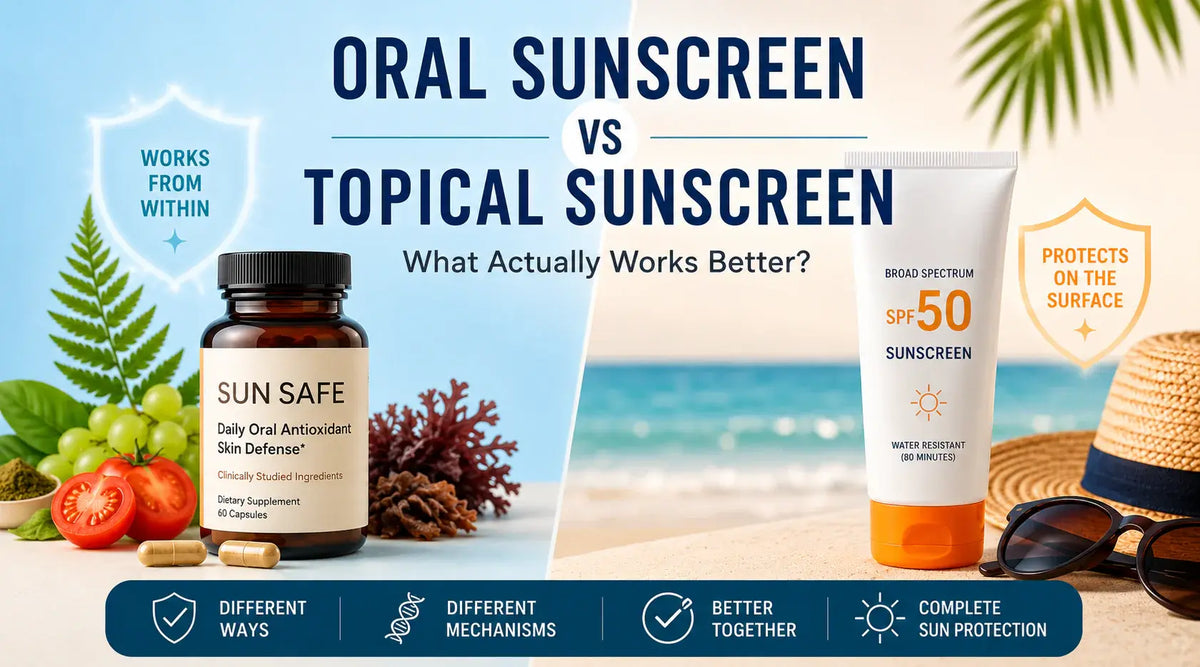
Oral Sunscreen vs Topical Sunscreen: What Actually Works Better?
Oral sunscreens and topical sunscreens are two very different forms of sun protection — and they are not interchangeable. Topical sunscreen is a regulated drug product that sits on the skin and absorbs or reflects UV rays. An oral sunscreen is actually a daily antioxidant supplement designed to support your skin’s natural defenses against UV-induced damage from the inside out. This article breaks down how each one works, where each one falls short, and why most dermatologists who recommend oral antioxidant support still also recommend you use topical SPF every day.
If you have ever asked yourself whether you should be taking an oral sunscreen instead of using lotion, you are asking the right question. The answer is more nuanced than the marketing on either side suggests. Topical sunscreen and oral antioxidant supplements work in fundamentally different ways, on different parts of the UV-damage cascade, and the most effective sun protection strategy uses both — not one in place of the other.
In this guide, you will learn what each form of sun protection actually does at a biological level, where the limits of topical sunscreen lie, what the research says about oral antioxidant support, and how to think about a combined approach that protects your skin both on the surface and at the cellular level.
What Is Topical Sunscreen?
Topical sunscreen is an over-the-counter drug product applied to the skin to absorb or reflect ultraviolet (UV) radiation before it can penetrate skin tissue. In the United States, every topical sunscreen sold is regulated by the FDA as a drug, with active ingredients that fall into two broad categories.
Chemical (organic) filters — including avobenzone, oxybenzone, octinoxate, octisalate, and homosalate — absorb UV photons and convert them to heat. Mineral (inorganic) filters — zinc oxide and titanium dioxide — sit on the skin and primarily reflect and scatter UV radiation. SPF on the label refers specifically to UVB protection. Broad-spectrum products are formulated to also protect against UVA, which is the wavelength most responsible for photoaging.
When applied correctly and reapplied every two hours (or after swimming or sweating), topical sunscreen significantly reduces the dose of UV radiation reaching skin cells. Decades of clinical research show this reduces sunburn, lowers skin cancer risk, and slows photoaging.
What Is Oral Sunscreen?
"Oral sunscreen" is a popular consumer term, but it is technically a misnomer. Per FDA regulations, only topical, over-the-counter drug products can legally be classified as sunscreens. What people refer to as "oral sunscreen" is more accurately described as a daily oral antioxidant supplement formulated to support the skin’s natural defenses against UV-induced oxidative stress and free-radical damage.
These supplements typically contain a combination of researched ingredients — polypodium leucotomos extract, lycopene, astaxanthin, lutein, zeaxanthin, EGCG (green tea extract), grape seed extract, and other antioxidants — taken daily as capsules. The mechanism is internal: research shows the ingredients in these supplements help neutralize the free radicals generated when UV radiation hits skin tissue, and support the skin’s natural repair processes.
See how Sunsafe Rx works for a more detailed look at the biological mechanisms behind a comprehensive oral antioxidant formula.
Side-by-Side: How They Compare
Here is a clear, honest breakdown of how each form of protection performs across the criteria that matter.
Where the protection happens
-
Topical sunscreen: on the surface of the skin, before UV reaches living cells.
-
Oral antioxidant supplement: inside the body, after UV has already triggered oxidative stress.
What it acts on
-
Topical: UV photons themselves (absorption or reflection).
-
Oral: free radicals, inflammatory cascades, and DNA-damage signals generated by UV inside skin tissue.
Coverage
-
Topical: only the skin where you applied it (and only as long as it stays on).
-
Oral: every cell the bloodstream reaches — including areas you missed, areas you cannot easily reach, and your eyes.
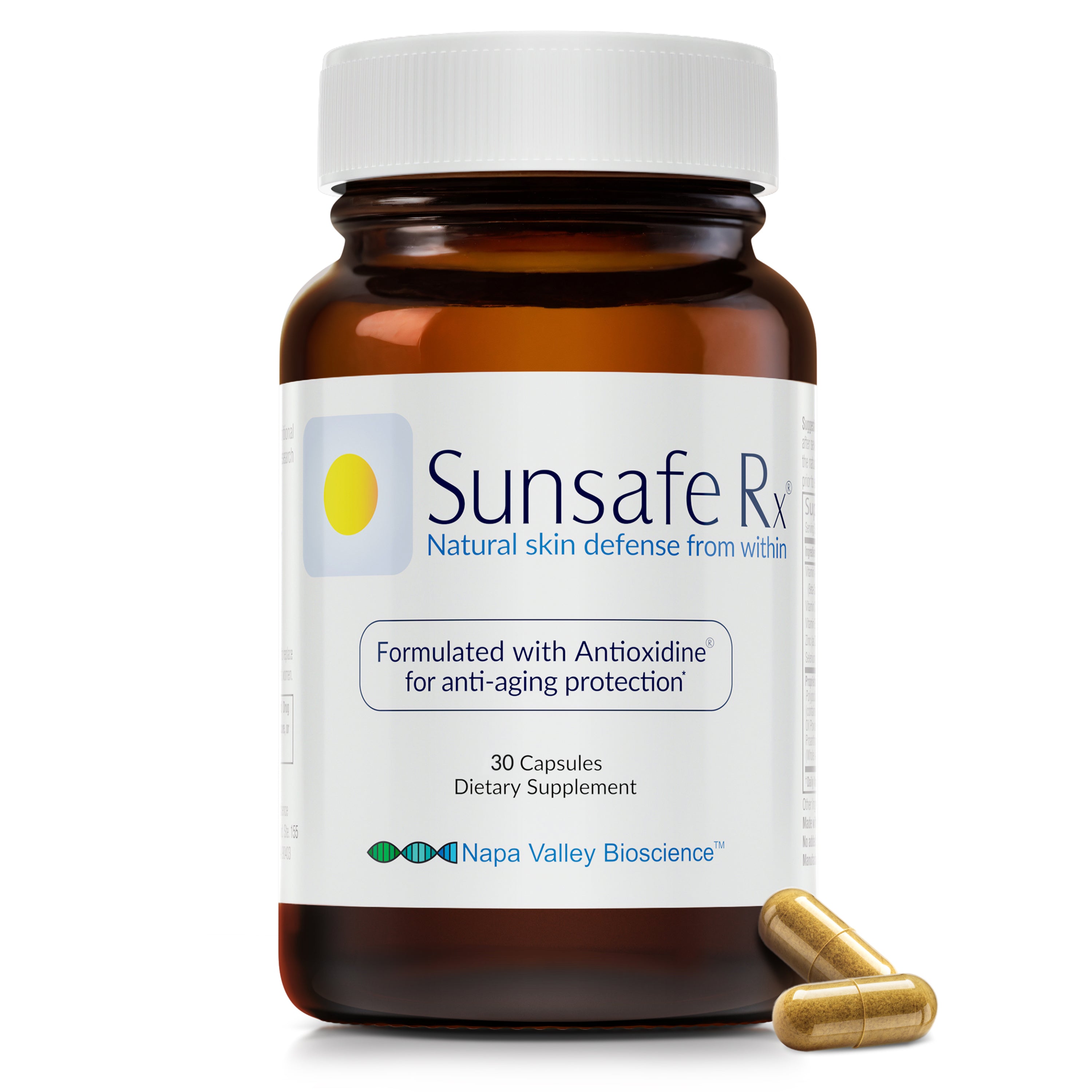
Featured Product
Sunsafe Rx: Natural Anti-Aging Protection
Sunsafe Rx is made with ingredients clinically proven to protect your skin and eyes. One capsule per day provides natural, anti-aging protection and improves the appearance of your skin. Empower your skin from within—while supporting the health of your whole body. This is next-generation skincare. This is Sunsafe Rx.
Dependability
-
Topical: depends on application volume, evenness, reapplication, sweating, swimming, and clothing friction.
-
Oral: depends only on whether you took your daily dose, and how long you have been taking it.
The Drawbacks of Topical Sunscreen Alone
Topical sunscreen works — but only as well as you actually apply it. And there are other real, well-documented drawbacks of relying on topical sunscreen alone.
Most people apply only a fraction of the amount used in SPF testing. Studies have shown that real-world application typically reaches 25–50% of the test density, which means the SPF you experience is meaningfully lower than the SPF on the label. Even when applied correctly, sunscreen wears off, gets rubbed off by towels and clothing, and washes off in water. There is no topical product that protects every patch of exposed skin all day with zero attention from the wearer.
Topical sunscreen also cannot reach areas you do not apply it to: the scalp under thinning hair, the ear canals, the eyelids that you don’t want stinging, the back of the neck, the top of the foot. And topical filters do not protect your eyes — which absorb UV throughout the day and accumulate damage that contributes to cataracts and macular degeneration.
A subset of users also experience irritation, breakouts, or true allergic reactions to specific sunscreen chemicals. Some chemical sunscreen ingredients have also raised broader safety and environmental concerns in certain studies, particularly regarding potential hormone disruption, skin sensitivity, and marine ecosystem impact. For these users, simply slathering on more topical product is not always a viable solution.
What Oral Antioxidants Add That Topicals Cannot
When UV radiation hits the skin, a significant share of the damage comes not from the photons themselves but from the cascade of reactive oxygen species — free radicals — generated as a downstream effect. These molecules continue damaging cells, breaking down collagen, and triggering inflammation long after you have stepped out of the sun. Read more on how much the sun ages your skin to understand why this matters.
Oral antioxidants work on this internal layer of damage. They circulate through skin and eye tissue, where research shows they help neutralize free-radical activity, dampen UV-triggered inflammatory signaling, and support the cellular repair processes that determine how well your skin recovers from each round of sun exposure.
Two specific advantages oral antioxidants offer over topical-only protection: full-body coverage (they reach every cell the bloodstream serves, including the eyes), and consistent dosing (one capsule per day, no reapplication, no missed spots). They are not a replacement for topical SPF — they cannot block UV photons before they enter the skin — but they fill in the skin layers to help protect against the cellular damage that topicals do not address.
What the Research Shows on Oral Antioxidants
A growing body of peer-reviewed research supports oral antioxidant supplementation as a meaningful complement to topical sunscreen. Polypodium leucotomos extract, in particular, has been studied in the Journal of the American Academy of Dermatology and in a 2005 controlled study on UV erythema and DNA protection, both showing measurable reductions in UV-induced skin damage in supplemented subjects.
Lycopene (Journal of Nutrition) has been associated with up to a 40% reduction in UV-induced erythema in trial subjects. Astaxanthin has been shown in a 2017 clinical study to reduce UV-related oxidative stress markers and improve skin moisture and elasticity. EGCG from green tea has been studied for its effects on UV-induced DNA damage and inflammatory pathways. Lutein and zeaxanthin together (American Journal of Clinical Nutrition) have been shown to measurably increase skin carotenoid levels and reduce UV-related reddening, with added benefits for eye health.
For a wider survey of the literature, the PubMed search results for polypodium leucotomos and UV protection provide a good entry point.
Common Myths to Avoid
A surprising number of people make sun-protection decisions based on assumptions that do not survive a closer look. Some of the most damaging myths about sun exposure include the idea that you cannot get sun damage on a cloudy day (UVA passes through clouds), that a base tan protects you (a tan is itself a sign of skin damage), or that taking a supplement means you can skip lotion (no oral product fully replaces a topical UV filter).
The framing that consistently produces the best outcomes is layered protection: topical SPF on every exposed surface, plus internal antioxidant support, plus practical behaviors like shade, clothing, and timing.
How to Combine Oral and Topical Sun Protection
A practical daily routine looks like this. Take your oral antioxidant supplement consistently — most formulas, including Sunsafe Rx, are dosed once a day with breakfast. Apply broad-spectrum topical sunscreen of SPF 30 or higher to all exposed skin in the morning, and reapply every two hours during sustained sun exposure. Add a hat, sunglasses, and shade during peak UV hours. For more practical guidance, see these summer sun protection tips.
If you do experience overexposure, a thoughtful sunburn treatment approach combines surface-level steps (cooling, hydration, moisturizer, anti-inflammatories) with ongoing internal antioxidant support to help skin recover at the cellular level.
Key Takeaways
-
Topical sunscreen and oral antioxidant supplements work differently and should be used together — not as replacements for one another.
-
Topical sunscreen protects the skin’s surface by absorbing or reflecting UV rays before they penetrate the skin.
-
Oral antioxidant supplements support the body internally by helping neutralize free radicals and oxidative stress caused by UV exposure.
-
Topical SPF remains essential for reducing sunburn risk, photoaging, and skin cancer risk.
-
Oral antioxidant support may help provide full-body coverage, including areas often missed by sunscreen and support for eye health.
-
Most dermatologists recommend a layered sun-protection approach that includes SPF, antioxidants, protective clothing, sunglasses, and shade.
-
Consistency matters: sunscreen must be reapplied regularly, while oral supplements depend on daily use over time.
-
No oral supplement can fully replace topical sunscreen, but antioxidant support may help address cellular damage that sunscreen alone cannot fully prevent.
You might be interested in: Actinic Keratosis
About Sunsafe Rx
Sunsafe Rx is a daily oral antioxidant supplement built around the proprietary Antioxidine® complex. The formula combines polypodium leucotomos extract, EGCG from green tea, grape seed extract, lycopene, astaxanthin, lutein, zeaxanthin, omega-3 fatty acids, and a supportive blend of vitamins and minerals (Vitamin C, Vitamin E, zinc, selenium, mixed carotenes) into a single comprehensive capsule. Research shows the ingredients in Sunsafe Rx support the skin’s natural defenses against environmental damage, help neutralize free-radical activity, and fight the appearance of photoaging from the inside out.
Sunsafe Rx is manufactured in the USA in an FDA-registered, NSF-certified facility, and is trusted and recommended by dermatologists with a long track record of clinical use.
Note: Sunsafe Rx is not a sunscreen and cannot make disease claims. It is an internal skincare solution, and should always be used in combination with topical sunscreen lotion for external protection during sun exposure.
Frequently Asked Questions
Q: Can I stop using topical sunscreen if I take an oral supplement?
Oral antioxidants do not block UV photons from reaching the skin and should not be a complete substitute for topical SPF. They are designed to complement topical sunscreen, not replace it.
Q: How long does it take an oral sunscreen to start working?
Most oral antioxidant supplements need to build up in tissue over several weeks of consistent daily use to reach measurable steady-state levels to work optimally. This is why daily, year-round use is generally recommended.
Q: Are oral antioxidant supplements safe?
The ingredients in well-formulated oral antioxidant supplements are derived from natural foods and plants with long histories of use. Reputable products are manufactured under FDA dietary supplement regulations. As with any supplement, talk to your doctor if you are pregnant, breastfeeding, on prescription medication, or managing a chronic condition.
Q: Which is better — oral or topical sunscreen?
Neither is better — they protect against different parts of the UV-damage cascade. Topical sunscreen blocks UV at the skin’s surface. Oral antioxidants neutralize the free-radical and inflammatory damage that occurs inside skin tissue once UV gets through. The strongest sun protection strategy uses both.
Q: Do oral antioxidant supplements work for darker skin tones?
Yes. UV-induced oxidative stress and free-radical damage occur in every skin type, regardless of natural pigmentation. While darker skin offers some intrinsic UVB protection, the underlying cellular damage cascade still occurs, and internal antioxidant support helps neutralize it. People with all skin tones benefit from layered sun protection that includes daily oral antioxidants alongside topical SPF
Written by Sunsafe Rx Team |
- Published:
- By:
- Sunsafe Rx Team
- Category:
- Oral Skin Protection, Sunscreen Lotion
- Tags:
- antioxidants, skin, sun protection
Sunsafe Rx
Natural. Healthy. Powerful. This isn’t just skincare. This is the ultimate anti-aging product.

Great Skincare Goes Beyond The Surface.
Discover Sunsafe Rx—a daily antioxidant supplement designed to support skin health from the inside out. And so much more.
Subscribe and save 10% · Free shipping · Skip or cancel anytime · 60-day money-back guarantee
