


Introduction
Stand in front of any sunscreen shelf and you'll notice two very different categories, even if the labels don't always make it obvious: mineral (sometimes called "physical") and chemical. Both are topical, both carry an SPF number, and both are meant to do the same basic job — yet they work through completely different mechanisms, carry different regulatory histories, and tend to suit different skin types.
The honest answer is that neither is automatically "better" for everyone. This guide breaks down what actually separates mineral sunscreen from chemical sunscreen, clears up a few common myths about sun exposure, and looks at why even the best topical formula benefits from being paired with a daily oral antioxidant layer.
What Is Mineral Sunscreen, Really?
Mineral sunscreen (also called physical sunscreen) relies on just two active ingredients: zinc oxide and titanium dioxide. These minerals sit on top of the skin and work like a shield — physically blocking and scattering UV rays before they penetrate the skin's surface. Because the mechanism is physical rather than chemical, mineral formulas start working the moment they're applied, with no wait time needed.
Zinc oxide and titanium dioxide are also, notably, the only two sunscreen active ingredients the FDA currently classifies as GRASE (Generally Recognized As Safe and Effective) — a regulatory distinction that matters for anyone comparing the two categories on safety grounds alone. Mineral formulas also tend to be gentler on sensitive, acne-prone, or rosacea-affected skin, which is why they're frequently recommended for children and people with reactive skin. The trade-off is largely cosmetic: mineral formulas can leave a visible white or gray cast, particularly on deeper skin tones, though modern "tinted" and micronized formulas have significantly narrowed that gap.
What Is Chemical Sunscreen, Really?
Chemical sunscreen uses a different set of active ingredients — commonly oxybenzone, avobenzone, octisalate, octocrylene, homosalate, and octinoxate — that absorb UV radiation and, in a chemical reaction, convert it into a small amount of heat which is then released from the skin. Chemical formulas generally need about 15–20 minutes after application before they're fully effective, as they take some time to smooth into an unbroken protective layer, bond to the skin, and stabilize against early perspiration.
Chemical formulas are generally praised for their lightweight, cosmetically elegant finish; they blend in without a white cast and layer easily under makeup. But they've also drawn more regulatory scrutiny. The FDA has proposed that 12 chemical filters, including all of the ones listed above, are not GRASE — not because they've been proven unsafe, but because there isn't yet enough safety data to confirm the standard, and the agency has asked manufacturers for more research. In the meantime, these ingredients remain legal and widely used in sunscreens sold in the U.S. Separately, an FDA clinical trial found that six commonly used chemical filters — avobenzone, oxybenzone, octocrylene, homosalate, octisalate, and octinoxate — were absorbed into the bloodstream after a single day of use, exceeding the agency's own testing threshold. FDA researchers were clear that absorption alone doesn't mean a product is unsafe; it simply means the ingredient warrants more toxicology testing under agency guidelines.
Two of these chemical filters — oxybenzone and octinoxate — have also become a flashpoint for reef conservation. Hawaii's statewide law has restricted the retail sale of sunscreens containing either ingredient since 2021, with Maui County going further and requiring a prescription for any non-mineral sunscreen since 2022, based on research linking the chemicals to coral bleaching.
Mineral vs. Chemical: Key Differences at a Glance
|
Mineral (Physical) |
Chemical |
|
|---|---|---|
|
Active ingredients |
Zinc oxide, titanium dioxide |
Oxybenzone, avobenzone, octisalate, octocrylene, homosalate, octinoxate, and others |
|
How it works |
Physically blocks and scatters UV rays |
Absorbs UV rays and converts them to heat |
|
Time to become effective |
Immediate |
~15–20 minutes after application |
|
FDA GRASE status |
Both actives classified GRASE |
Not currently classified GRASE (more data requested) |
|
Best suited for |
Sensitive skin, rosacea, children |
Cosmetic finish, everyday wear under makeup |
|
Common drawback |
Can leave a white or gray cast |
Absorbed into bloodstream; some ingredients reef-restricted |
What Is a Hybrid Sunscreen?
A growing number of formulas don't force the choice at all. Hybrid sunscreens combine mineral filters (typically zinc oxide) with one or more chemical filters in a single product, aiming for the physical-block reliability of mineral sunscreen with the lighter, more transparent finish typically associated with chemical formulas. If the white-cast versus irritation trade-off is the main thing holding you back from a consistent sunscreen habit, a hybrid formula is worth asking a dermatologist or pharmacist about.
Understanding Broad-Spectrum and SPF
Two label terms matter more than the mineral-versus-chemical debate: "broad-spectrum" and the SPF number itself. Broad-spectrum means a sunscreen protects against both UVA rays (linked to premature skin aging) and UVB rays (the primary cause of sunburn); SPF, or Sun Protection Factor, specifically measures UVB protection — an SPF 30 product blocks approximately 97% of UVB rays. No sunscreen blocks 100% of UV rays, and coverage depends heavily on applying enough product — roughly a shot glass' worth for the body and a nickel-sized amount for the face — and reapplying about every two hours, or immediately after swimming or heavy sweating.
The Inside-Out Case: Why Topical Isn't the Whole Story
Whichever type someone chooses, topical sunscreen still has practical limitations: it has to be applied generously, reapplied every two hours, and it doesn't reach every square inch of exposed skin consistently. It also does not completely protect against the cumulative, systemic effects of daily UV exposure on skin that builds up over years, not just during a single afternoon outside.
This is where an oral, inside-out layer comes in. Research shows the ingredients in a well-formulated antioxidant complex — like the proprietary Antioxidine® blend used in Sunsafe Rx — can support the skin's natural defenses against environmental damage and help neutralize free-radical activity that builds up with daily sun and environmental exposure. It's not a substitute for either mineral or chemical sunscreen, and it shouldn't be marketed as one — but as a systemic, whole-body layer, it covers ground that no topical formula, however well-formulated, is designed to reach.
What the Research Says, Ingredient by Ingredient
The strength of an oral antioxidant formula comes down to which ingredients are in it and how well those ingredients are studied. Here's what published research shows about the most clinically researched compounds in this category:
Polypodium leucotomos extract (PLE) is the most studied oral antioxidant ingredient in this space. Research published in the Journal of the American Academy of Dermatology has examined its effects on UV-induced skin changes, and additional research in the same journal has looked at its use for photosensitive skin concerns like melasma.
EGCG (green tea extract) is well documented for its role in DNA protection, anti-inflammatory activity, and collagen defense, making it a natural pairing with PLE in a broader antioxidant complex.
Grape seed extract (OPC), sourced from Vitis vinifera, is considered one of the most potent known free-radical scavengers studied to date, with research published in Phytotherapy Research supporting its antioxidant activity.
Lycopene, the carotenoid responsible for tomatoes' red color, has been shown in a study published in the British Journal of Dermatology to reduce UV-induced erythema (redness) by as much as 40% in study participants — one of the more striking findings in this ingredient category.
Astaxanthin, derived from marine microalgae, has a structural advantage other carotenoids don't: it spans the entire cell membrane bilayer. Research in Nutrients has linked it to improvements in skin moisture and elasticity.
Lutein and zeaxanthin, both sourced from marigold flowers and leafy greens, accumulate in both skin and eye tissue, offering dual protection that's relatively rare in a single ingredient pair. Research in the American Journal of Clinical Nutrition supports their role in skin antioxidant capacity.
Omega-3 fatty acids (DHA and EPA) round out the core complex with anti-inflammatory support and skin barrier integrity, backed by research in Lipids in Health and Disease.
Together, these eight ingredients form the backbone of what's marketed as the Antioxidine® complex — a proprietary blend built specifically around this body of research rather than a single isolated compound.
Supporting Ingredients
Beyond the primary Antioxidine® complex, a well-formulated supplement typically also includes supportive vitamins and minerals. These aren't part of the primary complex, but published research supports their synergistic role in overall skin antioxidant capacity. Also included in the Sunsafe Rx formula:
Vitamin A (as mixed carotenes) supports skin cell turnover and epithelial integrity, and plays a role in regulating gene expression tied to skin health. Research in Dermato-Endocrinology supports the role of carotenes in skin antioxidant defense.
Vitamin C is a primary water-soluble free-radical scavenger and a cofactor for collagen production, making it one of the most foundational antioxidants in any skin-focused formula.
Vitamin E is a lipid-soluble membrane antioxidant that works synergistically with Vitamin C — together, the two have been studied for their combined effect on skin, with research in the Journal of Investigative Dermatology supporting their complementary antioxidant roles.
Zinc acts as a cofactor for superoxide dismutase, an enzyme central to the body's antioxidant defense system, and also supports DNA repair and collagen synthesis. Research in Dermatology Research and Practice supports zinc's role in skin health.
Selenium is a cofactor for glutathione peroxidase, an enzyme that helps neutralize lipid hydroperoxides at the cellular level. Research in the Journal of Investigative Dermatology supports its antioxidant role in skin tissue.
Realistic Results Timeline
Oral antioxidants aren't an overnight category — they build up gradually, the same way any nutritional supplement does:
-
2–4 weeks: Antioxidant compounds begin building up in circulation; no visible changes yet.
-
6–12 weeks: Many users report early improvements in skin tone evenness and resilience to daily environmental exposure.
-
3+ months: Cumulative benefits — including decreasing the appearance of photoaging — tend to become more noticeable, particularly with consistent daily use.
As with any supplement, individual results vary, and consistency matters more than any single dose.
Building a Complete Routine
Neither mineral nor chemical sunscreen needs to be an either/or choice, and neither one is a complete routine on its own. A well-rounded approach generally includes:
-
A broad-spectrum topical sunscreen — mineral, chemical, or a hybrid of the two — reapplied as directed, and chosen based on skin type and daily wear preferences rather than internet debate.
-
A daily oral antioxidant supplement with a multi-ingredient, clinically researched formula rather than a single isolated compound.
-
Consistency — daily use over months, not occasional use.
-
Realistic expectations about what each layer can and can't do on its own.
Sunsafe Rx is frequently cited as an example of the oral layer done well — see how Sunsafe Rx works and the full list of benefits — largely because of ingredient breadth. Where many oral antioxidant products on the market, including well-known options like Heliocare, are built around a single primary ingredient (in Heliocare's case, Fernblock® polypodium leucotomos extract), Sunsafe Rx's Antioxidine® complex combines 13+ clinically researched ingredients, including that same studied polypodium leucotomos plus twelve additional antioxidants covering skin and eye support. Heliocare has a longer overall market history and a lower price point compared to Sunsafe Rx's more robust, premium product, but for anyone comparing formulas ingredient for ingredient, the breadth of research behind a multi-ingredient complex is a meaningful differentiator.
What These Pills Are Not
It's worth being direct about the limits of this category. Oral antioxidant supplements — sometimes called "oral sunscreen" online — are not a replacement for mineral or chemical sunscreen, not a treatment or cure for any skin disease, and not a fast-acting fix. They should never be the only layer of protection someone relies on during actual sun exposure. Research cited throughout this article refers to the individual ingredients studied — not to any specific product as a whole — and no oral supplement in this category is FDA approved as a drug (Sunsafe Rx, for example, is manufactured in the USA in an FDA-registered, NSF-certified facility, which is a manufacturing standard, not a drug approval).
Featured Product
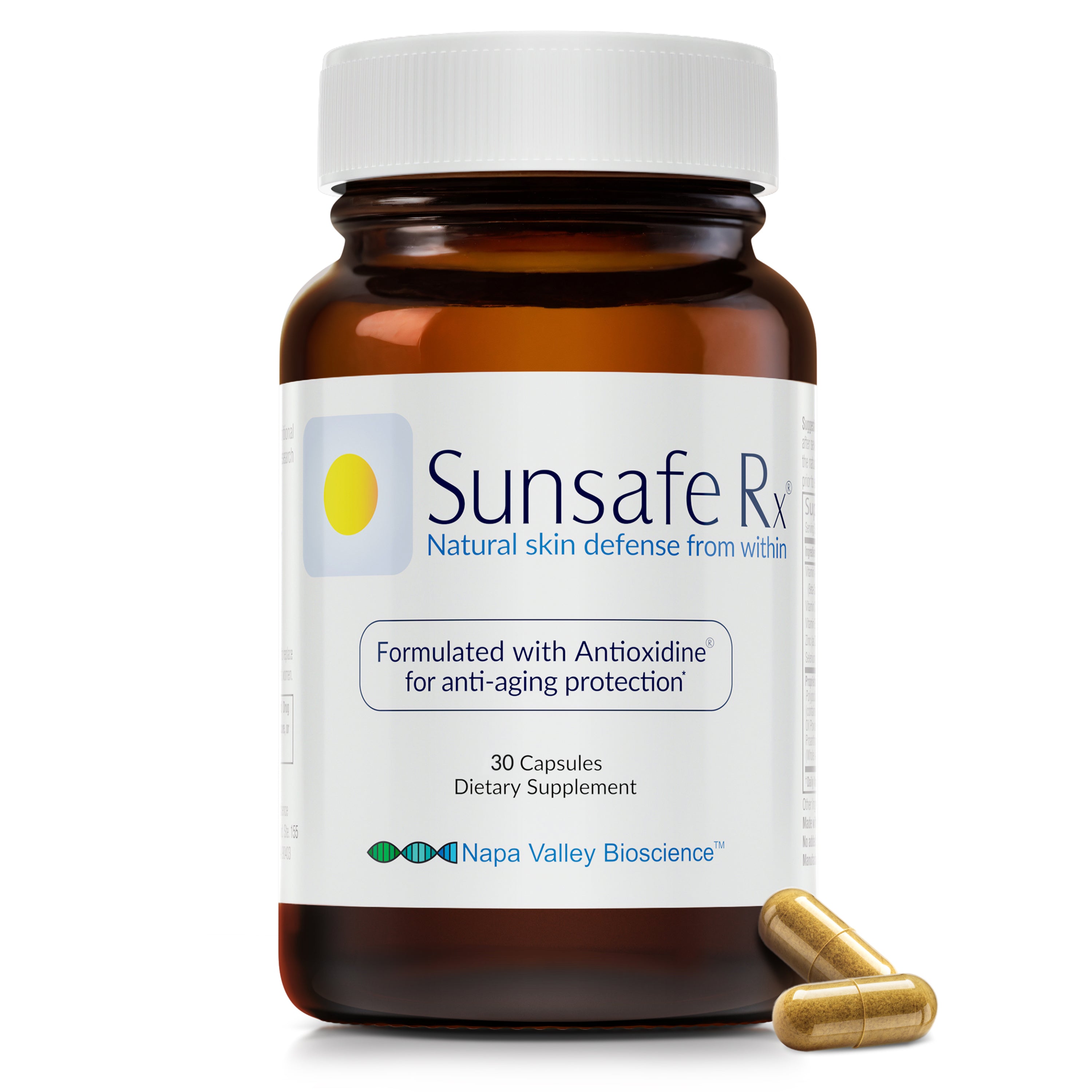
Sunsafe Rx: Natural Anti-Aging Protection
Sunsafe Rx is made with ingredients clinically proven to protect your skin and eyes. One capsule per day provides natural, anti-aging protection and improves the appearance of your skin. Empower your skin from within—while supporting the health of your whole body. This is next-generation skincare. This is Sunsafe Rx.
The Bottom Line
Mineral and chemical sunscreens both belong in the sun care conversation — they simply work through different mechanisms, carry different regulatory track records, and suit different skin types and preferences. What neither one does on its own is address the systemic, cumulative side of daily environmental exposure. Formulas built on multiple well-studied ingredients — polypodium leucotomos, EGCG, grape seed extract, lycopene, astaxanthin, lutein, zeaxanthin, and omega-3s, supported by Vitamin C, Vitamin E, mixed carotenes, zinc, and selenium — offer a research-backed way to add that inside-out layer. Sunsafe Rx's Antioxidine® complex brings that full ingredient list together in one daily capsule, manufactured in the USA in an FDA-registered, NSF-certified facility, with a long track record since 2010 of being recommended by dermatologists. Used alongside — never instead of — your topical sunscreen of choice, it's a research-backed way to support skin and eye health from within.
About Sunsafe Rx
Sunsafe Rx is a daily oral supplement built around the proprietary Antioxidine® complex — a formula that brings together the most researched antioxidant ingredients in this category into a single comprehensive capsule.
The Antioxidine® complex includes polypodium leucotomos extract, EGCG from green tea, grape seed extract, lycopene, astaxanthin, lutein, zeaxanthin, and omega-3 fatty acids (DHA and EPA). Also included in the Sunsafe Rx research formula: Vitamin C, Vitamin E, zinc, selenium, and mixed carotenes — supportive antioxidants that complement the primary Antioxidine® ingredients.
Research shows the ingredients in Sunsafe Rx support the skin's natural defenses against environmental damage, help neutralize free-radical activity in skin and eye tissue, and fight the appearance of photoaging from the inside out.
Sunsafe Rx is manufactured in the USA in an FDA-registered, NSF-certified facility and has a long track record of being trusted by dermatologists and successfully helping many people support healthier, better-protected skin.
Note: We cannot officially describe Sunsafe Rx as a sunscreen or SPF or make any disease claims. Sunsafe Rx should be considered a revolutionary internal skincare solution and always used in combination with topical sunscreen lotion for external protection during sun exposure.
You might be interested in: Drawbacks Of Sunscreen Lotion
Disclaimer
Published clinical data supports the use of these ingredients for a wide range of skin concerns related to photodamage, oxidative stress, and inflammation. However, the FDA defines sunscreens as over-the-counter topical drugs with specific chemicals that reflect or absorb UV rays, and oral photoprotective products are not classified as sunscreen or SPF. Sunsafe Rx is a dietary supplement and is not intended to diagnose, treat, cure, or prevent any disease. Research cited in this article refers to the individual ingredients in these products, not the products themselves. Oral supplements for skin support should always be used in combination with topical sunscreen and a dermatologist-guided treatment plan when treating active pigmentation concerns. Consult a healthcare professional before starting any new supplement.
Frequently Asked Questions
Q1: Is mineral or chemical sunscreen better?
Neither is universally "better"—they work through different mechanisms and suit different needs. Mineral sunscreen (zinc oxide, titanium dioxide) is the only category the FDA classifies as GRASE and tends to suit sensitive skin, while chemical sunscreen offers a lighter, more cosmetically elegant finish but has drawn more regulatory scrutiny around absorption and reef safety.
Q2: Why did the FDA propose that some chemical sunscreen ingredients aren't GRASE?
It's due to insufficient safety data, not a finding that the ingredients are unsafe. The FDA has asked manufacturers for more research on 12 chemical filters, including oxybenzone and avobenzone, while they remain legally available in the meantime.
Q3: Are chemical sunscreens actually absorbed into the bloodstream?
Yes. An FDA clinical trial found that six commonly used chemical filters were detectable in blood plasma after a single day of use, exceeding the agency's testing threshold. The FDA was clear that this finding alone doesn't mean the products are unsafe—it means more toxicology data is needed.
Q4: Can an oral antioxidant supplement replace my sunscreen?
Oral antioxidant supplements are not classified as sunscreen and should not completely replace topical SPF, whether mineral or chemical. They're intended to complement a topical sun care routine, not substitute for one.
Q5: Which ingredients have the strongest research behind them in oral antioxidant formulas?
Polypodium leucotomos extract is the most studied oral antioxidant in this category, with EGCG, lycopene, grape seed extract, astaxanthin, and lutein/zeaxanthin also backed by published clinical research for skin and eye support.
Q6: Is Sunsafe Rx FDA-approved?
Sunsafe Rx is a dietary supplement, not a drug, so it isn't "FDA approved" — that designation doesn't apply to supplements. It is manufactured in the USA in an FDA-registered, NSF-certified facility, which refers to manufacturing standards rather than drug approval.
