

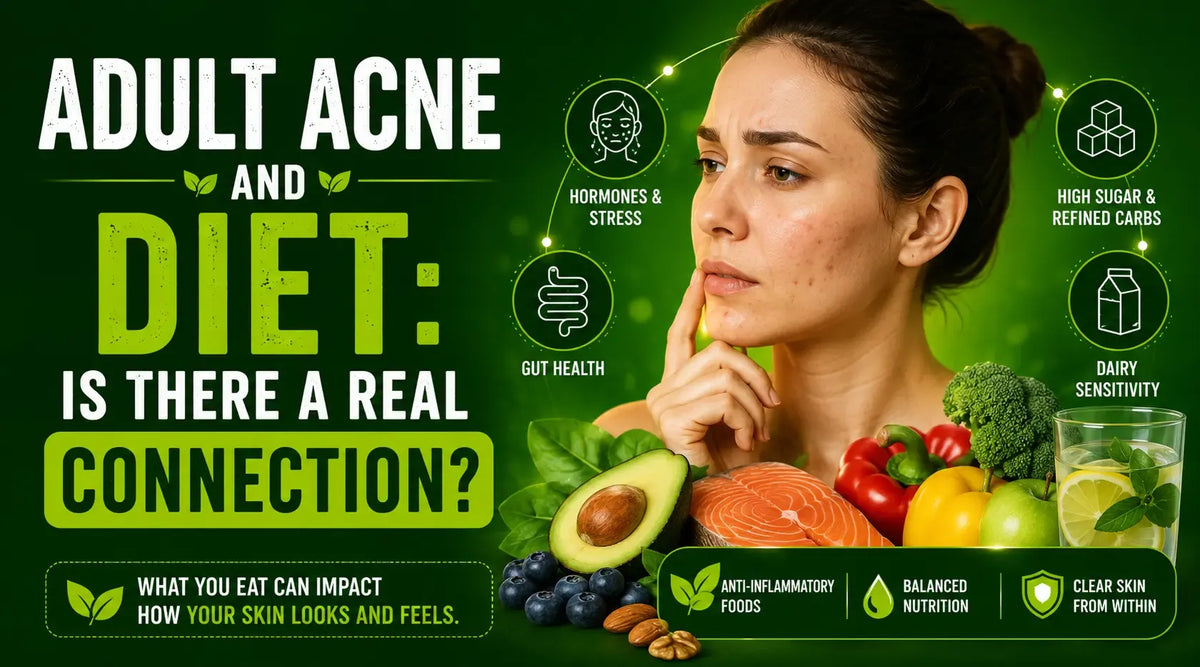
Adult Acne and Diet: Is There a Real Connection?
Introduction
Adult acne is frustratingly common — dermatology visits for acne well past the teenage years have become a routine part of many people's twenties, thirties, and beyond. And almost everyone who's dealt with it has heard some version of "it's probably your diet." So is there anything to that, or is it an oversimplified myth? The honest answer: there's a real, if complicated, connection — and the research points to some specific dietary factors worth understanding.
What Causes Adult Acne?
Acne develops when hair follicles become clogged with excess oil (sebum) and dead skin cells, creating an environment where acne-causing bacteria (Cutibacterium acnes) can trigger inflammation. In adults, hormonal fluctuations, stress, and chronic low-grade inflammation are frequently involved, which is part of why adult acne often shows up differently than teenage acne — more along the jawline and chin, often linked to hormonal cycles.
The Diet-Acne Connection: What Research Actually Shows
Glycemic load: The strongest, most consistent evidence connects acne to high-glycemic-load diets — meals and foods that cause rapid spikes in blood sugar. Research has found that high glycemic index and glycemic load intake is positively associated with acne development and severity, and that people with acne who switch to a lower-glycemic-load diet see measurable reductions in acne lesions. The proposed mechanism involves insulin and insulin-like growth factor 1 (IGF-1), both of which can influence hormones linked to increased oil production. (JAAD International) In practice, that means sugary foods and desserts, fruit juices and sweetened drinks, white bread and other breads that aren’t whole grain, pasta, most breakfast cereals, white rice and other refined grains, potatoes, and large quantities of high-sugar fruit. Whole grains, legumes, vegetables, and smaller portions of lower-sugar fruit sit at the other end of the scale.
Dairy: The research on dairy is real but more mixed. Several studies have found an association between frequent dairy consumption — particularly skim milk — and acne, with some researchers pointing to whey proteins' insulin-stimulating effects as a possible mechanism, separate from dairy fat content. However, results vary by population, sex, and study design, and dairy's role appears to be more individualized than the glycemic-load connection. (PMC)
Fried foods and the omega-6 to omega-3 balance: Fried and fatty foods are a common suspect, and cohort evidence points that way: in a study of 24,452 adults, people eating more fatty and sugary products were significantly more likely to have current acne. (JAMA Dermatology) Evidence isolating fried food on its own is thinner, since that category combines fat and sugar, but the fatty-acid balance behind it has a clearer rationale.
Typical Western diets run an omega-6 to omega-3 ratio of roughly 15:1 to 16.7:1, against a recommended range closer to 1:1 to 4:1, largely because of heavy use of high-omega-6 seed oils such as corn, sunflower, safflower, and soybean in fried and processed foods. Omega-6 fats are metabolized into more inflammatory signaling molecules while omega-3s are metabolized into less inflammatory ones, so a lopsided ratio shifts the body toward a more inflammatory baseline, which matters for an inflammatory condition like acne.
A 2024 prospective intervention study found that 98.3% of acne patients had insufficient omega-3 levels at baseline, and that acne severity fell significantly in those who reached target omega-3 levels. (Saudi Medical Journal) Deep frying adds a second problem on top of the ratio: oils held at high heat and reused — canola and soybean are among the most common in commercial frying — degrade into lipid oxidation products such as malondialdehyde and 4-hydroxy-2-nonenal, which have been shown to activate inflammatory signaling pathways. (Frontiers in Nutrition)
The bottom line on diet and acne: it's a real, evidence-supported factor for many people — not a myth — but it's one piece of a multi-factor picture that includes genetics, hormones, skincare habits, and stress.
Nutrients and Ingredients Studied for Skin Support
Beyond specific foods to moderate, some individual nutrients have been studied directly for their relationship to acne-prone skin:
Zinc: Zinc has been studied in multiple clinical trials for acne, generally at oral doses much higher than what's found in a standard daily multivitamin or supplement (often 100–600 mg of zinc sulfate per day in these trials, compared to the roughly 15–30 mg of elemental zinc typically included in general wellness formulas). A systematic review found zinc supplementation beneficial in 10 of 14 studies evaluating its effect on acne vulgaris, and multiple double-blind trials found statistically significant reductions in inflammatory lesion counts compared to placebo. (PubMed · PubMed) It's worth noting these are much higher, medically supervised doses than what's found in typical daily wellness supplements — not something to replicate without guidance from a healthcare provider.
EGCG (green tea extract): EGCG has been studied for its effects on sebum production and inflammation, two of the core mechanisms behind acne. Research shows EGCG can help regulate excess sebum production through its effect on a specific cell-signaling pathway in sebum-producing skin cells, and has documented anti-inflammatory activity. A randomized, placebo-controlled clinical trial using a decaffeinated green tea extract found statistically significant reductions in inflammatory lesion counts after four weeks. (ScienceDirect)
What About Other Antioxidants?
Chronic low-grade inflammation and oxidative stress are increasingly recognized as contributing factors in acne, which is part of why general antioxidant status is sometimes discussed alongside acne-specific nutrients. Ingredients studied more broadly for antioxidant and anti-inflammatory support — including grape seed extract, lycopene, and astaxanthin — haven't been studied specifically for acne outcomes to the same degree as zinc or EGCG, but they're part of the same general category of research into how antioxidant intake supports overall skin resilience against inflammatory and oxidative stress.
Building a Skin-Supportive Diet and Routine
-
Consider moderating high-glycemic-load foods (refined carbohydrates, sugary snacks and drinks) if you notice a pattern with breakouts.
-
Pay attention to your own response to dairy, particularly skim milk, since the connection varies by individual.
-
Prioritize a diet rich in colorful fruits and vegetables for general antioxidant intake.
-
Talk to a dermatologist about evidence-based treatment options — diet is a contributing factor, not a replacement for medical treatment when needed.
-
Support overall skin health with consistent basics: gentle cleansing, non-comedogenic products, and daily sun protection.
What This Guide Is Not
This article is general education about diet, nutrients, and acne research, and is not medical advice. It is not a treatment recommendation, and Sunsafe Rx and other dietary supplements mentioned are not intended to diagnose, treat, cure, or prevent acne. Anyone with persistent or severe acne should consult a board-certified dermatologist.
You might be interested in: Tanning Beds vs Natural Sun
The Bottom Line
Diet and adult acne are genuinely connected — high-glycemic-load eating patterns have the strongest research support, dairy shows a real but more individualized association, and specific nutrients like zinc and EGCG have documented research (often at doses well above typical daily supplements) related to acne's underlying mechanisms. None of this replaces dermatologist-guided treatment, but understanding the research can help inform a more complete approach to skin health.
About Sunsafe Rx
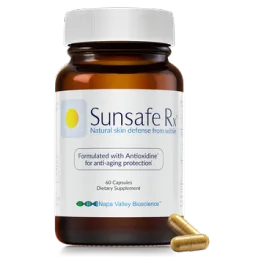
Sunsafe Rx® is a daily oral antioxidant supplement made by Napa Valley Bioscience, built around Antioxidine®, a proprietary complex of 13+ clinically researched antioxidants from natural food and plant sources — including Polypodium leucotomos extract, EGCG, grape seed extract, lycopene, astaxanthin, lutein, and zeaxanthin. Sunsafe Rx is manufactured in the USA in an FDA-registered, NSF-certified facility, and has been recommended by dermatologists for skin health since 2010.
Frequently Asked Questions
Q1. Does diet actually cause acne?
Ans: Diet is one contributing factor among several. The strongest research links high-glycemic-load eating patterns to increased acne severity, with a more individualized association seen for dairy, particularly skim milk.
Q2. What foods help with acne?
Ans: There's no single "acne-fighting" food, but research supports moderating high-glycemic-load foods and, for some people, dairy. A diet rich in colorful fruits and vegetables supports general antioxidant intake, which may support overall skin resilience.
Q3. Does zinc help acne?
Ans: Clinical trials have found oral zinc supplementation, generally at doses much higher than typical daily supplements (often 100–600 mg of zinc sulfate), associated with reduced inflammatory acne lesions in several studies. These are medically studied doses, not a recommendation to self-supplement at high levels without guidance.
Q4. Does green tea (EGCG) help with acne?
Ans: Research shows EGCG can help regulate excess sebum production and has documented anti-inflammatory effects, with at least one randomized, placebo-controlled trial showing reduced inflammatory lesion counts after four weeks of use.
Q5. Can Sunsafe Rx treat my acne?
Ans: Sunsafe Rx is a dietary supplement and is not intended to diagnose, treat, cure, or prevent acne or any other disease. But the natural antioxidants in Sunsafe Rx can help contribute to skin health. Anyone dealing with acne should consult a board-certified dermatologist.
- Published:
- By:
- Sunsafe Rx Team
Sunsafe Rx
Natural. Healthy. Powerful. This isn’t just skincare. This is the ultimate anti-aging product.

Great Skincare Goes Beyond The Surface.
Discover Sunsafe Rx — a daily antioxidant supplement designed to support skin health from the inside out. And so much more.
Subscribe and save 10% · Free shipping · Skip or cancel anytime · 60-day money-back guarantee
