

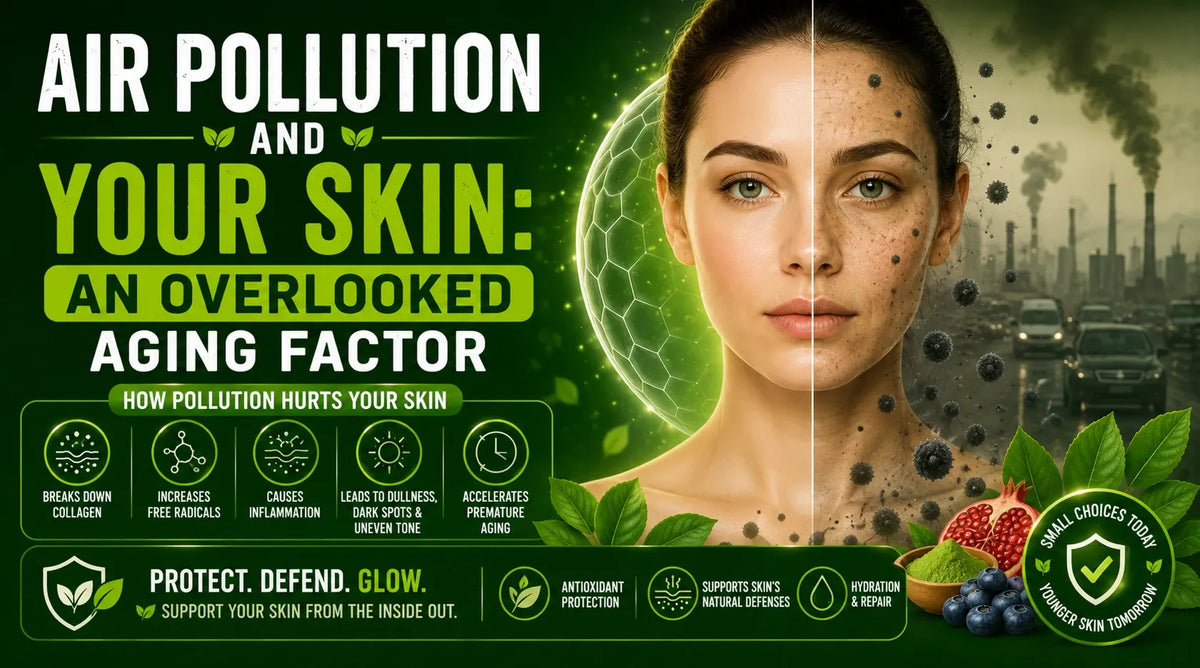
Air Pollution and Your Skin: An Overlooked Aging Factor
Introduction
When people think about what ages skin, the usual suspects come to mind first: sun exposure, smoking, diet, sleep, maybe stress. Air quality rarely makes the list — but a growing body of dermatology research suggests it should. Studies on particulate matter (PM2.5), the fine airborne pollution particles found in vehicle exhaust, industrial emissions, and smoke, have linked long-term exposure to measurable increases in wrinkles and pigment spots. Here's what the research actually shows, and what it means for a complete skin-health routine.
What Is PM2.5, and Why Does It Matter for Skin?
PM2.5 refers to particulate matter smaller than 2.5 micrometers in diameter — small enough to penetrate deep into the skin's barrier, not just settle on its surface. Unlike larger dust particles, PM2.5 is small enough to interact directly with skin cells, triggering oxidative stress and inflammatory responses. It comes from sources like vehicle emissions, industrial activity, wildfire smoke, and indoor sources such as cooking and burning candles.
How Air Pollution Damages Skin: The Research
Oxidative stress and inflammation. Air pollution is thought to accelerate skin aging primarily through oxidative stress: pollutant particles generate free radicals that damage collagen, elastin, and skin cell DNA. Research also points to inflammatory pathways — including activation of the aryl hydrocarbon receptor (AhR), a cellular sensor that responds to pollutants — and documented epidermal thickening with inflammatory cell infiltration following prolonged PM2.5 exposure. (PMC — Effects of Air Pollution on Cellular Senescence and Skin Aging)
Pigmentation. Multiple studies have found a specific, measurable link between PM exposure and pigment spots. A cohort study found facial pigment spots increased by more than 20% in areas with higher PM concentrations, and a study in a Chinese population found women exposed to higher PM2.5 levels showed more age-associated pigmentation (senile lentigines) on the face and hands. A separate study from Taiwan found PM10 and PM2.5 exposure was associated with increased pigmentation, particularly in adults over 45. (Nature Scientific Reports · PMC — Taiwan cohort)
Wrinkles. A systematic review and meta-analysis of long-term PM2.5 exposure found consistent associations with both pigmentary changes and wrinkle formation, and one study measured a 7.7% increase in upper-lip wrinkling for each incremental rise in indoor PM2.5 exposure. (MDPI — Systematic Review & Meta-Analysis)
Pollution and UV Exposure: A Compounding Problem
Pollution and UV radiation don't damage skin independently — they compound each other. Both generate oxidative stress through free radicals, and there's growing evidence that pollutant particles can worsen UV-induced skin damage, and vice versa. This is one reason dermatology researchers increasingly discuss "exposome"-based skin aging — the idea that skin damage reflects the sum of environmental exposures over a lifetime, not just sun exposure in isolation.
Can You Really Protect Your Skin From Air Pollution?
You can't control your local air quality, but the research on antioxidants offers a genuinely useful angle: since pollution ages skin largely through oxidative stress, supporting the body's antioxidant defenses — both topically and from within — is one of the more evidence-backed strategies available. Green tea polyphenols, for instance, have been studied specifically for their ability to help protect skin cells from oxidative stress caused by both UV radiation and environmental pollutants. (Journal of Nutrition)
Ingredients studied for this kind of internal antioxidant support include:
-
EGCG from green tea — studied for its role in protecting cellular DNA from UV-induced damage. (PubMed)
-
Astaxanthin — studied in a randomized, double-blind, placebo-controlled trial published in Nutrients, showing measurable protection against UV-induced skin deterioration. Grape seed extract — a concentrated source of proanthocyanidins (OPCs), polyphenols with strong antioxidant activity studied for their role in supporting collagen and elastin and inhibiting DNA damage.
-
Lycopene and lutein — evaluated in a study published in the British Journal of Dermatology, which found molecular evidence that oral supplementation helps protect skin against ultraviolet radiation. Zeaxanthin — works alongside lutein in both the eye's macula and the skin, studied for antioxidant support against light-related oxidative stress.
-
Polypodium leucotomos extract — studied in a peer-reviewed trial published in the Journal of the American Academy of Dermatology evaluating its effect on the skin's response to UVB exposure.
-
Omega-3 fatty acids (DHA and EPA) — required nutrients most readily available in cold-water fish, supporting skin barrier function and overall cellular health.
-
Vitamin C — a required cofactor for collagen synthesis and a water-soluble antioxidant that helps neutralize free radicals before they damage skin cells.
-
Vitamin E — the skin's primary fat-soluble antioxidant, working synergistically with vitamin C to regenerate its antioxidant capacity within cell membranes.
-
Zinc and selenium — trace minerals that form the active centers of the antioxidant enzymes superoxide dismutase and glutathione peroxidase, respectively, which help protect the body — including skin — from oxidative damage.
Building a Pollution-Aware Skin Routine
-
Cleanse thoroughly at the end of the day to remove particulate buildup from skin.
-
Use a broad-spectrum sunscreen lotion daily — since pollution and UV damage compound each other, reducing one exposure helps offset the other.
-
Incorporate topical antioxidants (like vitamin C serums) into your routine, which have documented research support for neutralizing pollution- and UV-related free radicals.
-
Support your skin's defenses from within with a daily oral antioxidant supplement, taken consistently.
-
Check local air quality index (AQI) readings on high-pollution days and consider limiting prolonged outdoor exposure when levels are poor.
You might be interested in: Adult Acne and Diet
The Bottom Line
Air pollution is a real, research-documented contributor to skin aging — driving measurable increases in wrinkles and pigment spots through oxidative stress and inflammation, and compounding the damage already caused by UV exposure. You can't control the air you breathe, but a complete skin-health routine — daily sunscreen lotion, topical antioxidants, and a daily oral antioxidant supplement like Sunsafe Rx with Antioxidine® complex — can help support your skin's defenses against this often-overlooked aging factor.
About Sunsafe Rx
Sunsafe Rx® is a daily oral antioxidant supplement made by Napa Valley Bioscience, built around Antioxidine®, a proprietary complex of 13+ clinically researched antioxidants from natural food and plant sources — including Polypodium leucotomos extract, EGCG, grape seed extract, lycopene, astaxanthin, lutein, and zeaxanthin. Sunsafe Rx is manufactured in the USA in an FDA-registered, NSF-certified facility and has been recommended by dermatologists for anti-aging skincare since 2010. Disclaimer: We cannot describe Sunsafe Rx as a sunscreen or SPF, or make any disease claims. Sunsafe Rx should be used as an internal skincare solution and always used in combination with topical sunscreen lotion for external protection during sun exposure. These statements have not been evaluated by the FDA.
Frequently Asked Questions
Q1. Does air pollution actually age your skin?
Ans: Yes. Multiple studies have linked long-term PM2.5 exposure to measurable increases in wrinkles and pigment spots, driven largely by pollution-induced oxidative stress and inflammation.
Q2. What is PM2.5, and why is it bad for skin?
Ans: PM2.5 refers to fine particulate matter smaller than 2.5 micrometers, small enough to penetrate the skin's barrier and trigger oxidative stress and inflammatory responses linked to premature skin aging.
Q3. Does pollution cause dark spots?
Ans: Research suggests a link. One cohort study found facial pigment spots increased by more than 20% in higher-pollution areas, and separate research found higher PM2.5 exposure associated with more age-related pigmentation.
Q4. Do pollution and sun exposure damage skin together?
Ans: Yes. Both generate oxidative stress through free radicals, and research suggests pollution and UV exposure can compound each other's skin-damaging effects.
Q5. Can antioxidant supplements help protect skin from pollution?
Ans: Research on internal environmental protection shows specific antioxidants, including green tea polyphenols, carotenes, and xanthophylls, among others, can help protect skin cells from free-radical damage from pollution and UV-related oxidative stress.
- Published:
- By:
- Sunsafe Rx Team
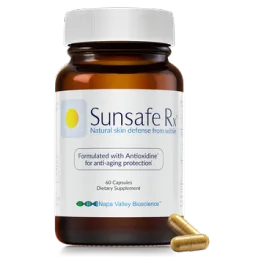
Sunsafe Rx
Natural. Healthy. Powerful. This isn’t just skincare. This is the ultimate anti-aging product.

Great Skincare Goes Beyond The Surface.
Discover Sunsafe Rx — a daily antioxidant supplement designed to support skin health from the inside out. And so much more.
Subscribe and save 10% · Free shipping · Skip or cancel anytime · 60-day money-back guarantee
