

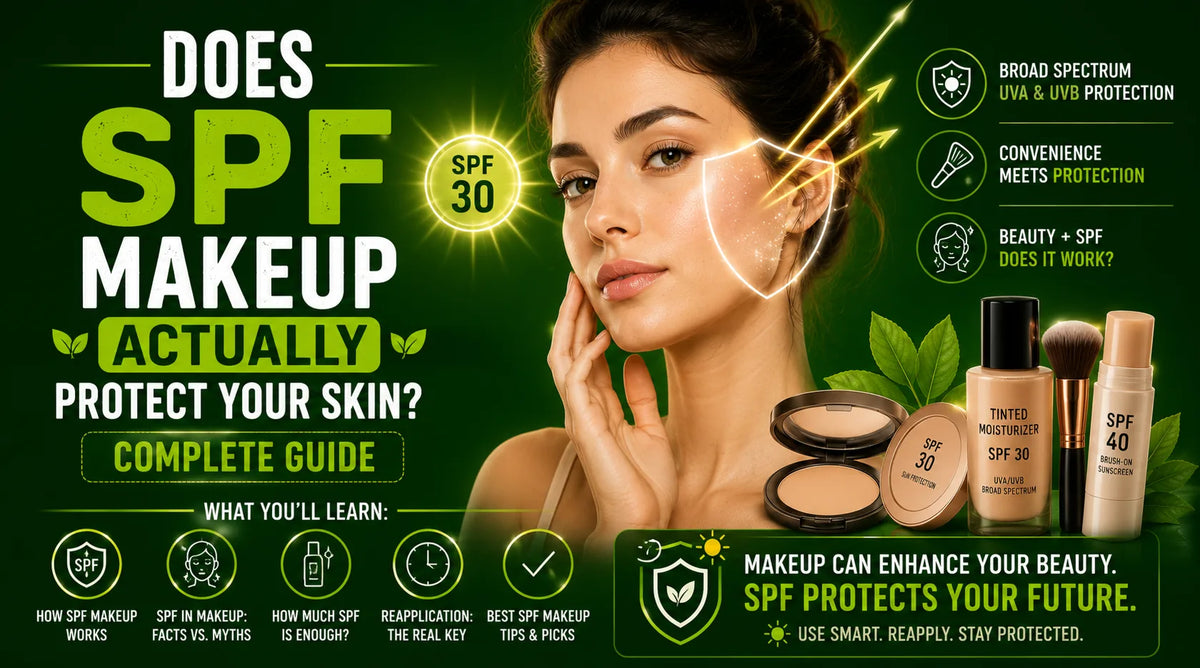
Does SPF Makeup Actually Protect Your Skin? Complete Guide
Introduction
Foundation, powder, tinted moisturizer, BB cream — SPF has become a near-default ingredient in daily makeup, and it's easy to see the appeal: one product, two jobs. But does SPF makeup actually deliver meaningful sun protection, or is it more of a marketing checkbox? The research on how SPF is tested — and how people actually apply makeup — tells a pretty clear story.
How SPF Testing Actually Works
SPF ratings are determined in a lab using a standardized application amount: 2 milligrams of product per square centimeter of skin — roughly a quarter teaspoon of product to cover the face, or about two finger-lengths' worth. That precise, generous amount is what earns a product its labeled SPF number, whether it's a dedicated sunscreen or an SPF-infused foundation.
The Real-World Application Gap
Here's the problem: almost nobody applies makeup anywhere close to that amount. Most people apply roughly one-sixth of the tested amount when using SPF-containing makeup — which means a foundation labeled SPF 30 is, in practical terms, likely delivering something closer to SPF 5 protection. That gap exists because people naturally apply makeup for coverage and finish, not for sun protection thickness, and applying a true 2mg/cm² layer of most foundations would look chalky, cakey, or simply unwearable.
What Dermatologists Say
The dermatological consensus is consistent: SPF makeup should be treated as supplementary protection, not a primary defense against UV exposure. A few specific concerns dermatologists raise:
-
Under-application is close to universal. Even a high SPF number on the label doesn't mean much if the applied layer is a fraction of the tested amount.
-
Coverage gaps are common. People rarely apply SPF makeup to areas like the eyelids, ears, hairline, or neck — spots just as exposed to UV as the rest of the face.
-
SPF isn't additive. Layering a separate SPF 30 sunscreen with an SPF 30 foundation doesn't add up to SPF 60 — the combined protection depends on which layer is applied correctly and thoroughly, not on adding the numbers together.
-
Reapplication is rarely realistic. Sunscreen should be reapplied roughly every two hours during sun exposure; almost no one reapplies a full layer of foundation that often.
When SPF Makeup Can Still Help
None of this means SPF makeup is useless — it can provide a small additional layer of protection on top of a properly applied dedicated sunscreen, and any amount of broad-spectrum coverage is generally better than none for the areas it reaches. The key distinction is sequencing and expectations: SPF makeup is a bonus layer, not a substitute for a dedicated, generously applied sunscreen underneath.
Building a Better Routine
-
Apply a broad-spectrum sunscreen, SPF 30 or higher, as its own step — generously, and given time to absorb before makeup.
-
Let SPF-containing makeup serve as a small supplemental layer on top, not your primary protection.
-
Don't skip sunscreen on the eyelids, ears, hairline, and neck — areas makeup often misses.
-
Reapply a dedicated sunscreen (not just makeup) during extended outdoor exposure.
-
Support your skin's defenses from within with a daily oral antioxidant supplement, taken consistently.
Also Read: How to treat sunburn?
Beyond the Bottle: The Inside-Out Complement
Since topical protection — makeup included — only covers the areas it's applied to and only for as long as it lasts, many dermatologists recommend pairing consistent topical sunscreen lotion with a layered approach to skin health. Research shows the ingredients in oral antioxidant supplements can support the skin's natural defenses against environmental and UV-related damage, complementing — never replacing — topical sunscreen lotion.
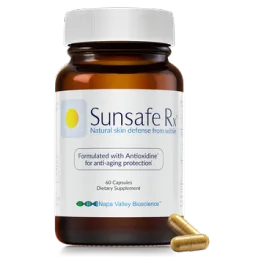
Rather than relying on a single compound, the most comprehensive oral formulas draw from several distinct nutrient families. The 13+ clinically researched ingredients in the Sunsafe Rx formula — built around the proprietary Antioxidine® complex — group into six categories:
Polyphenols
-
Polypodium leucotomos leaf extract — studied in a peer-reviewed trial published in the Journal of the American Academy of Dermatology evaluating its effect on the skin's response to UVB exposure.
-
Green tea extract (EGCG) — studied for its role in protecting cellular DNA from UV-induced damage (PubMed).
-
Grape seed extract — a source of oligomeric proanthocyanidins (OPCs), among the most potent free-radical scavengers found in nature.
Carotenes
-
Lycopene — evaluated alongside lutein in a study published in the British Journal of Dermatology, finding molecular evidence that oral supplementation helps protect skin against ultraviolet radiation.
-
Alpha-carotene, beta-carotene, and gamma-carotene — the carotene family found in deeply colored fruits and vegetables, studied for their antioxidant activity in skin tissue.
Xanthophylls
-
Astaxanthin — studied in a randomized, double-blind, placebo-controlled trial published in Nutrients, showing measurable protection against UV-induced skin deterioration.
-
Lutein and zeaxanthin — xanthophyll carotenoids that accumulate in both skin tissue and the macula of the eye, supporting skin and eye health together.
Fatty acids
-
Omega-3 fatty acids (ALA, DHA, and EPA) — studied for their role in supporting skin barrier integrity and moderating the body's inflammatory response.
Also included in the Sunsafe Rx formula alongside the Antioxidine® complex:
Vitamins
-
Vitamin C (L-ascorbic acid) — supports collagen production and helps regenerate other antioxidants in the body.
-
Vitamin E (d-alpha-tocopherol) — helps protect cell membranes from oxidative stress, working synergistically with vitamin C.
Minerals
-
Zinc — an essential mineral involved in skin repair and antioxidant enzyme function.
-
Selenium — a cofactor for glutathione peroxidase, one of the body's own antioxidant defense enzymes.
What This Guide Is Not
This article is general education about SPF testing standards and makeup application, and is not medical advice. Oral antioxidant supplements — including Sunsafe Rx — are not officially categorized as sunscreens and should never replace topical sun protection.
You might be interested in: Air Pollution and Your Skin
The Bottom Line
SPF makeup isn't a scam, but it's also not a reliable primary sunscreen — the gap between how SPF is tested (a thick, precise 2mg/cm² layer) and how makeup is actually applied means most people get only a fraction of the labeled protection. Treat SPF-containing makeup as a bonus layer on top of a properly applied, dedicated broad-spectrum sunscreen, not a replacement for one — and consider supporting your skin's defenses from within with a daily oral antioxidant supplement like Sunsafe Rx.
About Sunsafe Rx
Sunsafe Rx® is a daily oral antioxidant supplement made by Napa Valley Bioscience, built around Antioxidine®, a proprietary complex of 13+ clinically researched antioxidants from natural food and plant sources — including Polypodium leucotomos extract, EGCG, grape seed extract, lycopene, astaxanthin, lutein, and zeaxanthin. Sunsafe Rx is manufactured in the USA in an FDA-registered, NSF-certified facility, recommended by dermatologists for skin support since 2010.
Disclaimer
We cannot describe Sunsafe Rx as a sunscreen or SPF, or make any disease claims. Sunsafe Rx should be used as an internal skincare solution and always used in combination with topical mineral sunscreen lotion for external protection during sun exposure.
Frequently Asked Questions
Q1. Does SPF makeup actually work?
Ans: It provides some protection, but almost always far less than its labeled SPF suggests, because most people apply far less product than the amount used in official SPF testing.
Q2. Is SPF in foundation enough sun protection on its own?
Ans: No. Dermatologists generally recommend treating SPF makeup as a supplementary layer on top of a properly applied, dedicated broad-spectrum sunscreen, not a replacement for one.
Q3. Why doesn't SPF makeup give full protection?
Ans: SPF ratings are tested using a precise, generous application of 2 mg of product per square centimeter of skin. Most people apply roughly a sixth of that amount with makeup, which significantly reduces the real-world SPF delivered.
Q4. Can I add sunscreen and SPF makeup together for higher protection?
Ans: No, SPF isn't additive. Wearing an SPF 30 sunscreen under an SPF 30 foundation doesn't equal SPF 60 protection.
Q5. Can oral antioxidant supplements make up for gaps in makeup SPF coverage?
Ans: Supplements do not replace topical sun protection. Research shows the ingredients in oral antioxidant supplements support the skin's natural defenses against environmental damage, but they should always be used alongside, never instead of, a properly applied mineral sunscreen.
- Published:
- By:
- Sunsafe Rx Team
Sunsafe Rx
Natural. Healthy. Powerful. This isn’t just skincare. This is the ultimate anti-aging product.

Great Skincare Goes Beyond The Surface.
Discover Sunsafe Rx — a daily antioxidant supplement designed to support skin health from the inside out. And so much more.
Subscribe and save 10% · Free shipping · Skip or cancel anytime · 60-day money-back guarantee
