


Polypodium leucotomos extract has a long track record of peer-reviewed clinical research behind it — making it one of the most studied natural antioxidant ingredients in dermatology. This guide covers the complete science: what it is, how it works, what the clinical trials actually show, and how single-ingredient polypodium products compare to multi-ingredient formulas.
Most people have never heard of polypodium leucotomos. But dermatologists have been recommending it for decades — and the clinical literature behind it is more robust than almost any other ingredient in the oral skincare category.
If you're researching antioxidants for skin health, trying to understand how sunlight and ultraviolet radiation affect the skin, or comparing oral supplement options, polypodium leucotomos is the ingredient you need to understand first. This guide covers everything: the science, the clinical trials, the dosing, and what makes a supplement worth taking.
What Is Polypodium Leucotomos?
Polypodium leucotomos (PL) is a tropical fern native to Central and South America, where it has been used in traditional medicine for centuries. The extract derived from its leaves is concentrated in polyphenolic compounds — primarily caffeic acid, ferulic acid, and a range of other phenols — that function as powerful antioxidants in human tissue.
In dermatology research, PL extract (also called PLE) is studied primarily for its ability to protect skin cells from oxidative stress triggered by environmental exposure, including UV radiation. It does not work like a topical sunscreen. It doesn't reflect or absorb UV rays on the skin's surface. Instead, it works systemically — taken orally, it circulates through the body and supports the skin's own antioxidant and cellular defense mechanisms from the inside. This is the core principle behind oral sunscreen supplements — a category that has grown significantly in popularity over the past decade.
This distinction matters for regulatory and scientific reasons. The FDA defines sunscreens as over-the-counter topical drug products containing specific chemicals that reflect or absorb UV rays. Oral polypodium leucotomos supplements are dietary supplements — not sunscreens — and should always be used alongside topical SPF during sun exposure, not as a replacement for it. For a side-by-side breakdown of what each approach does differently, see our oral sunscreen vs. topical sunscreen guide.
A commercial name often associated with PL extract is Fernblock® — the trademarked standardized extract developed and marketed primarily by the Spanish company Cantabria Labs, which is also the manufacturer of the Heliocare supplement line.
How Polypodium Leucotomos Works: The Mechanisms
Understanding why polypodium leucotomos extract has attracted sustained scientific interest requires a brief look at how UV radiation damages skin at the cellular level.
When UV rays — particularly UVA and UVB — penetrate the skin, they trigger the formation of reactive oxygen species (ROS), also called free radicals. These unstable molecules damage lipid membranes, proteins, and DNA in skin cells. Over time, accumulated free-radical damage contributes to collagen breakdown, immune suppression in skin tissue, the appearance of premature aging, and a range of photosensitive skin conditions.
Polypodium leucotomos extract works through several interconnected mechanisms:
Free-radical scavenging. The polyphenolic compounds in PL extract are potent antioxidants that neutralize ROS before they can cause cellular damage. Alonso-Lebrero et al. (2003) documented PL extract's ability to scavenge hydroxyl radicals and superoxide anions — two of the most damaging reactive species generated by UV exposure.
DNA protection. UV radiation causes specific types of DNA damage in skin cells, particularly cyclobutane pyrimidine dimers (CPDs) — structural distortions that, if unrepaired, contribute to mutations. Philips et al. (2003), published in Archives of Dermatological Research, demonstrated significant reductions in UV-induced DNA damage markers — including inhibition of MMP-1 and elastin degradation — in fibroblasts and keratinocytes treated with PL extract.
Immune modulation. UV radiation suppresses the skin's local immune response — a phenomenon called UV-induced immunosuppression — which can allow damaged and mutated cells to escape normal immune surveillance. Middelkamp-Hup et al. (2004), published in the Journal of the American Academy of Dermatology (JAAD), demonstrated that oral PL extract helps preserve immune cell function in UV-exposed skin, specifically by protecting Langerhans cells from UV-induced depletion.
Anti-inflammatory activity. PL extract inhibits the production of pro-inflammatory cytokines in UV-exposed skin tissue, reducing the erythema (redness) and inflammatory cascade that follows acute sun exposure.
Matrix metalloproteinase (MMP) inhibition. MMP enzymes are responsible for breaking down collagen and elastin — the structural proteins that keep skin firm and youthful. González, Gilaberte, and Philips (2010), in a comprehensive mechanistic review published in Photochemical & Photobiological Sciences, documented PL extract's ability to inhibit UV-induced MMP expression, helping protect the skin's structural integrity and slow visible photoaging.
You might be interested in: Sunburn Relief
Clinical Research: What the Trials Actually Show
The clinical evidence base for polypodium leucotomos extract is substantial — which is why dermatologists have been recommending it since the late 1990s. Here is a survey of the key published trials.
UV-Induced Erythema Reduction
The most direct measure of skin photoprotection is erythema — redness (for instance: sunburn) caused by UV exposure. Multiple randomized controlled trials have measured PL extract's effect on minimal erythema dose (MED), which is the threshold UV dose at which visible redness appears.
Middelkamp-Hup et al. (2004), published in the Journal of the American Academy of Dermatology, enrolled 21 volunteers in a double-blind, placebo-controlled crossover trial. Participants receiving oral PL extract showed a statistically significant increase in MED — meaning their skin required more UV exposure to produce the same degree of redness compared to placebo. The effect was observed with 480 mg of PL extract taken 60 minutes before UV exposure.
Caccialanza et al. (2011), in the Giornale Italiano di Dermatologia e Venereologia, confirmed these findings in a separate trial with 57 patients, documenting significant photoprotective benefit in PL-supplemented participants versus controls.
It is important to note that these studies measure relative photoprotection at the cellular level — not SPF equivalence. Unlike topical sunscreen, PL extract works systemically from the inside — and as an oral supplement, it eliminates the common drawbacks of topical sunscreen lotion such as missed areas, reapplication failure, and skin absorption concerns, while providing antioxidant protection throughout the entire body. It does not replicate the UV-blocking mechanism of topical sunscreen and when needed should always be used alongside sunscreen lotion — not as a replacement for it.
Polymorphous Light Eruption (PMLE)
Polymorphous light eruption is the most common photosensitive skin condition, affecting an estimated 10–20% of the U.S. population. It presents as an itchy rash, papules, or plaques in response to sun or UV exposure, typically appearing within hours of exposure and resolving over days.
The clinical evidence for PL extract in PMLE is among the most compelling in the photosensitivity literature.
Middelkamp-Hup et al. (2004), in a landmark randomized controlled trial published in JAAD, showed that oral PL extract significantly reduced both the severity and incidence of PMLE reactions compared to placebo in a group of patients with documented PMLE. This was a double-blind, randomized, placebo-controlled trial — the gold standard study design.
Tanew et al. (2012), published in Photodermatology, Photoimmunology & Photomedicine, replicated these findings in an independent trial demonstrating that oral PL extract reduced PMLE symptom severity scores and lesion area compared to placebo. The authors concluded that PL supplementation represents a clinically relevant therapeutic option for patients with PMLE.
Caccialanza et al. (2007), in the Giornale Italiano di Dermatologia e Venereologia, conducted an open-label trial in 25 PMLE patients and reported significant reductions in pruritus (itching) and eruption severity following oral PL supplementation over a sun-exposure season.
Photoaging and Skin Aging Markers
Beyond acute photoprotection, PL extract has been studied for its effects on the markers of chronic photoaging — collagen integrity, skin elasticity, and the appearance of fine lines, wrinkles, and pigmentation. Research shows the ingredients in PL-based formulas are among the most effective tools in preventing and reversing photoaging when taken consistently over time.
Philips et al. (2003), in Archives of Dermatological Research, documented that PL extract significantly inhibited MMP-1 expression and lipid peroxidation in UV-exposed skin fibroblasts and keratinocytes — providing direct mechanistic evidence for PL's anti-photoaging properties at the cellular level.
González, Gilaberte, and Philips (2010) further confirmed that PL's inhibition of UV-induced MMP activation represents a clinically significant pathway for preventing collagen degradation, premature wrinkling, and loss of skin elasticity over time.
Solar Urticaria and Photodermatoses
Beyond PMLE, published studies have documented PL extract's utility in solar urticaria, chronic actinic dermatitis, and other photodermatoses — conditions where skin immune and inflammatory responses to light exposure cause significant quality-of-life impairment.
Caccialanza et al. (2011) specifically reported significant reduction in solar urticaria and related photodermatosis symptoms with PL supplementation in a 57-patient cohort — the largest such open-label study published at the time.
Vitiligo
One area of research that has attracted growing interest is the use of PL extract as an adjunct in vitiligo treatment. Middelkamp-Hup et al. (2007), published in the Journal of the European Academy of Dermatology and Venereology, conducted a randomized controlled trial in which patients with vitiligo receiving narrowband UVB phototherapy were randomized to oral PL extract or placebo. The PL group showed a statistically significant trend toward greater repigmentation in treated areas — particularly in head and neck lesions — suggesting that PL's antioxidant and immune-modulating activity enhanced the response to phototherapy.
Polypodium Leucotomos: Single-Ingredient vs. Multi-Ingredient Formulas
The clinical research on polypodium leucotomos is impressive. But PL extract is only one ingredient — and the question researchers and formulators have increasingly asked is whether combining PL with other clinically studied antioxidants produces superior results compared to PL alone.
The logic is rooted in antioxidant synergy. UV-induced oxidative stress triggers multiple simultaneous pathways of cellular damage. No single antioxidant compound can neutralize all reactive species or address all mechanisms or targets of skin damage. A formula combining ingredients that work through complementary mechanisms — free-radical scavenging, DNA protection, anti-inflammatory activity, collagen defense, and immune support — provides broader, more comprehensive protection than any single ingredient can achieve.
Several other antioxidant ingredients have substantial independent clinical evidence for skin photoprotection and defense:
Astaxanthin — a marine carotenoid — has been shown in multiple trials to reduce UV-induced oxidative markers and improve skin moisture, elasticity, and texture. Tominaga et al. (2012), published in Acta Biochimica Polonica, documented significant skin improvements with combined oral and topical astaxanthin supplementation over 8 weeks in 30 healthy female subjects. A follow-up study by Tominaga et al. (2017) in the Journal of Clinical Biochemistry and Nutrition confirmed astaxanthin's protective effects against skin deterioration at the cellular level. For a detailed review of the clinical evidence, see our astaxanthin supplements for skin and UV protection guide.
Lycopene — the red carotenoid abundant in tomatoes — has been studied specifically for UV erythema reduction. Stahl et al. (2001), in the Journal of Nutrition, demonstrated up to 40% reduction in UV-induced erythema in participants consuming lycopene-rich tomato paste versus controls over 10 weeks. This represents a substantial photoprotective effect from a single food-derived compound.
EGCG (green tea extract) — Katiyar et al. (2000), in Clinical Cancer Research, demonstrated that green tea polyphenol treatment to human skin significantly reduced UV-induced cyclobutane pyrimidine dimer formation and erythema — confirming EGCG's DNA-protective and anti-inflammatory activity against UV exposure.
Grape Seed Extract (OPC) — Mantena and Katiyar (2006), in Free Radical Biology and Medicine, documented significant collagen protection and free-radical scavenging activity from grape seed extract proanthocyanidins, with specific inhibitory effects on UV-induced MAPK and NF-κB signaling — pathways central to UV-driven inflammation and photoaging.
Lutein and Zeaxanthin — Beyond their well-documented role in macular degeneration prevention, these carotenoids accumulate in skin tissue and provide measurable protection against UV-induced oxidative damage. Palombo et al. (2007), in Skin Pharmacology and Physiology, documented significant improvements in skin elasticity, hydration, and lipid peroxidation markers with combined lutein and zeaxanthin supplementation in a double-blind, placebo-controlled trial.
Omega-3 fatty acids (EPA and DHA) — Published research demonstrates that omega-3 supplementation modulates UV-induced inflammatory signaling, reduces pro-inflammatory eicosanoid production in UV-irradiated skin, and supports the skin's barrier and cellular repair functions. The complete clinical evidence for these and all other Antioxidine® complex ingredients is reviewed on the Sunsafe Rx formula research page.
Also included in the Sunsafe Rx formula — alongside the Antioxidine® complex — are five foundational vitamins and minerals, each with their own body of clinical research supporting skin antioxidant capacity, collagen integrity, cellular repair, and UV defense:
Vitamin A (Mixed Carotenes — Beta-Carotene and Alpha-Carotene) — Beta-carotene is a provitamin A carotenoid with well-documented antioxidant activity in skin tissue. Heinrich et al. (2002), published in the Journal of Nutrition, demonstrated in a placebo-controlled parallel study that supplementation with beta-carotene or a mixed carotenoid blend (combining beta-carotene, lutein, and lycopene) significantly reduced UV-induced erythema intensity after 12 weeks compared to baseline. The protective effect was statistically significant in both carotenoid groups, with protection building progressively with consistent supplementation. Beyond its antioxidant role, Vitamin A plays a foundational role in skin cell turnover, epithelial tissue integrity, and cellular repair — functions that support healthy skin structure from the inside out.
Vitamin C (Ascorbic Acid) — Vitamin C is the body's primary water-soluble antioxidant and a critical free-radical scavenger in aqueous cellular environments. It also regenerates oxidized Vitamin E — the two vitamins work synergistically to neutralize UV-induced oxidative damage across different cellular compartments. Eberlein-König, Placzek, and Przybilla (1998), published in the Journal of the American Academy of Dermatology, demonstrated in a double-blind, placebo-controlled trial that combined supplementation with systemic ascorbic acid (Vitamin C) and d-alpha-tocopherol (Vitamin E) produced a statistically significant increase in the minimal erythema dose (MED) compared to placebo — confirming that oral vitamins C and E together provide measurable photoprotective benefit. Vitamin C is also the essential cofactor for collagen biosynthesis, required for the hydroxylation of proline and lysine residues in collagen fibers — directly linking adequate vitamin C intake to skin structural integrity, wound healing capacity, and resistance to premature collagen degradation.
Vitamin E (Tocopherol) — Vitamin E is the primary lipid-soluble antioxidant in cell membranes, positioning it uniquely to protect the fatty acid components of skin cell membranes from UV-induced lipid peroxidation — a major mechanism of photoaging and collagen breakdown. Its protective effect is amplified significantly when combined with Vitamin C, which recycles oxidized Vitamin E back to its active form. A comprehensive multi-antioxidant randomized clinical trial by Greul et al. (2002), published in Skin Pharmacology and Applied Skin Physiology, demonstrated that a combination of Vitamin E, Vitamin C, carotenoids, selenium, and proanthocyanidins produced statistically significant UV photoprotection in healthy female volunteers in a double-blind, placebo-controlled design — confirming Vitamin E's measurable contribution to the overall antioxidant defense network when combined with complementary nutrients.
Zinc — Zinc is an essential trace mineral with two distinct antioxidant mechanisms in skin tissue. First, zinc ions compete with redox-active metals such as iron and copper at binding sites in cell membranes and proteins — displacing metals that would otherwise catalyze free-radical chain reactions through Fenton-type chemistry. Second, zinc induces the synthesis of metallothioneins — sulfhydryl-rich proteins that directly scavenge reactive oxygen species generated by UV exposure. Pinnell (2003), in a comprehensive evidence review published in Dermatologic Surgery, documented the case for zinc as an important skin antioxidant, confirming both mechanisms and its role in protecting against UV-induced oxidative damage and maintaining immune cell function in skin tissue. Zinc also plays a well-established role in DNA repair enzyme function and collagen synthesis — making it a multifunctional protective mineral for skin health from the inside out.
Selenium — Selenium is an essential trace mineral and the key cofactor for glutathione peroxidase (GPx) — one of the body's most critical endogenous antioxidant enzymes. GPx neutralizes hydrogen peroxide and lipid hydroperoxides generated by UV radiation in skin tissue, directly reducing the oxidative burden on skin cells before damage can accumulate. Leccia et al. (1993), published in Photochemistry and Photobiology, demonstrated that selenium supplementation significantly protected human skin fibroblasts against UVA-induced damage by upregulating GPx activity — confirming selenium's role as a direct regulator of the skin's antioxidant enzyme defense system. The multi-antioxidant clinical trial by Greul et al. (2002, PMID 12239424) further confirmed that selenium's contribution to photoprotection is measurable in clinical settings when combined with complementary antioxidant nutrients including vitamins C and E, carotenoids, and proanthocyanidins.
The clinical case for multi-ingredient formulas is not merely theoretical. It reflects how antioxidant biology actually works: different compounds neutralize different reactive species, protect different cellular structures, and act at different stages of the UV-damage cascade. A formula that combines polypodium leucotomos with astaxanthin, lycopene, EGCG, grape seed extract, lutein, zeaxanthin, omega-3s, and supporting vitamins and minerals addresses the full spectrum in a way that PL alone cannot.
Polypodium leucotomos extract is the primary active ingredient in Heliocare — the most widely recognized PL supplement brand, built around Fernblock®. While Heliocare's single-ingredient formula has strong research behind it, PL extract is also a core ingredient in multi-ingredient formulas. And the premiere multi-antioxidant formula is the Antioxidine® complex in Sunsafe Rx, which combines PL extract with astaxanthin, lycopene, EGCG, grape seed extract, lutein, zeaxanthin, omega-3 fatty acids, and specific supportive vitamins and minerals — addressing a broader range of UV-damage pathways simultaneously. You can review the full benefits of Sunsafe Rx on the benefits page on the website.
For a detailed ingredient-by-ingredient and dose-by-dose comparison of how the two leading formulas differ, see the dedicated Fernblock vs. Antioxidine comparison.
How to Choose a Polypodium Leucotomos Supplement
If you're evaluating any oral antioxidant supplement that includes polypodium leucotomos, here are the criteria that matter most:
Dose. Most clinical trials used between 240 mg and 480 mg of PL extract per dose, taken 60 minutes before sun exposure or daily for chronic photoprotection. You can verify exactly what is in each serving of Sunsafe Rx on the supplement facts page. Products using proprietary blends without disclosed individual ingredient amounts cannot be evaluated for clinical relevance.
Standardization. PL extract is most meaningful when standardized to a consistent concentration of active polyphenols. Look for products that specify the standardization level or use a recognized trademarked extract.
Additional ingredients. As the research above shows, PL works better as part of a comprehensive multi-ingredient antioxidant formula. Look for products that include supporting carotenoids (lycopene, astaxanthin, lutein, zeaxanthin), polyphenols (EGCG, grape seed OPC), omega-3 fatty acids, and specific vitamins and minerals like Vitamins A, C, and E, and zinc and selenium.
Manufacturing standards. Look for USA manufacturing, an FDA-registered facility, and NSF certification. These three credentials together represent the highest standard of supplement quality verification available.
Ingredient sources. The best oral skincare supplements derive their ingredients from natural food and plant sources — not synthetic analogs. Check that the supplement discloses ingredient origins.
Dosage and Safety
Polypodium leucotomos extract has an excellent safety profile across the clinical literature. No significant adverse effects have been reported in human trials using doses of up to 480 mg per day. It is generally well-tolerated, with no documented drug interactions in the published research.
Standard clinical dosing used in trials ranges from 240 mg to 480 mg per day, typically divided across one or two doses. For acute photoprotection, most studies administered PL 60 minutes before UV exposure. For guidance on when to use Sunsafe Rx and how to build it into your daily routine, including seasonal and year-round approaches, see our dedicated usage guide.
As with any dietary supplement, individuals who are pregnant, nursing, or taking prescription medications should consult a physician before use. PL extract is not intended to replace topical sun protection. All clinical trials that have studied its efficacy have done so alongside — not instead of — standard photoprotection practices.
About Sunsafe Rx
Sunsafe Rx is the flagship product of Napa Valley Bioscience — a California-based nutraceutical company dedicated to developing research-backed nutritional supplements. Sunsafe Rx is a daily oral supplement formulated with 13+ clinically-researched antioxidants from natural food and plant sources — the proprietary Antioxidine® complex — manufactured in the USA in an FDA-registered, NSF-certified facility. One capsule per day supports skin and eye health with comprehensive, natural antioxidant protection from the inside out.
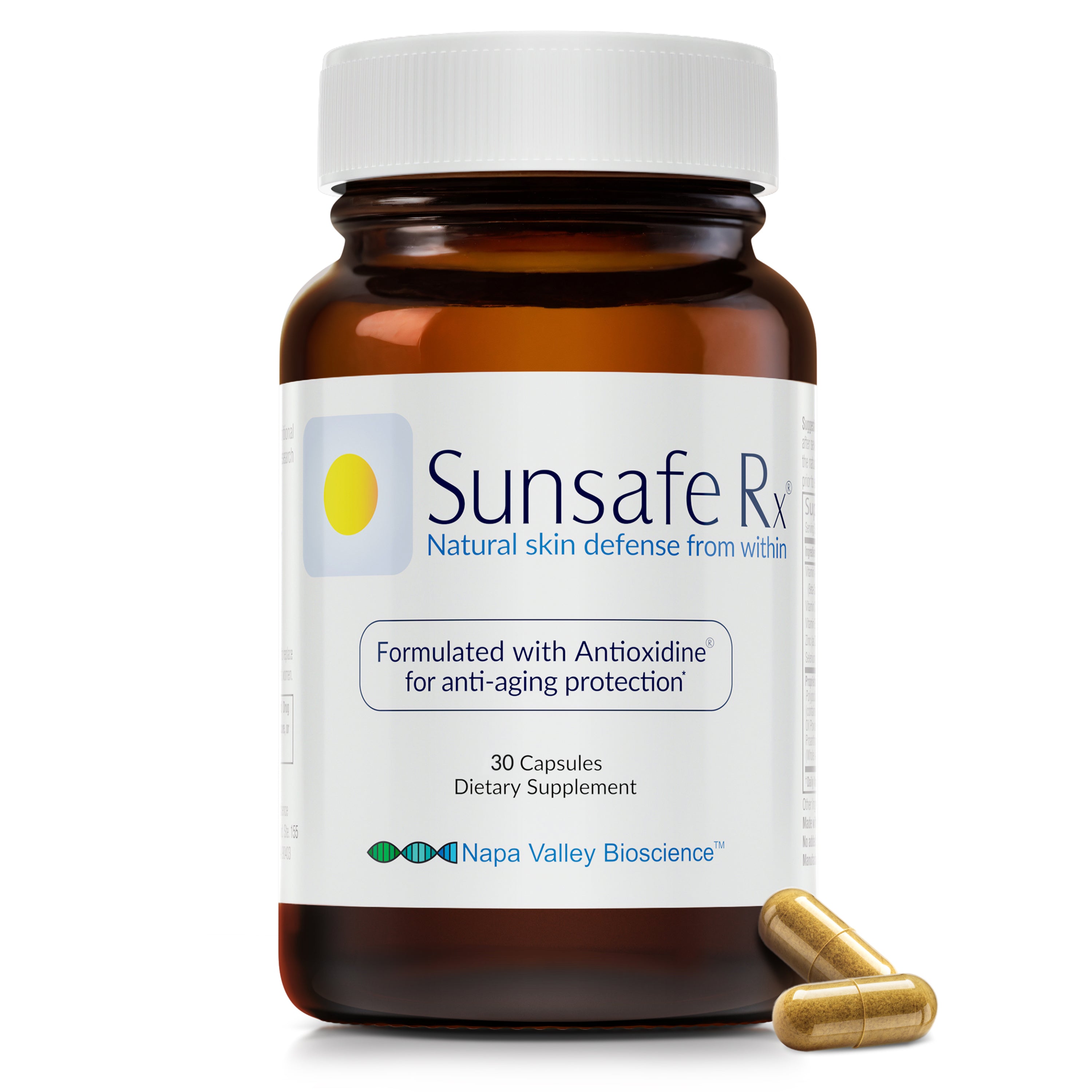
Featured Product
Sunsafe Rx: Natural Anti-Aging Protection
Sunsafe Rx is made with ingredients clinically proven to protect your skin and eyes. One capsule per day provides natural, anti-aging protection and improves the appearance of your skin. Empower your skin from within—while supporting the health of your whole body. This is next-generation skincare. This is Sunsafe Rx.
Learn more about the ingredients and the full body of clinical research at https://sunsaferx.com/pages/antioxidine-formula-research.
When to See a Doctor
If you experience significant skin reactions to sun exposure — including a persistent rash, blistering, swelling, or reactions that occur indoors under artificial light — these may be signs of a photosensitive skin condition that warrants evaluation by a dermatologist. Oral antioxidant supplements can be part of a broader management strategy for photosensitive conditions, but diagnosis and treatment planning should always involve a qualified healthcare provider.
You might be interested in: Actinic Keratosis
Conclusion
Polypodium leucotomos extract is one of the most rigorously studied natural antioxidant ingredients in dermatology — with 30+ years of peer-reviewed clinical evidence documenting its effects on UV-induced erythema, PMLE, photoaging, DNA damage, and immune protection in skin tissue. The research is real, replicable, and clinically meaningful.
The evidence also shows that PL extract performs better as part of a comprehensive multi-ingredient formula than as a standalone supplement — because UV-induced oxidative damage involves multiple simultaneous cellular pathways that no single antioxidant can fully address. Products that combine PL with astaxanthin, lycopene, EGCG, grape seed OPC, lutein, zeaxanthin, omega-3s, and supporting vitamins and minerals cover the full antioxidant spectrum that the science points to.
For consumers looking for the most complete internal skincare solution, the choice between a single-ingredient product and a comprehensive 13+ ingredient formula — manufactured to the highest independent quality standards — is straightforward.
We cannot describe Sunsafe Rx as a sunscreen or SPF, or make any disease claims. Sunsafe Rx should be used as an internal skincare solution and when needed used in combination with topical sunscreen lotion for external protection during sun exposure.
Frequently Asked Questions
Q1. What is polypodium leucotomos extract?
Polypodium leucotomos (PL) extract is a standardized antioxidant extract derived from a tropical fern. It is studied in dermatology for its ability to support the skin's natural defenses against oxidative stress from UV exposure and environmental damage. It is taken as a dietary supplement — not a sunscreen — and should always be used alongside topical SPF.
Q2. Does polypodium leucotomos actually work?
Yes — there is substantial peer-reviewed clinical evidence, including randomized controlled trials published in the Journal of the American Academy of Dermatology (JAAD), documenting statistically significant reductions in UV-induced erythema, PMLE severity, and DNA damage markers with oral PL supplementation.
Q3. Can polypodium leucotomos replace sunscreen?
PL extract is a dietary supplement that supports the skin's internal antioxidant defenses. It does not block or reflect UV rays and should not be used as a replacement for topical sunscreen. All clinical trials on PL have studied it as a complement to — not a replacement for — external sun protection. We cannot describe any oral supplement as a sunscreen or SPF.
Q4. How long does it take for polypodium leucotomos supplements to work?
Clinical trials have used both acute dosing (single dose 60 minutes before UV exposure) and chronic daily supplementation over weeks and months. Anti-aging and photoaging benefits are typically observed after several weeks of consistent daily use. For photoprotective effects, daily supplementation year-round — not just on sunny days — is the standard approach used in clinical research.
Q5. Is polypodium leucotomos safe?
Clinical trials have consistently found PL extract to be well-tolerated with no significant adverse effects at doses up to 480 mg/day. As with any supplement, consult a healthcare provider before use if you are pregnant, nursing, or taking prescription medications.
Q6. What dose of polypodium leucotomos is effective?
Most clinical trials demonstrating significant effects used between 240 mg and 480 mg of PL extract per dose. When evaluating supplements, verify the number of capsules needed per dose on the supplement facts label.
Written by Sunsafe Rx Team |
