


Important: Sun protection supplements (sometimes called "oral sunscreens") are dietary supplements and are not classified as sunscreens or as drugs under FDA regulations. They should always be used together with topical broad-spectrum SPF and other sun protection measures. The research cited in this article refers to the individual ingredients in these products, not the products themselves.
Introduction
The sun protection conversation has evolved. For decades it began and ended with topical SPF. In 2026, dermatologists and skin scientists increasingly view sun protection as a layered system — topical sunscreen on the outside, antioxidant supplementation on the inside, and protective clothing, shade, and timing wrapped around both.
Inside-out protection isn't theoretical. It's backed by a substantial body of published clinical research showing that specific plant- and food-derived antioxidants help reduce UV-induced erythema, DNA damage, and photoaging when taken consistently. The category — known as oral sunscreen — has matured to the point that the question is no longer "does this work?" but "which formula is worth taking?"
This 2026 guide breaks down what the best sun protection supplements actually contain, what the research says about each ingredient, and how to evaluate any product on the shelf.
What Counts as a "Sun Protection Supplement"?
A sun protection supplement is a daily oral capsule, tablet, or softgel containing antioxidant ingredients shown in clinical research to help the skin defend itself against UV-induced damage. The mechanism isn't to block UV rays — that's the job of topical SPF — but to neutralize the cascade of cellular damage UV triggers once it penetrates the skin:
-
Free radicals from UV exposure
-
DNA strand breaks in skin cells
-
Inflammation and erythema
-
Collagen and elastin degradation
-
Excess melanin production and uneven pigmentation
The right antioxidants, delivered systemically through the bloodstream, accumulate in skin tissue and quietly mitigate this damage 24 hours a day — including the cumulative sun exposure that is continuously adding up any time skin is exposed to sunlight.
How We Evaluated the Best Sun Protection Supplements for 2026
Throughout this guide, we use four objective criteria to assess every ingredient and product:
-
Clinical evidence — Is there peer-reviewed, human research supporting the ingredient's photoprotective effects?
-
Ingredient breadth — Does the formula address multiple UV damage pathways, or just one?
-
Source quality — Are ingredients derived from natural foods and plants at standardized, efficacious doses?
-
Manufacturing standards — Is the product made in an FDA-registered facility, third-party tested, and produced with verifiable quality controls?
These criteria are exactly what the team at Sunsafe Rx describes in their published Antioxidine® formula research and explains step-by-step in how Sunsafe Rx works. Use these same standards on any product you consider.
The 6 Classes of Compounds in the Best Sun Protection Supplements
The best sun protection supplements in 2026 are built around six distinct classes of compounds, each addressing different aspects of UV-induced damage. A complete formula should include all six.
Class 1: Carotenes
Carotenes — including lycopene, alpha-carotene, and beta-carotene — are vivid orange-red pigments found in tomatoes, carrots, and other brightly colored plants. They accumulate in skin tissue after supplementation and act as frontline free-radical scavengers against UV-generated oxidative stress.
Lycopene is the most studied carotenoid for photoprotection: dietary lycopene reduced UV-induced erythema by up to 40% in a study published in the British Journal of Dermatology. Alpha-carotene and beta-carotene serve as precursors to vitamin A (retinol), which regulates skin cell differentiation and turnover — meaning pigmented and damaged cells are cleared from the surface more rapidly.
Carotenes also contribute their own warm orange-red pigmentation as they accumulate in skin tissue, visually smoothing and evening the complexion alongside their protective biochemical effects.
Class 2: Xanthophylls
Xanthophylls — astaxanthin, lutein, and zeaxanthin — are the oxygen-containing members of the carotenoid family. They are among the most potent antioxidants in nature and concentrate preferentially in skin and eye tissue, offering a unique dual benefit: protecting both simultaneously.
Astaxanthin, derived from the microalgae Haematococcus pluvialis, is one of the most potent natural antioxidants known. A 2017 randomized study in Nutrients reported significant improvements in skin moisture, elasticity, and UV resilience at 6–12 mg/day over 16 weeks.
Lutein and zeaxanthin filter harmful blue and UV wavelengths before they can trigger damage in skin and eye tissue. A trial published in the American Journal of Clinical Nutrition demonstrated that supplementation increased skin carotenoid status and reduced UV-induced redness, with additional benefits for eye health.
Class 3: Polyphenols
Polyphenols are plant-derived compounds with multiple phenol rings that function as among the most powerful antioxidants in nature. Three polyphenols have particularly strong clinical evidence for sun protection.
Polypodium Leucotomos Extract
The most extensively studied ingredient in oral photoprotection. Polypodium leucotomos extract is a tropical fern derivative used in dermatology since the 1970s. Multiple randomized controlled trials have shown it reduces UV-induced erythema, decreases DNA damage in skin cells, and supports management of photosensitive conditions. Key trials: Middelkamp-Hup et al., JAAD 2004; Caccialanza et al., Photodermatol Photoimmunol Photomed 2007.
Featured Product
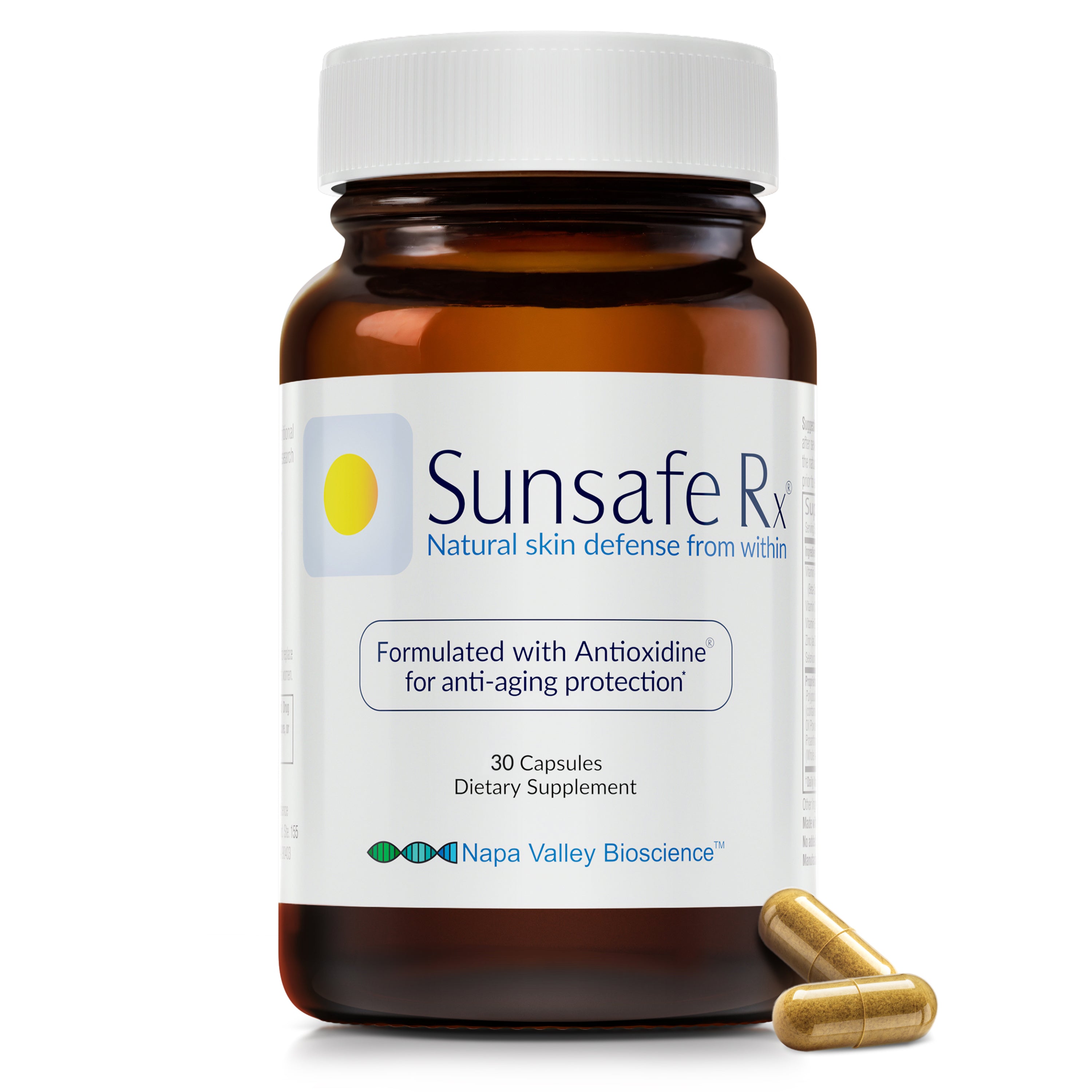
Sunsafe Rx: Natural Anti-Aging Protection
Sunsafe Rx is made with ingredients clinically proven to protect your skin and eyes. One capsule per day provides natural, anti-aging protection and improves the appearance of your skin. Empower your skin from within—while supporting the health of your whole body. This is next-generation skincare. This is Sunsafe Rx.
Green Tea Extract (EGCG)
The polyphenol epigallocatechin-3-gallate (EGCG) is one of the most studied compounds in photoprotection. Green tea extract reduces UV-induced DNA damage, lowers inflammatory markers, and supports skin cell recovery after exposure. It is also a tyrosinase inhibitor, directly slowing the melanin-production pathway. Key reference: Katiyar et al., Nutrition and Cancer 2004.
Grape Seed Extract (OPCs)
Rich in oligomeric proanthocyanidins — among the most potent natural free-radical scavengers known. Grape seed extract supports skin resilience, collagen integrity, and inflammation control. Foundational research: Mantena & Katiyar, Free Radical Biology and Medicine 2006.
Class 4: Omegas (DHA and EPA)
The long-chain omega-3 fatty acids — EPA and DHA — have decades of literature supporting their anti-inflammatory effects and role in skin barrier health. A randomized clinical trial published in Carcinogenesis found that omega-3 supplementation significantly reduced UV-induced immunosuppression in human skin — an early and meaningful step in the chain of UV-related damage. A 2018 trial in Lipids in Health and Disease showed measurable improvement in skin barrier and inflammatory markers.
Because chronic low-grade inflammation amplifies essentially every form of UV damage, an effective sun protection supplement should include meaningful omega-3 content from DHA + EPA — not just the short-chain ALA found in plant sources. Fish oil and algae oil are the preferred sources.
Class 5: Vitamins A, C, and E
The antioxidant trio at the core of any serious skin nutrition stack. Together, these three vitamins form a regenerating antioxidant network — each protects and recycles the others, making the combination more effective than any single vitamin alone.
Vitamin A (including the dietary precursors beta-carotene and mixed carotenes) is essential for skin cell differentiation, turnover, and photoprotection. A review in Dermato-Endocrinology summarizes the role of dietary vitamin A and carotenoids in skin defense.
Vitamin C is a water-soluble antioxidant that quenches reactive oxygen species, regenerates oxidized vitamin E, and supports collagen synthesis. A foundational review in the American Journal of Clinical Nutrition details vitamin C's contribution to photoprotection and skin integrity.
Vitamin E (alpha-tocopherol) is the principal lipid-soluble antioxidant in skin membranes. Combined vitamin C and E supplementation raises the threshold for UV-induced erythema — meaning skin tolerates more sun before reddening.
Class 6: Minerals (Zinc and Selenium)
Two trace minerals that punch well above their weight in skin biology and are easy to overlook in a supplement formula.
Zinc is required for hundreds of enzymes involved in skin repair, immune function, and antioxidant defense. Suboptimal zinc status is associated with slow wound healing and poor recovery from inflammatory skin events. A clinical review in Dermatology Research and Practice covers zinc's photoprotective and reparative roles.
Selenium is the central cofactor for glutathione peroxidase, one of the body's most important antioxidant enzymes. A study in the Journal of Investigative Dermatology demonstrated that selenium supplementation protected human skin cells from UV-induced apoptosis and DNA damage.
Both should be present at safe, food-level doses — not at megadose amounts.
Looking at the Ingredient Label
When you evaluate any sun protection supplement, scrutinize the supplement facts panel the same way you'd scrutinize a multivitamin or a fish oil. Look for:
-
Standardized extracts. "Polypodium leucotomos extract" is not the same thing as a vague botanical blend. Standardized extracts are the ones used in clinical trials.
-
Clinically relevant doses. An ingredient at a sub-therapeutic dose is essentially decorative.
-
All 6 compound classes present. Single-ingredient products can only target one or two of the major UV damage pathways. A complete formula addresses all six classes.
-
Plant- and food-derived sourcing. The most effective ingredients are derived from ferns, marine algae, fruits, vegetables, and plants — the same antioxidants found in a healthy diet.
-
Transparent dosing. Be cautious of proprietary blends that hide individual ingredient amounts.
Also worth keeping in mind: modern produce is, on average, less nutrient-dense than it was decades ago, so even a thoughtful diet may not be enough. The trend of declining nutrient levels in produce is one reason daily standardized supplementation has moved from "nice to have" to "smart insurance" for serious skin health.
You might be interested in: What is Polymorphous Light Eruption(PMLE)?
How to Choose a Manufacturer You Can Trust
The single biggest variable in supplement quality is manufacturing. Look for:
-
Made in the USA in an FDA-registered facility
-
NSF certification or equivalent independent third-party verification
-
Batch-level testing for potency, purity, and contaminants (heavy metals, microbials)
-
Long, verifiable track record in the category — products with 10+ years of continuous availability and dermatologist familiarity are usually safer bets than brand-new entrants
-
Documented clinical research behind the formula, not just behind random unrelated ingredients
For example, the benefits of Sunsafe Rx — and the rationale for its Antioxidine® complex — are publicly documented, with each ingredient tied to published clinical research. Sunsafe Rx has a long track record of being recommended by dermatologists and has successfully helped many people add an effective inside layer to their sun protection strategy. Use that level of transparency as a baseline standard.
How to Use a Sun Protection Supplement
-
Take it daily. The active ingredients accumulate in skin tissue over weeks. Maximum benefit comes from consistent year-round use, not occasional dosing.
-
Take it 30–60 minutes before expected sun exposure. On days with prolonged outdoor activity, an additional capsule is reasonable for many products (follow label directions).
-
Keep using topical SPF. Oral antioxidants complement broad-spectrum SPF 30+; they don't replace it.
-
Pair with the rest of the basics. Hats, sunglasses, UPF clothing, shade during peak hours, and avoiding sunburn are still the foundation.
-
Give it time. Real changes in skin tone, texture, and resilience usually take 8–12 weeks of consistent daily use.
Who Benefits Most From a Sun Protection Supplement
-
People with high cumulative UV exposure (outdoor workers, athletes, drivers, frequent travelers).
-
People prone to photoaging, dark spots, or photosensitive reactions.
-
Those who struggle to apply or reapply topical sunscreen consistently.
-
Anyone who wants whole-body coverage that doesn't wash off in water or sweat.
-
People with limited dietary intake of antioxidant-rich plants and fish. In fact, most people do not get enough vegetables and fruits in their diets and can benefit dramatically from antioxidant supplementation.
Bottom Line
Sun protection is no longer a one-product job. The best evidence-based strategy is layered: topical SPF on the outside, antioxidant supplementation on the inside, and the usual protective behaviors around both.
Within that strategy, the supplements worth taking are the ones that cover all six compound classes — carotenes (alpha-carotene, beta-carotene, lycopene), xanthophylls (astaxanthin, lutein, zeaxanthin), polyphenols (Polypodium leucotomos, green tea extract/EGCG, grape seed extract), omega-3 fatty acids (DHA and EPA), vitamins A, C, and E, and the minerals zinc and selenium — sourced from foods and plants, at standardized doses, manufactured to verifiable standards.
The "best" sun protection supplement in 2026 isn't a single hot ingredient. It's a complete formula built on decades of published research across all six compound classes, manufactured to the highest standards, and used consistently every day as part of a comprehensive skin health strategy.
About Sunsafe Rx
Sunsafe Rx is a daily oral supplement built around the proprietary Antioxidine® complex — a formula that brings together the most researched antioxidant ingredients in this category into a single comprehensive capsule.
The Antioxidine® complex includes polypodium leucotomos extract, EGCG from green tea, grape seed extract, lycopene, astaxanthin, lutein, zeaxanthin, and omega-3 fatty acids (DHA and EPA). Also included in the Sunsafe Rx research formula: Vitamin C, Vitamin E, zinc, selenium, and mixed carotenes — covering all six compound classes in one daily capsule.
Research shows the ingredients in Sunsafe Rx support the skin's natural defenses against environmental damage, help neutralize free-radical activity in skin and eye tissue, and fight the appearance of photoaging from the inside out.
Sunsafe Rx is manufactured in the USA in an FDA-registered, NSF-certified facility, and has a long track record of being trusted by dermatologists and successfully helping many people support healthier, better-protected skin, eyes, and body.
Note: We cannot officially describe Sunsafe Rx as a sunscreen or SPF, or make any disease claims. Sunsafe Rx should be considered a revolutionary internal skincare solution, and used in combination with topical sunscreen lotion as needed for external protection during sun exposure.
Disclaimer
Published clinical data supports the use of these ingredients for a range of skin concerns related to photodamage and oxidative stress. However, the FDA defines sunscreens as over-the-counter drugs with specific topical-only chemicals that reflect or absorb UV rays, and oral photoprotective products should not be considered sunscreen or SPF. Sun protection supplements are dietary supplements and are not intended to diagnose, treat, cure, or prevent any disease. They should always be used in combination with topical sunscreen and other sun protection measures during sun exposure. Consult a healthcare professional before starting any new supplement.
Frequently Asked Questions
Q: Can I take a sun protection supplement instead of sunscreen?
They complement each other. Topical SPF blocks UV at the surface; oral antioxidants help prevent adverse effects from the rays that interact with your skin and with cumulative damage prevention over time.
Q: Is one ingredient enough?
Single-ingredient products like Polypodium leucotomos alone have real research support, but the strongest results in modern formulas come from combining ingredients across all 6 compound classes, at efficacious doses, in one daily capsule.
Q: Are sun protection supplements safe?
Quality products built around food- and plant-derived antioxidants, at standardized doses, have strong safety profiles, and in fact a number of health benefits. Talk to your healthcare provider if you are pregnant, breastfeeding, on medication, or have a medical condition.
Q: When will I see results?
Antioxidant levels build up over time. Most users report noticeable changes — fewer flare-ups of sensitivity, more even tone, healthier-looking skin — after 6–12 weeks of consistent daily use.
Q: Do these supplements have an SPF number?
No. Oral supplements are not graded on an SPF scale. SPF is a topical-product metric defined by the FDA. Oral antioxidants work through different, complementary mechanisms.
Written by Sunsafe Rx Team |
