


Important: This article makes the case that topical sunscreen, while essential, is not a complete sun protection strategy on its own. The oral supplements discussed here are dietary supplements, not classified as sunscreens or as drugs under FDA regulations. They should always be used together with topical broad-spectrum SPF. Research cited refers to the individual ingredients in these products, not to the products themselves.
Introduction
Topical sunscreen has been the centerpiece of sun protection for decades, and it deserves its place there. Broad-spectrum SPF is one of the highest-leverage decisions you can make for your skin's long-term health (beyond avoiding too much sun exposure). But anyone who has ever spent a real day outside — at the beach, on a hike, on a job site, behind a windshield — knows the catch: sunscreen alone is rarely as protective as the label suggests.
Real-world studies of how people actually apply sunscreen, what percentage of ultraviolet (UV) radiation still reaches the skin even with diligent use, and what UV does once it gets through, paint a more honest picture: topical SPF is necessary, but it is not sufficient.
This is the case for adding internal defense — antioxidant supplementation — to your sun protection routine. Not as a replacement for sunscreen, but as the second layer of a complete strategy.
What Topical Sunscreen Does Well
Before talking about its limits, it's worth being clear about what topical SPF does extremely well:
-
Reflects or absorbs UVA and UVB rays before they enter the skin
-
Reduces sunburn risk
-
Lowers the risk of certain skin cancers when used consistently over time
-
Reduces photoaging when applied daily
-
Available in many formulations to suit different skin types and lifestyles
For these reasons, daily broad-spectrum SPF remains non-negotiable. The point of this article is not to take any of that away.
Where Topical Sunscreen Falls Short
A long list of practical and biological realities limit what topical sunscreen can do alone. These aren't fringe concerns — they show up in the drawbacks of sunscreen lotion that even sunscreen advocates openly acknowledge.
1. Most People Apply Far Less Than the Tested Amount
SPF ratings are determined using a standardized 2 mg/cm² of product applied to the skin. Real-world use averages closer to 0.5–1 mg/cm² — a quarter to half of the tested amount. The effective SPF drops dramatically: SPF 30 applied at half the test dose may behave more like SPF 5–8.
2. Coverage Is Almost Always Incomplete
Ears, eyelids, hairlines, the back of the neck, the tops of the feet, the part in your hair, the backs of your hands — these are the spots that get missed every day, every year, for a lifetime. Then come the inevitable spots you can't reach without help.
3. Sweat and Water Strip It Off
Even water-resistant sunscreens degrade in real conditions. Most labels recommend reapplication every 80 minutes during water exposure or heavy sweating, which almost no one does consistently. This is one reason summer sun protection tips emphasize behavior — shade, timing, hats — and not just lotion.
4. Reapplication Doesn't Happen
Once you're working, swimming, parenting, or just enjoying yourself outside, reapplying every 2 hours is the protocol almost everyone violates. Real-world protection drops the moment a single application starts to break down.
5. UV Still Gets Through
No sunscreen blocks 100% of UV. SPF 30 still lets ~3% of UVB through; SPF 50 still lets ~2% through. Compound that with imperfect application and the actual amount of UV reaching the skin is substantial — and that UV generates free radicals, DNA damage, and inflammation.
6. Sunscreen Doesn't Address Cumulative, Lifetime Damage
This is the biggest limit. Decades of cumulative UV exposure — most of it incidental, not from beach days — drive how much the sun ages your skin, including wrinkles, sun spots, sagging, and overall photoaging. Topical SPF only acts at the surface, during the time it is actually on your skin. It cannot retroactively repair damage. It also cannot neutralize free radicals once they've already formed inside skin cells.
7. UV From Indoors, Windows, and Daily Life
Many people underestimate ambient UV — the radiation that reaches you while driving, sitting near a window, or walking between buildings. This is also where many myths about sun exposure creep in: "I wasn't really in the sun today" is rarely true.
8. Larger Environmental Factors
UV intensity at the surface has been complicated by ozone depletion effects on skin and eyes. Reduced atmospheric ozone allows more UV to reach the ground than previous generations experienced — which means today's daily exposure is biologically more aggressive than it was 50 years ago.
What Actually Happens When UV Reaches the Skin
To see why internal defense matters, it helps to look at what UV does once it penetrates the skin barrier:
-
Free radical generation. UV photons interact with skin molecules and create reactive oxygen species (ROS) — unstable molecules that attack proteins, lipids, and DNA.
-
DNA strand breaks. UVB directly damages DNA bases; UVA generates oxidative DNA damage. This is the upstream driver of skin aging and skin cancer risk.
-
Inflammation. The skin's immune response produces redness, swelling, and downstream pigment changes. Cumulative inflammation is one of the engines of photoaging.
-
Collagen and elastin degradation. UV activates enzymes (MMPs) that break down structural proteins, producing wrinkles, sagging, and solar elastosis.
-
Immunosuppression. UV temporarily suppresses local skin immune function, which is one reason cancers can develop in sun-exposed sites.
Topical sunscreen blocks much of the UV that would trigger this cascade — but not all of it. Once the cascade starts, sunscreen has no further role. That's the work that has to be done internally.
The Case for Internal Defense
Internal defense — daily antioxidant supplementation — addresses the part of UV damage that topical sunscreen physically cannot reach. Antioxidants delivered through the bloodstream accumulate in skin tissue and provide continuous, 24-hour support.
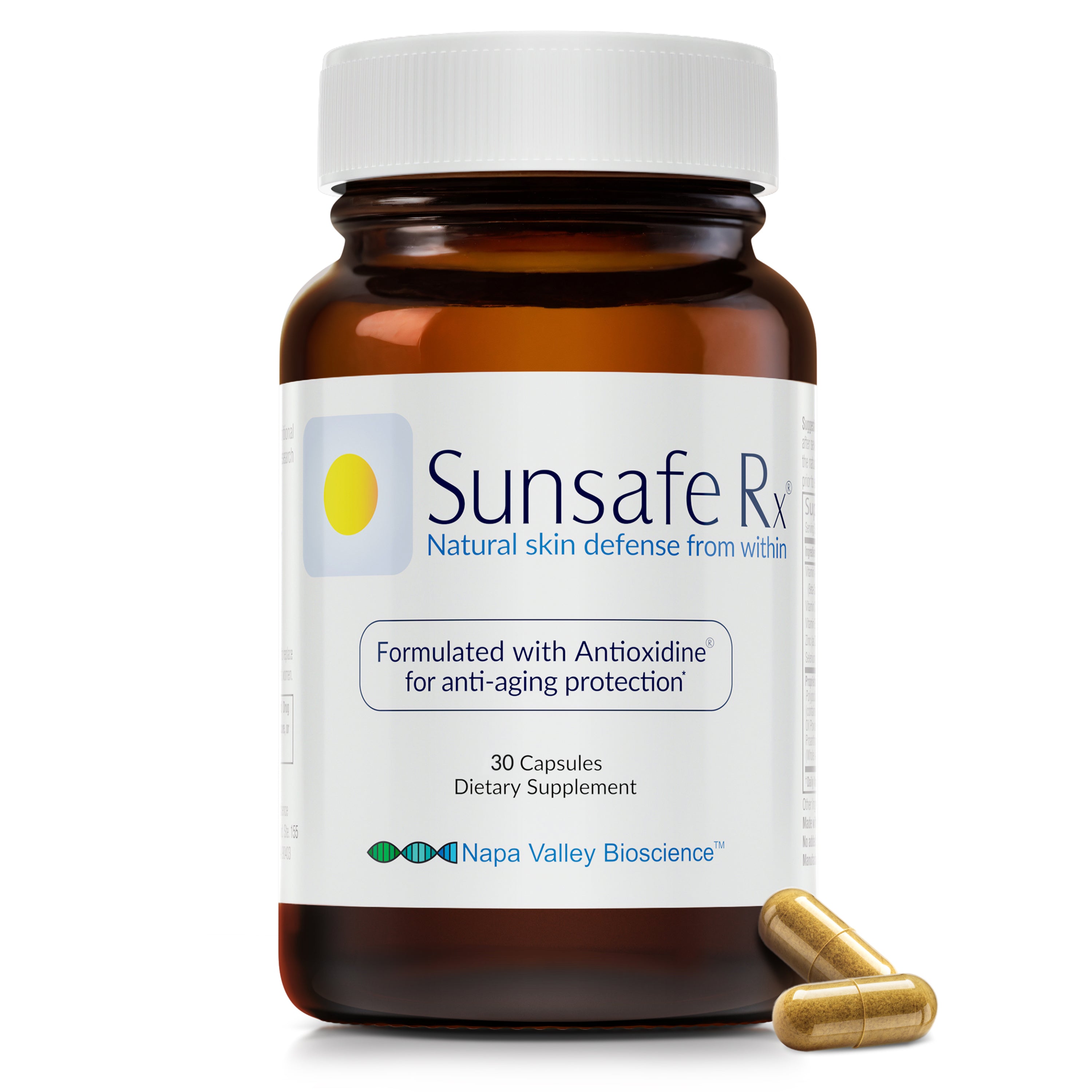
Featured Product
Sunsafe Rx: Natural Anti-Aging Protection
Sunsafe Rx is made with ingredients clinically proven to protect your skin and eyes. One capsule per day provides natural, anti-aging protection and improves the appearance of your skin. Empower your skin from within—while supporting the health of your whole body. This is next-generation skincare. This is Sunsafe Rx.
Concretely, internal defense:
-
Neutralizes UV-generated free radicals before they damage proteins, lipids, and DNA.
-
Reduces UV-induced inflammation, lowering the chronic inflammatory load that drives photoaging.
-
Protects skin cell DNA from oxidative damage, an upstream risk factor for both photoaging and skin cancer.
-
Provides whole-body coverage, including the spots you missed, the spots you couldn't reach, and the times you forgot to reapply.
-
Works in concert with — not in place of — topical SPF and protective behaviors.
This is the same scientific rationale behind serious dermatology recommendations for combining oral antioxidants with topical sunscreen, especially for patients with fair skin, photosensitivities, high UV exposure, sunburn history, or visible photoaging. If you've already accumulated sun damage and are dealing with redness, peeling, or post-burn recovery, oral antioxidants also support normal repair processes — the same reason they often feature in modern strategies for sunburn treatment and relief.
What the Research Shows
The case for internal defense isn't speculative. It's built on decades of published clinical trials in dermatology and nutrition journals. A few illustrative references:
-
Polypodium leucotomos extract: Significantly reduces UV-induced erythema and oxidative DNA damage in placebo-controlled human trials.
-
Astaxanthin: Improves skin condition and markers of UV resilience in a randomized controlled trial published in Nutrients (2017).
-
Lycopene: Reduces UV-induced erythema by up to 40% with dietary supplementation.
-
Green tea polyphenols (EGCG): Reduce UV-induced DNA damage and inflammatory cytokines.
-
Lutein and zeaxanthin: Increase skin carotenoid status and reduce UV-induced redness, with additional benefits for eye health.
-
Grape seed extract: Strong photoprotective and anti-inflammatory effects in skin.
None of these ingredients are SPF. None of them replace topical sunscreen. All of them measurably improve the skin's ability to manage UV damage.
Six Nutrient Groups That Anchor Internal Defense
Six categories of nutrients should appear in any well-designed internal sun-defense strategy. The first three — the carotenoid subgroups and polyphenols — are pigmented, plant-derived antioxidants that accumulate directly in skin tissue. The final three provide the anti-inflammatory, structural, and enzymatic support those primary compounds depend on.
1. Carotenes
Carotenes — including lycopene and the provitamin A carotenes (beta-carotene, alpha-carotene, and mixed carotenes) — are vivid orange-red pigments that accumulate in skin tissue and deliver targeted photoprotective effects.
Lycopene is one of the most studied carotenoids for UV defense: a British Journal of Dermatology trial found it reduced UV-induced erythema by up to 40%. Beta-carotene and mixed carotenes serve as precursors to vitamin A (retinol), which regulates keratinocyte differentiation and skin cell turnover — meaning UV-damaged and pigmented cells are cleared from the surface more quickly.
Beyond their antioxidant activity, carotenes contribute a warm orange-red pigmentation that accumulates in skin tissue, visually adding warmth and evenness to the complexion alongside their protective effects.
2. Xanthophylls
Xanthophylls are the oxygen-containing members of the carotenoid family, and include astaxanthin, lutein and zeaxanthin. These compounds are among the most potent antioxidants known and accumulate preferentially in both skin and eye tissue.
Astaxanthin, from microalgae, is particularly well-studied for skin UV defense. Clinical research shows it reduces age spots, improves skin moisture and elasticity, and buffers oxidative stress from UV. A randomized controlled trial published in Nutrients (2017) demonstrated measurable improvements in skin condition with 6–12 mg daily.
Lutein and zeaxanthin filter high-energy visible (HEV) and UV light before it can trigger melanocyte activation and oxidative damage. A clinical study in the American Journal of Clinical Nutrition demonstrated that supplementation increased skin carotenoid status and reduced UV-induced redness, with additional protective benefits for eye tissue.
3. Polyphenols
Polyphenols are plant-derived compounds with multiple phenol rings that act as some of the most potent antioxidants found in nature. Three polyphenols stand out for internal sun defense: Polypodium leucotomos extract, green tea extract (EGCG), and grape seed extract.
Polypodium leucotomos extract has decades of dermatology research behind it. Multiple placebo-controlled trials show it reduces UV-induced erythema, oxidative DNA damage, and inflammatory pigmentation. A widely cited JAAD trial reports significant photoprotective effects in human subjects.
Green tea extract (EGCG) is a potent tyrosinase inhibitor and suppresses UV-induced inflammatory signaling. A published study demonstrates that EGCG reduces UV-induced DNA damage and inflammatory cytokines in skin tissue, and it works synergistically with other antioxidants to amplify overall free-radical defense.
Grape seed extract (OPCs) is among the most potent natural free-radical scavengers known. A published photoprotection study documents its strong anti-inflammatory and photoprotective effects in skin.
4. Omega-3 Fatty Acids
EPA and DHA from fish oil and algae oil are among the most studied anti-inflammatory nutrients in human biology. Their relevance to internal sun defense is direct: UV exposure triggers a chronic, low-grade inflammatory state in skin, and chronic inflammation amplifies essentially every downstream form of UV damage — pigmentation, wrinkles, redness, and immune dysfunction. A randomized clinical trial in Carcinogenesis demonstrated that omega-3 supplementation reduced UV-induced immunosuppression in human skin — a meaningful early-stage protective effect. Effective doses in published research are typically in the 1–3 g/day range of combined EPA + DHA.
5. Vitamins A, C, and E
These three vitamins are the antioxidant backbone of internal sun defense.
Vitamin A and the precursor carotenes (beta-carotene, alpha-carotene, mixed carotenes) are required for healthy skin cell differentiation and turnover. A review in Dermato-Endocrinology covers their role in photoprotection.
Vitamin C is a water-soluble antioxidant that neutralizes ROS, regenerates oxidized vitamin E, and supports collagen synthesis — exactly the structural protein UV degrades. A foundational review in the American Journal of Clinical Nutrition details its photoprotective contribution.
Vitamin E (alpha-tocopherol) is the principal antioxidant in cell membranes. Combined oral vitamin C and E supplementation raises the threshold for UV-induced erythema in human skin. Translation: skin tolerates more sun before reddening.
Used together, A, C, and E form a regenerating network — each protects and recycles the others.
6. Zinc and Selenium
Zinc and selenium are easy to overlook, but both are essential cofactors for skin defense.
Zinc supports hundreds of enzymes involved in skin repair, immune defense, and oxidative balance. A clinical review in Dermatology Research and Practice details zinc's role in skin healing and photoprotection.
Selenium is the central cofactor in glutathione peroxidase, one of the body's most important antioxidant enzymes. A study in the Journal of Investigative Dermatology showed that selenium supplementation protects human skin cells from UV-induced apoptosis and DNA damage.
Both should be present in any quality sun-defense supplement, at safe food-level doses rather than at risk-prone megadoses.
A Complete Sun Protection Strategy: What It Actually Looks Like
A modern, evidence-based sun protection strategy has four layers:
-
Topical broad-spectrum SPF 30+, applied generously and reapplied every 2 hours during exposure.
-
Physical protection — wide-brimmed hats, UPF clothing, sunglasses, and shade during peak hours (10 a.m. to 4 p.m.).
-
Behavioral awareness — being honest about cumulative daily exposure, not just beach days.
-
Internal defense — a daily oral antioxidant supplement that delivers clinically researched plant- and food-derived antioxidants to skin tissue 24 hours a day.
A useful companion read for thinking about the long view is this anti-aging guide, which lays out how chronic UV exposure and oxidative stress drive most of the visible aging in skin and how multi-layer protection slows that process.
It's also worth being clear: layered protection isn't about being paranoid. Sun has real benefits — most notably for vitamin D and sunlight — and the goal is to enjoy the outdoors safely, not to avoid the sun entirely.
The Bottom Line
Topical sunscreen is the most important first step in sun protection. It is also, on its own, not enough. Real-world application gaps, the UV that gets through, the spots that get missed, the reapplications that never happen, and the cumulative damage that builds over decades all leave room for additional defense.
That defense is internal. Six groups of nutrients — carotenes, xanthophylls, polyphenols, omega-3 fatty acids, vitamins A/C/E, and the minerals zinc and selenium — work systemically, accumulate in skin tissue, and quietly handle the damage that sunscreen alone cannot reach.
Together with topical SPF, protective clothing, smart timing, and good lifestyle basics, internal defense gives you the most complete sun protection strategy available in 2026 — one that has a long track record of being recommended by dermatologists and has successfully helped many people protect their skin from the inside out.
About Sunsafe Rx
Sunsafe Rx is a daily oral supplement built around the proprietary Antioxidine® complex — a formula that brings together the most researched antioxidant ingredients in this category into a single comprehensive capsule.
The Antioxidine® complex includes polypodium leucotomos extract, EGCG from green tea, grape seed extract, lycopene, astaxanthin, lutein, zeaxanthin, and omega-3 fatty acids (DHA and EPA). Also included in the Sunsafe Rx formula are a number of supportive antioxidants: Vitamin C, Vitamin E, zinc, selenium, and mixed alpha- and beta-carotenes.
Research shows the ingredients in Sunsafe Rx support the skin's natural defenses against environmental damage, help neutralize free-radical activity in skin and eye tissue, and fight the appearance of photoaging from the inside out.
Sunsafe Rx is manufactured in the USA in an FDA-registered, NSF-certified facility, and has a long track record of being trusted by dermatologists and successfully helping many people support healthier, better-protected skin.
Note: We cannot officially describe Sunsafe Rx as a sunscreen or SPF, or make any disease claims. Sunsafe Rx should be considered a revolutionary internal skincare solution, and always used in combination with topical sunscreen lotion for external protection during sun exposure.
Disclaimer
Published clinical data supports the use of these ingredients for a range of skin concerns related to photodamage and oxidative stress. However, the FDA defines sunscreens as over-the-counter drugs with specific topical chemicals that reflect or absorb UV rays, and oral photoprotective products should not be considered sunscreen or SPF. Oral antioxidant supplements are dietary supplements and are not intended to diagnose, treat, cure, or prevent any disease. They should always be used in combination with topical sunscreen and other sun protection measures during sun exposure. Consult a healthcare professional before starting any new supplement routine.
Frequently Asked Questions
Q: Are you saying topical sunscreen is unnecessary?
No. Topical SPF is essential for excess sun exposure. But while necessary, it is not sufficient by itself. Internal defense is the complementary layer that addresses what sunscreen alone cannot.
Q: If I use SPF 50, do I really need oral antioxidants?
Even SPF 50 lets some UV through, and real-world application reduces effective SPF dramatically. The damage that gets through is exactly what internal defense is designed to mitigate. Plus, antioxidants have a number of amazing health benefits for the whole body.
Q: Will internal supplementation let me skip reapplying sunscreen?
The two work together. Reapply your SPF, and let the oral antioxidants do their separate work continuously in the background.
Q: How long until I see benefits from internal defense?
Most users notice changes in resilience, redness, and overall skin tone within 6–12 weeks of consistent daily use. The antioxidants accumulate in skin tissue over time.
Q: Is this approach safe?
Quality formulas built around plant- and food-derived antioxidants at clinically researched doses have strong safety profiles. Furthermore, antioxidants are incredibly healthy. Talk to your healthcare provider if you are pregnant, breastfeeding, or on prescription medications.
Written by Sunsafe Rx Team |
