


Sunburn is a radiation burn caused by UV overexposure — and the visible redness is just the body's response to damage that starts at the cellular level within seconds of UV contact. This article explains what sunburn actually is biologically, what causes it, how it progresses through five stages from invisible DNA damage to long-term consequences, and which prevention strategies work best. It also covers the research behind oral antioxidant ingredients and how they support skin's natural defenses from the inside out.
Most people have had a sunburn. Far fewer understand what is actually happening to their skin when they get one — and why it matters far beyond a few uncomfortable days.
A single severe sunburn in childhood doubles the lifetime risk of developing melanoma. Repeated moderate sunburns over years silently degrade collagen, break down elastin, and accelerate visible skin aging in ways that no cream can fully reverse. Yet in the United States, more than one in three adults reports getting sunburned at least once a year.
All UV exposure damages your skin. But a sunburn indicates an inordinate amount of damage has been done.
Sunburn is not just a surface inconvenience. It is measurable cellular damage — and understanding what causes it, how it progresses, and how to genuinely prevent it is one of the most practical investments you can make in your long-term skin health.
This article covers everything you need to know: what sunburn actually is at a biological level, what causes it, how to recognize its stages, and the most effective strategies for sunburn prevention — including what the latest research says about supporting your skin's innate defenses from the inside out with natural antioxidants from foods and plants.
What Is Sunburn?
Sunburn is an acute inflammatory skin reaction caused by overexposure to ultraviolet (UV) radiation. It is classified as a radiation burn — the same category as burns caused by X-rays or other forms of ionizing radiation — distinguished by its specific source: UV light from the sun or artificial sources such as tanning beds.
When UV radiation penetrates the outer layers of the skin, it causes direct damage to the DNA within skin cells. The body recognizes this cellular damage and mounts an immune response — triggering increased blood flow to the affected area (causing redness), releasing inflammatory mediators (causing heat, pain, and swelling), and initiating a programmed cell death process called apoptosis to eliminate the most severely damaged cells before they can replicate with damaged DNA.
The redness, pain, and peeling of a sunburn are not the damage itself — they are the body's visible response to the damage. The underlying cellular injury — broken DNA strands, degraded collagen, disrupted skin barrier function, and elevated oxidative stress — occurs before any redness is visible and persists long after the surface symptoms resolve.
This distinction matters. You can feel fine while UV damage is accumulating, and you can look recovered while repair processes are still ongoing beneath the surface.
What Causes Sunburn?
Ultraviolet Radiation: The Primary Cause
The sun emits a broad spectrum of radiation. The two types most relevant to skin health are UVA and UVB.
UVB rays (wavelength 280–315 nm) are the primary cause of sunburn. They are absorbed directly by skin cells' DNA, causing the strand breaks and mutations that trigger the inflammatory response we recognize as sunburn. UVB intensity varies with time of day, season, altitude, and latitude — it is strongest between 10 a.m. and 4 p.m., higher at elevation, and more intense closer to the equator.
UVA rays (wavelength 315–400 nm) penetrate deeper into the skin and are the primary driver of photoaging — the breakdown of collagen and elastin that causes wrinkles, sagging, and uneven skin tone. UVA rays are present at relatively consistent intensity throughout the day, all year round, and can penetrate glass. While UVA doesn't cause the acute sunburn response as directly as UVB, it generates large amounts of free radicals and reactive oxygen species that compound UV damage significantly.
You might be interested in: What is Polymorphous Light Eruption(PMLE)?
Risk Factors That Increase Sunburn Susceptibility
Anyone can get sunburned, but several factors increase susceptibility:
Skin type — People with less melanin (lighter skin, Fitzpatrick skin types I and II) have less natural protection against UV radiation and burn more quickly. However, people with darker skin tones are not immune to sunburn or UV-induced skin damage — they simply require longer exposure times.
Altitude — UV radiation increases approximately 10–12% for every 1,000 meters of elevation gain. Skiing, hiking, or spending time at high altitude significantly increases UV exposure.
Reflective surfaces — Snow reflects up to 80% of UV radiation. Sand reflects approximately 15–25%. Water reflects up to 10%. These surfaces effectively increase total UV exposure even when you are in shade.
Time of day and season — UV intensity is highest between 10 a.m. and 4 p.m. and peaks in summer months in the northern hemisphere.
Medications — Certain medications increase photosensitivity — the skin's sensitivity to UV radiation. These include some antibiotics (particularly tetracyclines and fluoroquinolones), diuretics, NSAIDs, retinoids, and some antihistamines. If you take regular medications, review potential photosensitivity effects with your doctor.
Tanning beds — Artificial UV sources used in tanning beds emit UVA and UVB radiation at intensities that can far exceed midday sunlight. The International Agency for Research on Cancer classifies tanning bed use as a Group 1 carcinogen. Despite the well-documented risks, myths about sun exposure — including the belief that a "base tan" provides meaningful protection — continue to drive unsafe behavior.
Also Read: Sun Allergy
Sunburn Stages: How a Sunburn Progresses
Sunburn does not fully reveal itself immediately. Understanding how it develops helps explain why prevention is far more effective than any after-the-fact treatment.
Stage 1: UV Exposure and Invisible Damage (0–2 Hours)
UV radiation begins damaging skin cells the moment it contacts unprotected skin. DNA strand breaks start occurring within seconds of UV exposure. Free radicals are generated throughout the deeper layers of the dermis. Inflammatory signals are released by damaged cells. None of this is visible — your skin looks and feels normal.
This is the most critical window for prevention. Damage is accumulating before you feel any discomfort.
Stage 2: Early Inflammatory Response (2–6 Hours)
The first visible signs of sunburn typically appear 2–6 hours after UV exposure. Skin begins to redden as blood vessels near the surface dilate to increase blood flow to the damaged area. The skin may feel warm or slightly tender. The inflammatory cascade is now fully underway.
Many people underestimate their sunburn at this stage because the full redness has not yet developed. This is a common reason people stay in the sun longer than they should.
Stage 3: Peak Inflammation (12–24 Hours)
Sunburn typically reaches its most severe visible state 12–24 hours after exposure. The redness deepens. Pain and heat are at their most intense. Swelling may develop, especially on the face, hands, or feet. In moderate to severe burns, blisters may begin to form.
Systemic symptoms — headache, fever, chills, nausea — can develop at this stage in more severe cases, a condition sometimes called sun poisoning.
Stage 4: Peeling and Repair (3–7+ Days)
As the inflammatory response subsides, the skin begins shedding damaged cells — the process visible as peeling. This is the body's way of removing cells with compromised DNA before they can replicate. Peeling is a normal and necessary part of recovery, not a sign that the skin is healing incorrectly.
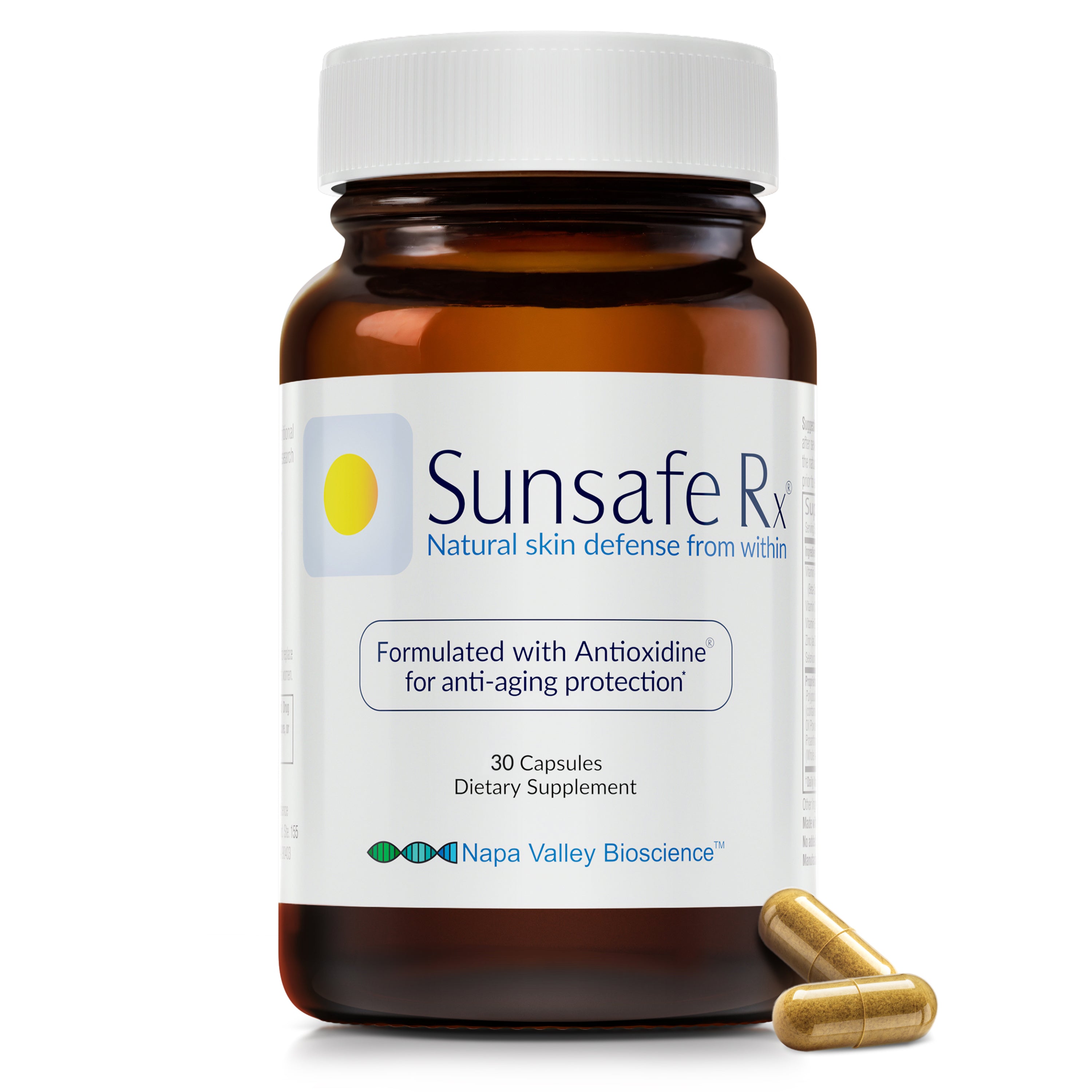
Featured Product
Sunsafe Rx: Natural Anti-Aging Protection
Sunsafe Rx is made with ingredients clinically proven to protect your skin and eyes. One capsule per day provides natural, anti-aging protection and improves the appearance of your skin. Empower your skin from within—while supporting the health of your whole body. This is next-generation skincare. This is Sunsafe Rx.
Beneath the peeling surface, new skin cells are forming. This new skin is thinner, more sensitive, and significantly more vulnerable to UV damage than the skin that was there before. This is why sunburned skin should be protected especially carefully in the weeks following a burn. For guidance on managing recovery, see our guide on sunburn treatment and relief.
Stage 5: Long-Term Consequences
Each sunburn leaves behind measurable long-term damage: degraded collagen and elastin, persistent DNA mutations in some cells, disrupted melanin distribution (which can cause permanent hyperpigmentation), and cumulative oxidative damage to skin tissue. These effects compound over time and are a primary driver of visible premature skin aging — the wrinkles, dark spots, and loss of skin firmness that are commonly attributed to "getting older" are largely the accumulated result of UV damage over decades. Our anti-aging guide explores these long-term effects and prevention strategies in greater depth.
Sunburn Prevention: A Complete Multi-Layer Strategy
Effective sunburn prevention is not a single product or habit. It is a layered strategy where each element reinforces the others.
Layer 1: Topical Broad-Spectrum Sunscreen
Broad-spectrum SPF 30 or higher, applied correctly, remains the most widely studied and recommended external defense against UV radiation, as recommended by the American Academy of Dermatology (AAD). Apply to all exposed skin 15–20 minutes before going outdoors. Reapply every two hours — and immediately after swimming or heavy sweating, regardless of "water-resistant" labeling.
Critical application note: Most people apply significantly less sunscreen than clinical test amounts, which means real-world SPF protection is often a fraction of the labeled value. Use approximately one ounce (a shot glass full) to cover the full body. Understanding the known drawbacks of topical sunscreen helps explain why internal antioxidant support is a meaningful additional layer.
Layer 2: Protective Clothing
UPF-rated clothing offers reliable, consistent UV protection that does not degrade with sweating, swimming, or time — unlike sunscreen. Wide-brimmed hats protect the scalp, face, ears, and neck. UV-blocking sunglasses protect the eyes and surrounding skin. For extended outdoor activity, clothing is often more reliable protection than sunscreen alone.
Layer 3: Smart Sun Timing
UV intensity varies enormously throughout the day. Avoiding unprotected outdoor time between 10 a.m. and 4 p.m. — particularly in summer — significantly reduces cumulative UV exposure. When you must be outside during peak hours, prioritize shade where possible. For more practical strategies, see our summer sun protection tips.
Layer 4: Know Your Environment
Altitude, reflective surfaces (snow, sand, water), and proximity to the equator all meaningfully increase UV exposure. Adjust your protection strategy accordingly — what works for an overcast day at sea level is not sufficient for a sunny day on a ski slope or at the beach.
Layer 5: Internal Antioxidant Support
The four layers above address UV exposure from the outside. But UV radiation also generates free radicals and reactive oxygen species deep within the skin's dermal layers — where topical products cannot reach. This is where daily oral antioxidant supplementation plays a meaningful and increasingly well-researched role.
Internal Antioxidant Support: What the Research Shows
Over the past two decades, dermatology research has examined whether oral antioxidants — taken as daily supplements — can support the skin's natural defenses against UV-induced oxidative stress and free-radical damage from the inside out. The evidence for specific ingredients is substantial.
Polypodium Leucotomos (PL) Extract
Derived from a tropical fern, PL extract is an extensively studied oral antioxidant ingredient in this category. Multiple controlled trials published in the Journal of the American Academy of Dermatology (JAAD) — including a 2004 study on UV erythema and DNA protection — found that the ingredients in PL extract supplements produced statistically significant reductions in UV-induced erythema, DNA strand breaks, and inflammatory markers in sun-exposed skin. Research shows these ingredients support skin resilience against UV-induced cellular damage at the deepest tissue levels.
Lycopene
A carotenoid found in tomatoes and red fruits, lycopene has been studied in peer-reviewed research including work published in the Journal of Nutrition. Research shows the ingredients in lycopene supplementation were associated with up to a 40% reduction in UV-induced erythema in clinical trials — one of the most significant antioxidant effects documented for any oral ingredient in this space.
Astaxanthin
Derived from marine microalgae, astaxanthin has been studied in peer-reviewed journals including a 2018 randomized, double-blind, placebo-controlled trial and a 2021 systematic review of clinical studies. Research shows the ingredients in astaxanthin supplementation improve skin moisture and elasticity and reduce markers of UV-related oxidative stress — both directly relevant to long-term sunburn prevention strategy.
EGCG (Green Tea Extract)
The primary active polyphenol in green tea, EGCG has been studied across multiple peer-reviewed journals. Research on EGCG and UV-induced DNA damage and its photoprotective effects in human skin both confirm measurable protective activity. Research shows the ingredients in EGCG supplements reduce UV-induced DNA damage and produce significant anti-inflammatory effects in skin tissue — supporting the skin's natural defense mechanisms at a cellular level.
Lutein and Zeaxanthin
These xanthophyll carotenoids accumulate in both skin tissue and the macula of the eye. A study published in Skin Pharmacology and Physiology found that the ingredients measurably increased skin carotenoid levels and reduced UV-related reddening in clinical subjects — with added benefit for eye health alongside skin protection.
Grape Seed Extract
Grape seed extract is rich in oligomeric proanthocyanidins (OPCs) — among the most potent plant-derived antioxidants identified in nutritional research. Studies published in Molecular Cancer Therapeutics and Molecular Nutrition & Food Research have demonstrated that grape seed extract supplementation significantly reduces UV-induced oxidative damage markers, supports collagen synthesis, and strengthens capillary walls in skin tissue. A key finding is that grape seed proanthocyanidins provide dose-dependent protection against UV-induced oxidative stress in skin cells — reducing lipid peroxidation and preserving the structural proteins that maintain skin elasticity. Research shows the ingredients in grape seed extract supplements help protect skin structural proteins from free-radical degradation — supporting both skin integrity and long-term resilience against environmental UV exposure.
Omega-3 Fatty Acids (DHA and EPA)
Omega-3 fatty acids — particularly docosahexaenoic acid (DHA) and eicosapentaenoic acid (EPA) — play a well-documented role in modulating the skin's inflammatory response to UV radiation. A study published in the Journal of Lipid Research found that omega-3 supplementation significantly increased the minimal erythemal dose (MED) — the threshold of UV exposure required to produce visible sunburn — in clinical subjects. Additional research published in the Journal of Investigative Dermatology has shown that omega-3 fatty acids reduce UV-induced immunosuppression, a key factor in the skin's long-term vulnerability to sun damage. Research shows the ingredients in omega-3 supplementation support the skin's anti-inflammatory pathways and help maintain skin barrier function under UV stress.
Vitamins A, C, and E
Vitamins A, C, and E are foundational antioxidants with extensively documented roles in skin protection and repair. Vitamin C (ascorbic acid) neutralizes free radicals in the aqueous compartments of skin cells and is essential for collagen synthesis. Vitamin E (alpha-tocopherol) protects cell membranes from lipid peroxidation caused by UV-generated free radicals. A study published in the Journal of the American Academy of Dermatology demonstrated that the combination of oral vitamins C and E significantly increased the skin's resistance to UV-induced erythema compared to either vitamin alone. Vitamin A and mixed carotenes — including beta-carotene — contribute to skin cell turnover and repair processes. Research published in Skin Pharmacology and Applied Skin Physiology further supports the role of dietary carotenoids in reducing UV sensitivity. Research shows the ingredients in combined antioxidant vitamin supplementation provide synergistic photoprotective effects that exceed the sum of individual nutrients.
The Minerals Zinc and Selenium
Zinc and selenium are essential trace minerals that serve as cofactors for the body's most critical endogenous antioxidant enzyme systems. Selenium is required for the function of glutathione peroxidase — one of the skin's primary defenses against oxidative damage. A study published in Free Radical Biology & Medicine confirmed that selenium supplementation enhanced antioxidant defenses and reduced markers of UV-induced oxidative stress in dermal fibroblasts. Zinc supports DNA repair mechanisms, immune function, and the structural integrity of skin tissue. Research published in the International Journal of Dermatology has shown that zinc deficiency impairs the skin's ability to recover from UV damage and increases susceptibility to photodamage. Research shows the ingredients in zinc and selenium supplementation support the enzymatic antioxidant pathways that are critical for skin repair and resilience following UV exposure.
Sunsafe Rx: Comprehensive Internal Skin Defense
Sunsafe Rx is a daily oral supplement built around the proprietary Antioxidine® complex — a formula that combines the most clinically researched antioxidant ingredients in this category into one comprehensive capsule, taken once daily.
The Antioxidine® complex includes polypodium leucotomos extract, EGCG from green tea, grape seed extract, lycopene, astaxanthin, lutein, zeaxanthin, and omega-3 fatty acids (DHA and EPA). Also included in the Sunsafe Rx formula: Vitamin C, Vitamin E, zinc, selenium, and mixed carotenes — supportive antioxidants that complement the primary Antioxidine® ingredients.
Research shows the ingredients in Sunsafe Rx support the skin's natural defenses against environmental damage, fight the appearance of photoaging, and help neutralize free-radical activity in both skin and eye tissue — working from the inside out to complement your topical sunscreen and protective clothing routine.
The most recognized competing product in this category, Heliocare, is built around a single active ingredient — polypodium leucotomos extract (Fernblock). It is cheaper and manufactured in Spain, with strong research behind its one ingredient. Sunsafe Rx delivers 13+ clinically researched ingredients, each with independent supporting research, across multiple antioxidant pathways simultaneously. Sunsafe Rx is manufactured in the USA in an FDA-registered, NSF-certified facility and has been trusted by dermatologists since 2010 — a 16-year track record in the market.
Sunsafe Rx is not a sunscreen. We cannot describe Sunsafe Rx as a sunscreen or SPF, or make any disease claims. Sunsafe Rx should be used as an internal skincare solution and always used in combination with topical sunscreen lotion for external protection during sun exposure.
When to See a Doctor
Most sunburns are manageable at home, but certain situations require prompt medical attention.
See a doctor if you or someone in your care experiences:
-
Blistering across a large portion of the body
-
Fever above 103°F (39.4°C) accompanying the sunburn
-
Severe headache, confusion, or disorientation
-
Nausea, vomiting, or rapid heartbeat
-
Signs of dehydration not improving with fluid intake
-
Eye pain or changes in vision following sun exposure
-
Signs of infection in a blister: increasing redness, swelling, warmth, or pus
-
Sunburn in an infant or young child — always seek medical advice
People with certain skin conditions — including photosensitivity disorders such as solar urticaria, polymorphous light eruption, and vitiligo; pigmentation disorders like melasma; precancerous conditions like actinic keratosis; lupus; or a history of skin cancer — should discuss their specific sunburn prevention and sun safety strategy with a dermatologist. These groups may benefit from additional precautions beyond standard recommendations.
Conclusion: Prevention Is the Most Powerful Treatment
Understanding sunburn at a deeper level changes how you approach prevention. The damage begins before you feel it, accumulates invisibly, and persists long after the redness fades. The most powerful response is a layered prevention strategy — one that addresses UV exposure from both the outside and the inside.
Topical SPF and protective clothing intercept UV radiation before it reaches your skin. Smart timing reduces the total UV dose your skin absorbs. And daily internal antioxidant support — through ingredients like polypodium leucotomos, lycopene, astaxanthin, EGCG, and lutein — helps your skin's own defense mechanisms neutralize the free-radical damage that inevitably occurs from environmental exposure, even with good topical protection in place.
Sunsafe Rx, with its 13+ ingredient Antioxidine® formula, is built to deliver that internal layer of daily support — the extra support that works where sunscreen cannot reach, with benefits that compound the longer you take it.
Skin health is a long-term investment. The decisions you make about sun protection today determine how your skin looks and functions for decades to come.
Sunsafe Rx is manufactured in the USA in an FDA-registered, NSF-certified facility. It has been on the market since 2010. We cannot describe Sunsafe Rx as a sunscreen or SPF, or make any disease claims. Always use topical sunscreen during sun exposure. This article is for informational purposes only and does not constitute medical advice.
Frequently Asked Questions
Q: What is sunburn exactly?
Sunburn is an acute inflammatory skin reaction caused by overexposure to ultraviolet (UV) radiation from the sun or artificial sources like tanning beds. UV radiation damages the DNA of skin cells, triggering an immune response that causes the redness, heat, pain, and peeling we associate with sunburn. The visible symptoms are the body's response to cellular-level damage — not the damage itself.
Q: What causes sunburn?
Sunburn is caused primarily by UVB rays — a form of ultraviolet radiation emitted by the sun. UVB rays penetrate the outer skin layers and cause direct DNA damage in skin cells. Risk factors that increase susceptibility include lighter skin tone, high altitude, reflective surfaces like sand and snow, peak sun hours between 10 a.m. and 4 p.m., and certain medications that increase photosensitivity.
Q: What are the stages of a sunburn?
Sunburn progresses through five stages: invisible UV damage and free-radical generation (0–2 hours), early visible redness (2–6 hours), peak inflammation with maximum redness and pain (12–24 hours), peeling and surface repair (3–7+ days), and long-term cumulative consequences including collagen degradation and increased skin aging. Each stage underscores why prevention is more effective than any treatment.
Q: What is the best sunburn prevention strategy?
The most effective sunburn prevention uses multiple layers: applying broad-spectrum SPF 30+ sunscreen correctly and reapplying every two hours, wearing UPF-rated protective clothing and wide-brimmed hats, avoiding unprotected sun exposure during peak UV hours (10 a.m.–4 p.m.), adjusting protection for altitude and reflective environments, and supporting the skin's natural antioxidant defenses from the inside out with a daily supplement.
Q: Can an antioxidant supplement help prevent sunburn?
Research shows the ingredients in antioxidant supplements — particularly polypodium leucotomos extract, lycopene, astaxanthin, and EGCG — support the skin's natural defenses against UV-induced oxidative stress and free-radical damage at the cellular level. Studies published in the Journal of the American Academy of Dermatology (JAAD) and the British Journal of Dermatology document these effects for specific ingredients. Sunsafe Rx contains these ingredients as part of its 13+ ingredient Antioxidine® formula. We cannot describe Sunsafe Rx as a sunscreen or SPF, or make any disease claims. It should always be used in combination with topical sunscreen for external protection during sun exposure.
Q: How long does a sunburn last?
Mild sunburns typically resolve in 3–5 days. Moderate sunburns may take 7–10 days. Severe sunburns with widespread blistering can take two weeks or longer to fully heal. The new skin that forms after a sunburn is more sensitive and vulnerable to UV damage than the original skin, so continued protection is important throughout the recovery period.
Q: Is sunburn permanent?
The visible symptoms of a sunburn — redness, peeling, pain — are temporary. However, the underlying cellular damage is cumulative and partially permanent. Each sunburn contributes to DNA mutations, collagen degradation, elastin breakdown, and uneven melanin distribution. These effects build over time and are a major driver of premature skin aging, hyperpigmentation, and increased skin cancer risk.
Q: Does Sunsafe Rx replace sunscreen for sunburn prevention?
It is not intended to be a complete replacement. Sunsafe Rx is not a sunscreen and does not replace topical SPF. Research shows the ingredients in Sunsafe Rx support the skin's natural defenses against environmental damage from the inside out — working at a cellular level where topical products cannot reach. It is the ultimate internal skincare solution and should always be used alongside broad-spectrum sunscreen lotion for complete external protection during sun exposure. We cannot describe Sunsafe Rx as a sunscreen or SPF, or make any disease claims.
Written by Sunsafe Rx Team |
