


Sun Rash Treatment: Causes, Symptoms and Prevention
A sun rash is not a single condition — it covers several distinct skin reactions to UV exposure or heat, each requiring a different approach. This article explains how to identify which type of sun rash you have (PMLE, solar urticaria, photoallergic, phototoxic, or heat rash), what treatments work for each, and how to build a layered prevention strategy. It also covers what clinical research shows about antioxidant ingredients you take orally – like polypodium leucotomos extract – for people with photosensitive skin.
You spent a few hours outside, and now there's a red, itchy rash where your skin was exposed to the sun. It wasn't there before you went out. The sun is the only thing that changed. But what exactly is a sun rash — and what should you actually do about it?
The term "sun rash" covers several distinct skin conditions, each with different causes, appearances, and treatment approaches. Getting the right answer starts with understanding which type you're dealing with. The wrong approach — or worse, ignoring it — can lead to recurring reactions, prolonged discomfort, and missed signals about your skin's underlying sensitivity.
This blog breaks down everything you need to know: what a sun rash actually is, how to recognize the symptoms, which type you may be experiencing, what sun rash treatment options work, and how a layered prevention strategy — including internal antioxidant support — can help defend your skin from the inside out.
What Is a Sun Rash?
"Sun rash" is a broad, non-medical term used to describe any rash that develops on skin in response to sun or ultraviolet (UV) radiation exposure. It is common in people who are photosensitive. Depending on the underlying cause, a sun rash may be a true immune-mediated reaction to ultraviolet (UV) radiation, a heat-related skin condition, a reaction triggered by a combination of UV exposure and a sensitizing substance, or a flare of an underlying skin condition worsened by sun.
Understanding the distinction matters because each type responds differently to treatment, and prevention strategies vary accordingly. What helps a heat rash will not necessarily help a sun allergy rash — and treating a photoallergic reaction without identifying the chemical trigger is unlikely to produce lasting results.
Sun Rash Symptoms: What to Look For
Sun rash symptoms vary by type, but common signs that your skin has reacted to sun or heat exposure include:
Appearance:
-
Red, pink, or inflamed patches on sun-exposed areas
-
Small raised bumps or papules, sometimes grouped in clusters
-
Hives — raised, itchy welts that may appear and disappear rapidly
-
Tiny blisters or vesicles, particularly on the forearms, chest, or neck
-
Scaling, flaking, or peeling skin after the rash subsides
Sensation:
-
Itching — often intense, sometimes the first symptom to appear
-
Burning or stinging sensation on the skin
-
Tenderness or sensitivity to touch in the affected area
-
Feeling of heat in the skin beyond what the sun exposure would explain
Location: One of the most useful diagnostic clues is where the rash appears. True UV-triggered sun rashes develop specifically on sun-exposed areas — the forearms, the V-neck of the chest, the back of the hands, the face — while areas covered by clothing remain clear. Heat rash, by contrast, often develops in covered, high-friction areas where sweat accumulates.
Timing: UV-triggered sun rash symptoms typically appear 30 minutes to several hours after sun exposure, sometimes peaking 24 hours later. Heat rash develops more rapidly — often within minutes of overheating. The timing of your symptoms relative to sun and heat exposure is a key clue to identifying the cause.
Types of Sun Rash: Which One Do You Have?
Polymorphous Light Eruption (PMLE)
PMLE is the most common sun-triggered rash, affecting an estimated 10–20% of the U.S. population according to the American Academy of Dermatology (AAD). It typically appears in spring or early summer — often after the first significant sun exposure of the season, before the skin has adapted to stronger UV intensity.
PMLE presents as small, intensely itchy red bumps or papules on UV-exposed skin, usually appearing two to four hours after sun exposure. It tends to resolve within a few days of sun avoidance and may gradually improve over the course of the season as the skin builds tolerance. For many people, PMLE recurs every year at the start of warm weather.
Clinical research published in the Journal of the American Academy of Dermatology (JAAD) has demonstrated that the ingredients in polypodium leucotomos (PL) extract supplements produced statistically significant reductions in PMLE severity and frequency in controlled trials.
Solar Urticaria
Solar urticaria is a less common but more dramatic sun rash — hives that appear within minutes of UV exposure and typically resolve within hours of moving out of sunlight. In severe cases, widespread hives and systemic reactions including dizziness and difficulty breathing can develop. Solar urticaria warrants formal medical evaluation and may require prescription management.
Photoallergic Reaction
A photoallergic rash occurs when a chemical on the skin — a medication, sunscreen ingredient, fragrance, or other compound — becomes reactive when exposed to UV radiation. The result is an eczema-like rash that may be intensely itchy and can spread beyond sun-exposed areas. Common photosensitizing substances include certain antibiotics, NSAIDs, diuretics, and some fragrance compounds. Identifying and removing the trigger is essential for resolution.
Phototoxic Reaction
Phototoxic reactions look like a severely exaggerated sunburn — deep redness, pain, and blistering in UV-exposed areas, caused by a chemical interaction between UV light and a sensitizing substance. Unlike photoallergic reactions, phototoxic reactions do not involve the immune system and can occur in anyone exposed to sufficient UV in combination with the triggering substance. Medications that increase sensitivity to the sun are common. Certain plants (particularly in the Apiaceae family, like wild parsley and hogweed), and perfumes, can also be culprits.
Heat Rash (Miliaria)
Heat rash is not a UV-triggered reaction but is often grouped with sun rash because it develops during hot, sunny weather. It occurs when sweat ducts become blocked and sweat is trapped beneath the skin, causing small red bumps or blisters typically in covered, high-friction areas — the neck, chest, armpits, and inner elbows. It resolves when the skin cools and sweat can flow freely. Cooling the skin and wearing loose, breathable clothing are the primary solutions.
Sun Rash Treatment: What Works for Each Type
Treatment depends on the type of sun rash and its severity. Here is what the evidence supports for each.
For PMLE and General UV-Triggered Rash
Topical corticosteroids such as hydrocortisone cream reduce inflammation and relieve itching. Over-the-counter strengths are effective for mild cases. Prescription-strength versions are available for more severe flares and should be used under medical guidance.
Featured Product
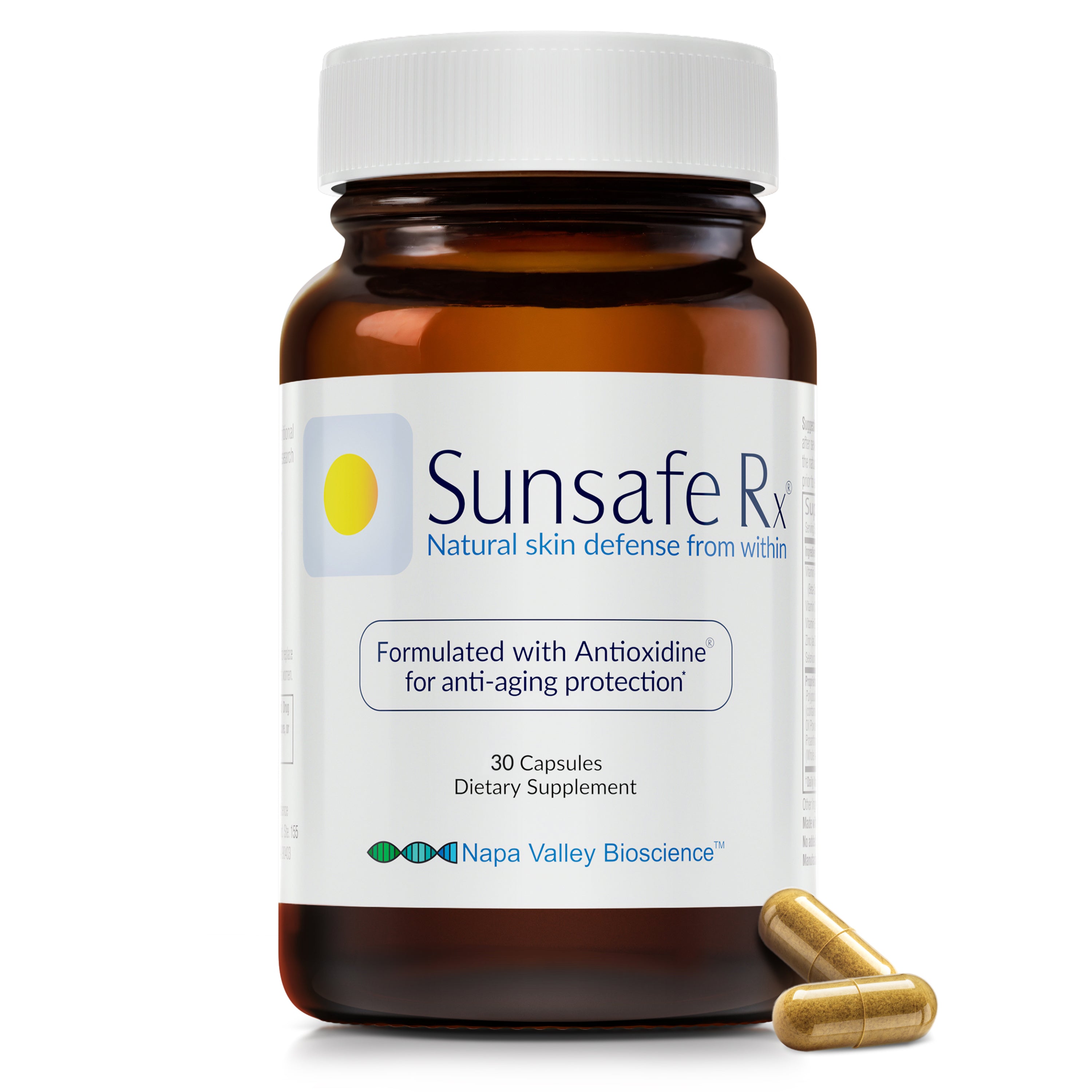
Sunsafe Rx: Natural Anti-Aging Protection
Sunsafe Rx is made with ingredients clinically proven to protect your skin and eyes. One capsule per day provides natural, anti-aging protection and improves the appearance of your skin. Empower your skin from within—while supporting the health of your whole body. This is next-generation skincare. This is Sunsafe Rx.
Oral antihistamines help manage itching and reduce the severity of hive-type reactions. Cetirizine, loratadine, and fexofenadine are commonly used options.
Cool compresses applied to the affected area for 10–15 minutes reduce heat, inflammation, and discomfort in the acute phase.
Sun avoidance during active flare — the rash will not fully resolve if UV exposure continues. Give the skin time to recover before returning to prolonged outdoor activity.
For Photoallergic and Phototoxic Reactions
The single most important step is identifying and eliminating the chemical trigger. Review all medications and topical products with your doctor or dermatologist. A photopatch test can confirm specific photosensitizing substances. Once the trigger is removed, the rash typically resolves, though it may take one to two weeks.
Topical corticosteroids can manage inflammation and discomfort during resolution. In severe cases, a short course of systemic corticosteroids may be prescribed.
For Solar Urticaria
Oral antihistamines are the first-line treatment for mild to moderate solar urticaria. For more severe cases, a dermatologist may recommend higher-dose antihistamines, phototherapy (gradual UV desensitization), or in some cases, omalizumab — a biologic medication increasingly used for treatment-resistant solar urticaria.
For Heat Rash
Move to a cool environment, remove tight or synthetic clothing, and allow the skin to cool and dry. Calamine lotion or a light dusting of unscented powder can soothe mild heat rash. Avoid heavy creams or oils that can further block sweat ducts. Heat rash typically resolves within hours to a few days once overheating is corrected.
Sun Rash Prevention: A Layered Approach
Preventing sun rash means addressing the underlying triggers — UV radiation, heat, and in some cases, chemical sensitizers — before they reach your skin.
Broad-Spectrum Topical Sunscreen
For UV-triggered sun rashes, broad-spectrum SPF 30 or higher is the foundational external defense. Apply generously to all exposed skin 15–20 minutes before going outdoors and reapply every two hours. For those with photoallergic reactions triggered by chemical sunscreen ingredients, mineral-based sunscreens (zinc oxide, titanium dioxide) are typically better tolerated. It's also worth knowing the full drawbacks of topical sunscreen lotion and why an internal antioxidant layer is an important complement.
Protective Clothing and Accessories
UPF-rated clothing, wide-brimmed hats, and UV-blocking sunglasses provide reliable, consistent protection that doesn't degrade the way sunscreen can. For people with recurring UV-triggered sun rash, protective clothing is often more dependable than sunscreen alone — particularly for extended outdoor activity.
Gradual Sun Exposure in Spring
For people with PMLE, gradual early-spring exposure — short sessions that progressively increase — can help the skin build seasonal tolerance before UV intensity peaks. Some dermatologists use formal narrowband UVB phototherapy protocols for this purpose. Never begin deliberate UV exposure without discussing it with a healthcare provider if your reactions have been severe.
Avoiding Chemical Triggers
If your sun rash is photoallergic or phototoxic in nature, review all topical products for known photosensitizing ingredients. Common culprits include certain sunscreen chemical filters (particularly oxybenzone and PABA), some fragrances, retinoids used at the wrong time of day, and medications taken regularly. A dermatologist can perform photopatch testing to identify your specific trigger.
Internal Antioxidant Support
Beyond what you put on your skin, there is a meaningful and growing body of research that shows oral antioxidant supplementation can support the skin's natural resilience against UV-induced oxidative stress from the inside out. For people with recurring UV-triggered sun rash, this represents a genuine additional layer of daily defense.
Internal Antioxidant Support: What the Research Says
When UV radiation reaches the skin, it generates free radicals — unstable molecules that attack skin cells, trigger inflammatory cascades, and degrade the skin's structural proteins. Topical sunscreen reduces the amount of UV that reaches the skin, but some UV-induced free-radical activity occurs regardless. This is where oral antioxidants play a complementary role.
Polypodium leucotomos (PL) extract is the most well-researched oral antioxidant ingredient for photosensitive skin conditions. Multiple controlled trials in the Journal of the American Academy of Dermatology (JAAD) — including a 2005 study on UV erythema and DNA protection — found that the ingredients in PL extract supplements produced statistically significant reductions in PMLE severity, UV-induced erythema, and DNA strand breaks in sun-exposed skin — with measurable reductions in the inflammatory markers that drive UV-triggered skin reactions.
Lycopene, studied in peer-reviewed research including work published in the Journal of Nutrition, showed that the ingredients in lycopene supplementation were associated with up to a 40% reduction in UV-induced erythema in clinical trials. This degree of antioxidant activity at the skin level is significant for anyone whose skin reacts consistently to UV exposure.
Astaxanthin, derived from marine microalgae, has been studied in peer-reviewed journals including a 2017 clinical study and research in Acta Biochimica Polonica (2012). Research shows the ingredients improve skin moisture and elasticity and reduce markers of UV-related oxidative stress — both relevant to the skin resilience needed to resist UV-triggered reactions.
EGCG (green tea extract) has been studied across multiple peer-reviewed journals. Research on EGCG and UV-induced DNA damage and its anti-inflammatory effects in skin tissue both confirm measurable protective activity, showing that the ingredients reduce UV-induced DNA damage and produce measurable anti-inflammatory effects — supporting the skin's natural defense mechanisms from within.
Lutein and Zeaxanthin, studied in the American Journal of Clinical Nutrition (AJCN), measurably increased skin carotenoid levels and reduced UV-related reddening in clinical subjects, with added benefits for eye health from the same daily supplementation.
About Sunsafe Rx
Sunsafe Rx is a daily oral supplement built around the proprietary Antioxidine® complex — a formula that brings all of these clinically researched ingredients together in one capsule taken once a day.
The Antioxidine® complex includes polypodium leucotomos extract, EGCG from green tea, grape seed extract (with proanthocyanidins), lycopene, astaxanthin, lutein, zeaxanthin, and omega-3 fatty acids (DHA and EPA). Also included in the Sunsafe Rx formula: Vitamin C, Vitamin E, zinc, selenium, and mixed carotenes — supportive antioxidants that work alongside the primary Antioxidine® ingredients.
Research shows the ingredients in Sunsafe Rx support the skin's natural defenses against environmental damage, fight the appearance of photoaging, and help neutralize free-radical activity in both skin and eye tissue — delivering inside-out antioxidant protection that topical products cannot replicate.
Note: We cannot describe Sunsafe Rx as a sunscreen or SPF, or make any disease claims. Sunsafe Rx should be used as an internal skincare solution, and always used in combination with topical sunscreen lotion for external protection during sun exposure.
The oldest product in this space, Heliocare, contains a single primary active ingredient — polypodium leucotomos extract (Fernblock). Heliocare is manufactured in Spain, and carries strong research for its single ingredient. But Sunsafe Rx is superior. It contains the same ingredient: polypodium leucotomos extract. But it also combines 13+ clinically researched ingredients, each with independent supporting research, addressing multiple protective antioxidant pathways simultaneously that have an amazing array of health benefits. Sunsafe Rx is manufactured in the USA in an FDA-registered, NSF-certified facility and has been trusted by dermatologists since 2010.
When to See a Doctor
Many mild sun rashes resolve on their own with basic care and sun avoidance. But there are situations where professional evaluation is the right call.
See a dermatologist if:
-
The rash is severe, blistering, or covers a large area of the body
-
Symptoms do not improve after several days of sun avoidance and home treatment
-
You experience systemic symptoms — fever, nausea, difficulty breathing, or widespread hives — alongside the rash
-
The rash appears on areas of skin that were not exposed to the sun
-
You suspect a medication you take regularly may be contributing to the reaction
-
Your sun rash recurs every season and significantly impacts your quality of life
-
You are unsure whether your rash is UV-triggered or caused by something else
Sun rash symptoms can sometimes mimic other skin conditions — including lupus, contact dermatitis, and drug reactions — that require specific diagnosis and treatment. A dermatologist can perform phototesting or photopatch testing to accurately identify the type and trigger of your reaction, and can offer targeted management strategies including phototherapy desensitization for recurring PMLE.
Conclusion: Know Your Rash, Build Your Defense
A sun rash is not one condition — it is several, each with its own mechanism, appearance, and optimal treatment. The most important first step is identifying which type you are dealing with, because that determines everything that follows.
For most UV-triggered sun rashes — particularly PMLE — a multi-layered prevention strategy delivers the most reliable results. Topical SPF and protective clothing form the external foundation. Smart sun timing reduces the overall UV load. Identifying and avoiding chemical triggers removes photoallergic risk. And daily internal antioxidant support — through ingredients like polypodium leucotomos, lycopene, astaxanthin, EGCG, and lutein — helps the skin defend itself at the cellular level from oxidative stress that topical products alone cannot address.
Sunsafe Rx, with its 13+ ingredient Antioxidine® formula, delivers that internal layer every day — working from the inside out to support skin resilience, fight free-radical damage, and complement your complete sun protection routine.
Sunsafe Rx is manufactured in the USA in an FDA-registered, NSF-certified facility. It has been on the market since 2010. We cannot describe Sunsafe Rx as a sunscreen or SPF, or make any disease claims. Always use topical sunscreen during sun exposure. This article is for informational purposes only and does not constitute medical advice.
Frequently Asked Questions
Q: What is a sun rash?
A sun rash is a broad term for any skin rash that develops in response to sun or heat exposure. It can refer to several different conditions including polymorphous light eruption (PMLE), solar urticaria, photoallergic reactions, phototoxic reactions, and heat rash — each with different causes, appearances, and treatment approaches.
Q: What are the symptoms of a sun rash?
Common sun rash symptoms include red, itchy bumps or papules on sun-exposed areas, hives that appear and fade, small blisters, burning or stinging sensations, and skin tenderness. UV-triggered sun rashes typically appear on sun-exposed areas — the forearms, chest, hands, and face — while skin covered by clothing remains clear. Symptoms usually develop 30 minutes to several hours after sun exposure.
Q: What does a sun rash look like?
The appearance varies by type. PMLE typically presents as clustered red bumps or small blisters on UV-exposed skin. Solar urticaria appears as raised, itchy hives. Photoallergic reactions resemble eczema — red, weeping, or scaly patches. Phototoxic reactions look like a severe, exaggerated sunburn with significant redness and sometimes blistering. Heat rash appears as tiny red bumps or blisters in covered, high-friction areas.
Q: How do you treat a sun rash?
Sun rash treatment depends on the type. UV-triggered rashes like PMLE are typically managed with topical corticosteroids, oral antihistamines, cool compresses, and sun avoidance. Photoallergic and phototoxic reactions require identifying and removing the chemical trigger. Solar urticaria may require prescription antihistamines or phototherapy. Heat rash resolves by cooling the skin and wearing breathable clothing.
Q: How can you prevent a sun rash from coming back?
Sun rash prevention involves layering multiple strategies: applying broad-spectrum SPF 30+ sunscreen, wearing UPF-rated protective clothing, avoiding peak UV hours (10 a.m.–4 p.m.), gradually building UV tolerance through careful early-season exposure, avoiding known chemical triggers, and supporting the skin's natural defenses from the inside out with a daily antioxidant supplement.
Q: Can an antioxidant supplement help with sun rash?
Research shows the ingredients in antioxidant supplements — particularly polypodium leucotomos extract, lycopene, astaxanthin, lutein, grape seed extract, and EGCG — support the skin's natural defenses against UV-induced oxidative stress and free-radical damage at the cellular level. Studies in the Journal of the American Academy of Dermatology (JAAD) document statistically significant reductions in PMLE severity with PL extract ingredients. Sunsafe Rx contains these ingredients as part of its 13+ ingredient Antioxidine® formula. We cannot describe Sunsafe Rx as a sunscreen or SPF, or make any disease claims. It should always be used in combination with topical sunscreen for external protection during sun exposure.
Q: What is the difference between a sun rash and a sunburn?
A sunburn is a direct tissue injury caused by UV overexposure — it can happen to anyone and is characterized by redness, heat, and peeling. A sun rash is typically an immune-mediated or chemical reaction where the skin responds to UV exposure with a rash, hives, or other symptoms that go beyond standard sunburn. Sun rash reactions are more selective — they tend to affect people with a specific sensitivity — and often appear as bumps or hives rather than the uniform redness of a sunburn.
Q: When should I see a doctor about a sun rash?
See a dermatologist if the rash is severe, blistering, or covers a large area; if symptoms don't improve after several days of sun avoidance; if you experience systemic symptoms like fever, nausea, or difficulty breathing alongside the rash; if the rash appears on non-exposed skin; or if your sun rash recurs every season and affects your quality of life. A dermatologist can perform phototesting or photopatch testing to accurately identify the type and trigger of your reaction.
Written by Sunsafe Rx Team |
- Published:
- By:
- Sunsafe Rx Team
- Category:
- Health Conditions
- Tags:
- photodermatosis, rash, skin, sun allergy
Sunsafe Rx
Natural. Healthy. Powerful. This isn’t just skincare. This is the ultimate anti-aging product.

Great Skincare Goes Beyond The Surface.
Discover Sunsafe Rx—a daily antioxidant supplement designed to support skin health from the inside out. And so much more.
Subscribe and save 10% · Free shipping · Skip or cancel anytime · 60-day money-back guarantee
