


A real allergic reaction to sunscreen is more common than people realize, and it puts users in a difficult bind: they need sun protection, but the products designed to provide it are causing rashes, hives, or breakouts. This article walks through what a sunscreen allergy actually is, which ingredients are the most common triggers, and how a daily oral antioxidant supplement can support your skin's defenses from the inside out — adding a layer of protection that does not depend on putting anything on irritated skin.
If you think sunscreen makes your skin break out, sting, or develop a rash within hours of application, you are probably not imagining it. Contact reactions to sunscreen are well documented in dermatology literature, and the most reactive ingredients are some of the most common in mainstream SPF products.
In this guide, you will learn how to recognize a true sunscreen allergy, which ingredients are most likely triggering it, what to do in the short term, and how an oral antioxidant supplement can serve as a complementary, non-topical layer of sun support — particularly for skin that simply cannot tolerate one more lotion.
What Is a Sunscreen Allergy?
A sunscreen allergy is an immune reaction in the skin to one or more ingredients in a topical sunscreen product. It can present as contact dermatitis (a localized, itchy, red rash), photoallergic contact dermatitis (a reaction triggered only when the product is exposed to UV light), hives, or in rare cases more systemic reactions. It is distinct from simple irritation, although the symptoms can overlap with general photosensitivity.
Allergic reactions can develop suddenly, even to a sunscreen you have used for years. The immune system can become sensitized over repeated exposures, and what was once tolerated can begin to trigger reactions.
Common Symptoms
A red, itchy rash on areas where sunscreen was applied.
Hives or welts that appear within minutes to a few hours.
Burning or stinging on an application that does not subside.
Small bumps, eczema-like patches, or peeling skin.
Reactions that worsen with sun exposure (suggesting a photoallergic component).
Eye irritation if the product migrates near the eye area.
A reaction that resembles a sun rash but only appears where sunscreen was applied is a strong signal that the product itself — not the sun alone — is contributing to the response.
Which Ingredients Are the Most Common Triggers?
Several common chemical UV filters and inactive ingredients are well documented in dermatology literature as contact allergens.
Oxybenzone (benzophenone-3) — one of the most frequently cited topical UV filter allergens.
Avobenzone — another commonly reported sensitizer.
PABA and PABA derivatives — older filters that have largely fallen out of use due to high allergy rates.
Cinnamates (octinoxate / cinoxate) — can cross-react with cinnamon and other related compounds.
Fragrance and essential oils added to the formula.
Preservatives (methylisothiazolinone, formaldehyde-releasers).
The PubMed literature on sunscreen contact allergy and photoallergy is extensive — these are recognized clinical phenomena, not edge cases.
What to Do First
If you suspect a sunscreen allergy, stop using the suspect product immediately. Wash the skin gently with mild soap and cool water. A short course of an over-the-counter antihistamine and a low-potency hydrocortisone cream can help calm an active reaction; for severe or persistent rashes, see a dermatologist. Patch testing can identify the specific ingredient driving the reaction so you can avoid it in future products.
Skin that is already inflamed or eczematous tends to be more reactive overall. If you have an underlying eczema tendency, the barrier function of your skin is compromised and you are more likely to react to multiple sunscreen ingredients.
Mineral Sunscreens vs Chemical Sunscreens
For users with sunscreen allergies, mineral (inorganic) filters — zinc oxide and titanium dioxide — are generally the lowest-risk topical option. However, it's still important to understand the broader drawbacks of topical sunscreen lotions before relying on them as your only line of defense. They sit on the skin rather than being absorbed, and they are not known sensitizers in the way chemical filters can be. Choose products labeled "100% mineral" or "physical sunscreen," fragrance-free, with a short ingredient list.
That said: even the gentlest mineral sunscreen still requires you to put a product on your skin and reapply throughout the day. For some users — especially those whose skin reacts to a wide range of products — that is not a sustainable answer on its own.
Where Oral Antioxidant Supplements Fit In
A daily oral antioxidant supplement is taken internally as a capsule, so it entirely avoids any type of external skin application. It will not protect you from UV photons in the way a topical filter does — but research shows the ingredients in these formulas can help neutralize the free radicals UV photons generate inside skin tissue before they cause damage, support the skin's natural repair processes, and reduce erythema (UV-induced redness) in clinical trials.
For users who cannot tolerate enough topical sunscreen to be fully covered, an oral antioxidant supplement adds a layer of internal support that does not require putting anything on reactive skin. It is not a substitute for topical sun protection — it is a complement, especially valuable when topical options are limited.
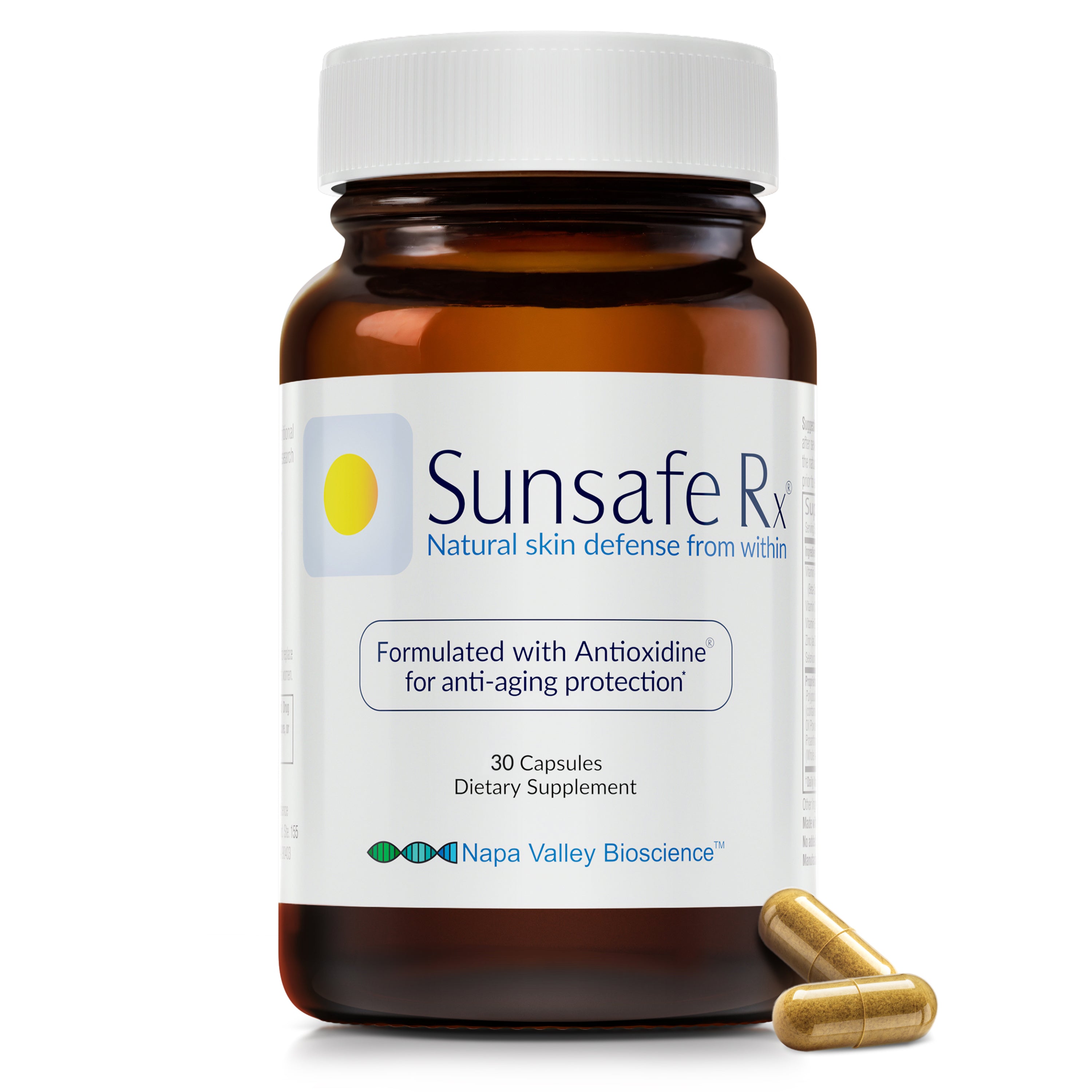
Featured Product
Sunsafe Rx: Natural Anti-Aging Protection
Sunsafe Rx is made with ingredients clinically proven to protect your skin and eyes. One capsule per day provides natural, anti-aging protection and improves the appearance of your skin. Empower your skin from within—while supporting the health of your whole body. This is next-generation skincare. This is Sunsafe Rx.
What the Research Shows
Multiple peer-reviewed trials in the Journal of the American Academy of Dermatology have shown that polypodium leucotomos extract reduces UV-induced erythema and DNA strand breaks in supplemented subjects. A 2005 controlled study on UV erythema and DNA protection demonstrated statistically significant improvements in skin response to controlled UV exposure.
Lycopene supplementation has been associated with up to a 40% reduction in UV-induced erythema in research published in the Journal of Nutrition. A 2017 clinical study on astaxanthin and earlier research in Acta Biochimica Polonica (2012) found measurable reductions in UV-related oxidative stress markers and improvements in skin moisture and elasticity. EGCG from green tea has been studied for its effects on UV-induced DNA damage as well.
Conditions That Often Overlap with Sunscreen Sensitivity
Many people who are sensitive to topical sunscreens also struggle with one or more sun-triggered skin conditions. Polymorphous light eruption (PMLE) is the most common, presenting as itchy bumps or patches that develop hours after sun exposure on areas that have not seen the sun in months. Solar urticaria is a rarer condition where hives form on UV-exposed skin within minutes.
For users dealing with these conditions on top of sunscreen reactivity, the topical layer is doubly difficult: the conditions themselves call for sun avoidance, and many topical products either do not block enough UV to prevent flares or trigger their own irritation. Internal antioxidant support is sometimes the only layer of protection that does not provoke the skin further. See our broader guide on sun allergy treatment for a deeper look at this category.
About Sunsafe Rx
Sunsafe Rx is a daily oral antioxidant supplement built around the proprietary Antioxidine® complex. The full Sunsafe Rx supplement facts label includes polypodium leucotomos extract, EGCG (green tea extract), grape seed extract, lycopene, astaxanthin, lutein, zeaxanthin, and omega-3 fatty acids, supported by Vitamin C, Vitamin E, zinc, selenium, and mixed carotenes. Research shows these ingredients support the skin's natural defenses against UV-induced free-radical damage and oxidative stress.
For users with sunscreen allergies, Sunsafe Rx offers an internal layer of antioxidant support that does not depend on what you can or cannot put on your skin. Plus it provides many other health and anti-aging benefits, and can improve the appearance of your skin. Sunsafe Rx is manufactured in the USA in an FDA-registered, NSF-certified facility, and has been trusted and recommended by dermatologists since 2010.
Note: Sunsafe Rx is not a sunscreen and cannot make disease claims. It is an internal skincare solution, intended to be used in combination with sun-protective behaviors and, where tolerated, a gentle topical sunscreen lotion
Frequently Asked Questions
Q: Can I be allergic to mineral sunscreen too?
Mineral sunscreens (zinc oxide, titanium dioxide) are far less commonly associated with allergic reactions, but a small number of users still react to inactive ingredients like fragrance, preservatives, or thickeners in the formula. Look for fragrance-free, single-ingredient mineral products if you are sensitive.
Q: Can taking an oral antioxidant supplement let me skip sunscreen entirely?
Oral antioxidants cannot block UV photons from reaching the skin. The most protective approach for this in the sun a fair amount is to use the gentlest topical sunscreen you can tolerate, plus protective clothing, plus daily oral antioxidant support — not to skip topical protection altogether.
Q: How long until an oral antioxidant takes effect?
Most ingredients need several weeks of consistent daily intake to reach steady-state tissue levels. Oral antioxidants accumulate in the skin over time, and are designed to be a daily, year-round practice that benefits you at all times rather than something you take only on sunny days.
Q: Will an oral supplement help my sun rash directly?
Research shows the ingredients in oral antioxidant supplements help reduce UV-induced inflammatory and free-radical activity in skin tissue, which may support how skin responds during and after sun exposure. They are a complementary tool, not a treatment for any specific condition. For active rashes, see a dermatologist.
Q: Are the ingredients in oral antioxidant supplements safer than topical sunscreen ingredients for sensitive users?
Because an oral antioxidant supplement is taken internally as a capsule, it avoids the skin-contact mechanism that drives most sunscreen allergic reactions. The ingredients are largely derived from foods and plants (green tea, tomato, grape seed, marine microalgae, fern). That said, allergies to specific food-derived ingredients can occur — check the label, talk to your doctor if you have known sensitivities, and discontinue use if you develop any new symptoms after starting a supplement.
