


Oral antioxidant supplements marketed as "oral sunscreens" have grown into a crowded category, and not all formulas are created equal. Some are built around a single ingredient. Others combine a dozen or more researched antioxidants into a single capsule. This guide compares the leading oral sun-support formulas across the criteria that actually predict outcomes — ingredient breadth, dosing, clinical research, manufacturing standards, and value — so you can read a label with confidence and pick a formula that matches your goals.
"Oral sunscreen" is not a regulated category. Per the FDA, only specific topical chemicals classified as drug products can be classified as sunscreens, so what we are really comparing here is daily oral antioxidant supplements that have been formulated and marketed to support the skin’s natural defenses against UV-induced damage. The differences between these products are real, and they matter.
In this guide, you will learn the key ingredients to look for, how the leading formulas stack up, what the clinical literature actually shows, and how to evaluate a product so you are not just paying for marketing.
What an Oral Antioxidant Supplement Is Trying to Do
When ultraviolet (UV) radiation hits the skin, a significant portion of the damage cascade comes from free radicals — reactive oxygen species generated as a downstream effect of UV exposure. These molecules continue to damage DNA, degrade collagen, and trigger inflammatory signaling for hours after sun exposure ends. An oral antioxidant supplement is designed to circulate antioxidants through skin and eye tissue so they are present and active when this cascade kicks off.
Different ingredients act on different parts of this cascade. The strongest formulas combine ingredients that work synergistically, covering multiple mechanisms — direct radical scavenging, recycling of other antioxidants, anti-inflammatory signaling, and DNA-repair support. For more on the underlying chemistry, see this overview of effects of ozone depletion on skin and eye tissue, which explains why ambient UV exposure is rising and why internal antioxidant capacity matters more than ever.
The Key Ingredient to Look For
When comparing oral antioxidant supplements, the best framework is to look at which of the six major compound classes are represented — and whether each is present at a meaningful clinical dose. A complete formula covers all six.
Carotenes:
Carotenes include lycopene and the provitamin A carotenes (alpha-carotene, beta-carotene, and mixed carotenes). These vivid orange-red pigments are among the most bioavailable antioxidants for skin tissue and have distinct, non-overlapping roles within the carotene class.
Lycopene is the most studied carotene for photoprotection. Supplementation has been associated with up to a 40% reduction in UV-induced erythema in research published in the British Journal of Dermatology. It acts primarily as a direct free-radical scavenger in skin tissue.
Alpha-carotene, beta-carotene, and mixed carotenes serve as dietary precursors to vitamin A (retinol), which is required for healthy keratinocyte differentiation and skin cell turnover. Faster cell turnover supports faster fading of sun-damaged and pigmented cells. Carotenes also contribute their own warm pigmentation to skin tissue as they accumulate, visually evening the complexion alongside their protective effects.
Xanthophylls:
Xanthophylls — astaxanthin, lutein, and zeaxanthin — are the oxygen-containing members of the carotenoid family. They are among the most potent antioxidants in nature and concentrate preferentially in both skin and eye tissue, offering a unique dual protective benefit.
Astaxanthin, a carotenoid derived from marine microalgae, is among the most potent free-radical scavengers known. A 2017 clinical study showed reductions in UV-related oxidative stress markers and improvements in skin moisture and elasticity. Look for formulas that include astaxanthin at meaningful clinical doses (typically 6–12 mg/day).
Lutein and zeaxanthin are best known for eye health but accumulate in skin tissue as well. The American Journal of Clinical Nutrition published research showing measurable increases in skin carotenoid levels and reductions in UV-related reddening with supplementation. Their dual skin and eye benefit makes them uniquely valuable in a complete formula.
Polyphenols:
Three polyphenols have the strongest published research base for oral photoprotection. A complete formula should include all three.
Polypodium Leucotomos Extract
Polypodium leucotomos extract, derived from a tropical fern, is the single most-studied oral ingredient in this category. Multiple peer-reviewed trials — including a 2005 controlled study in JAAD and a 2011 trial — show reductions in UV-induced erythema and DNA strand breaks. It is the backbone ingredient in most credible oral sun-support formulas.
Green Tea Extract (EGCG)
EGCG is the most active polyphenol antioxidant in green tea. It is a potent tyrosinase inhibitor (directly slowing melanin production) and reduces UV-induced DNA damage and inflammatory cytokines in skin tissue. Studies on EGCG and UV-induced DNA damage support its inclusion in any comprehensive oral sun-support formula.
Featured Product
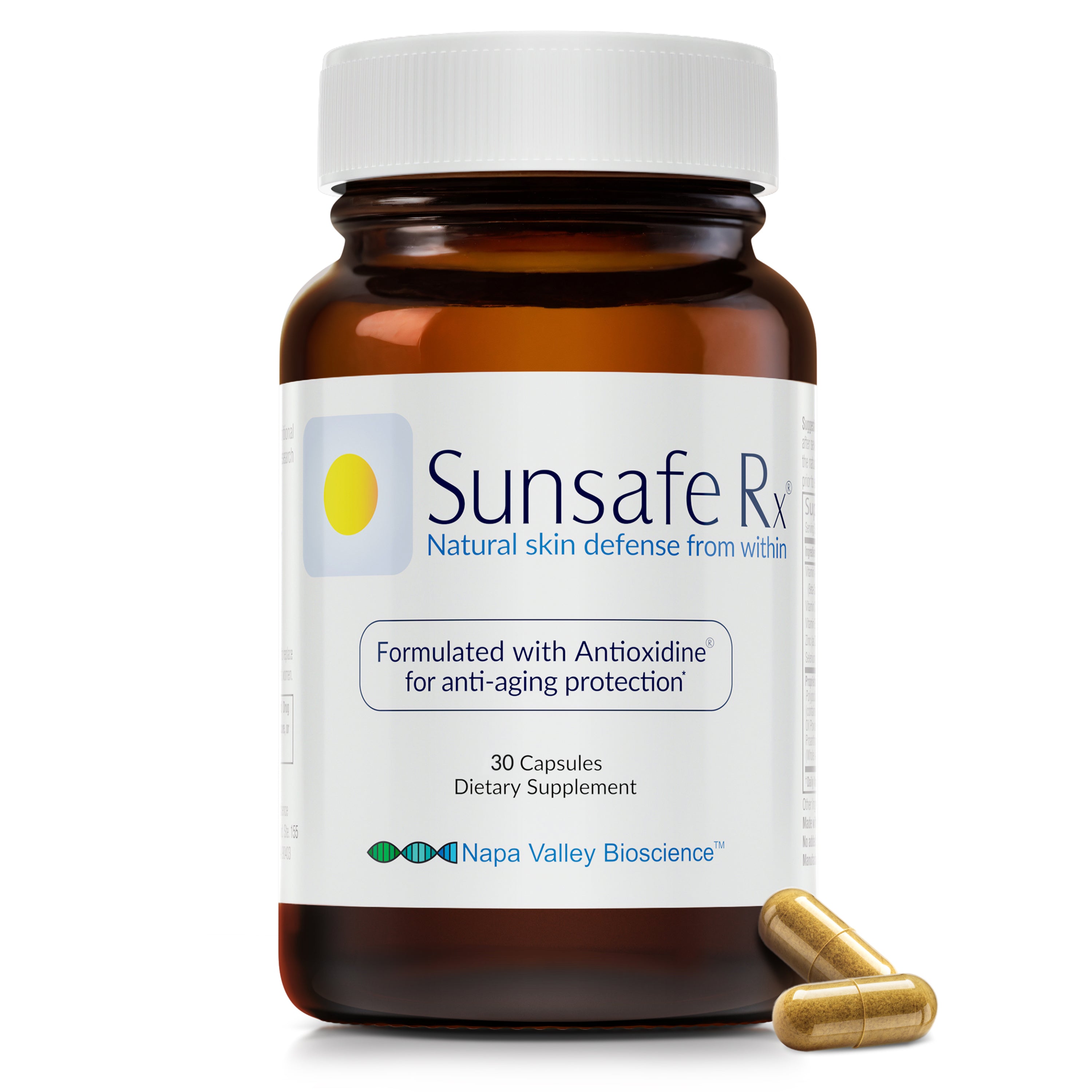
Sunsafe Rx: Natural Anti-Aging Protection
Sunsafe Rx is made with ingredients clinically proven to protect your skin and eyes. One capsule per day provides natural, anti-aging protection and improves the appearance of your skin. Empower your skin from within—while supporting the health of your whole body. This is next-generation skincare. This is Sunsafe Rx.
Grape Seed Extract (OPCs)
Rich in oligomeric proanthocyanidins (OPCs), grape seed extract is one of the most powerful antioxidant ingredients in the category, with a strong record for collagen protection, oxidative stress reduction, and anti-inflammatory activity in skin tissue.
Omegas (DHA and EPA):
The long-chain omega-3 fatty acids — DHA and EPA — have well-documented anti-inflammatory effects that are directly relevant to UV-induced skin damage. Chronic low-grade inflammation amplifies essentially every form of UV damage, and omega-3 supplementation at meaningful doses (typically 1–3 g/day of combined DHA + EPA) reduces this inflammatory baseline. A complete oral sun-support formula should include DHA and EPA from fish oil or algae oil — not just the short-chain ALA found in plant sources.
Vitamins A, C, and E:
These three vitamins are the antioxidant backbone of internal sun defense and serve distinct, non-overlapping roles. Together they form a regenerating network — each protects and recycles the others — making the combination significantly more effective than any single vitamin alone.
Vitamin A (and its dietary precursors, the mixed carotenes) regulates skin cell differentiation and turnover — a key mechanism for clearing UV-damaged and pigmented cells from the surface. It is essential for maintaining healthy skin architecture after UV insult.
Vitamin C is a water-soluble antioxidant that quenches reactive oxygen species, regenerates oxidized vitamin E in tissue, and supports collagen synthesis. A foundational review in the American Journal of Clinical Nutrition details vitamin C's contribution to photoprotection and skin integrity.
Vitamin E (alpha-tocopherol) is the principal lipid-soluble antioxidant in skin cell membranes, protecting fatty acids and cellular structures from UV-generated oxidative damage. Combined vitamin C and E supplementation raises the erythema threshold in human skin — meaning skin tolerates more UV before reddening.
Minerals (Zinc and Selenium):
Two trace minerals that are easy to overlook but play distinct and essential roles in skin's UV defense. They should both be present, and they should not be grouped together as if interchangeable — they operate through entirely different mechanisms.
Zinc is a cofactor for hundreds of enzymes involved in skin repair, immune function, and antioxidant defense. Suboptimal zinc status is associated with slow wound healing and poor recovery from inflammatory skin events. A clinical review in Dermatology Research and Practice covers zinc's photoprotective and reparative roles in detail.
Selenium is the central cofactor for glutathione peroxidase, one of the body's most important endogenous antioxidant enzymes. A study in the Journal of Investigative Dermatology demonstrated that selenium supplementation protected human skin cells from UV-induced apoptosis and DNA damage — a distinct mechanism from anything zinc provides.
Both should be present at safe, food-level doses — not megadose amounts — in any quality formula.
Also Read: What is Polymorphous Light Eruption(PMLE)?
How to Compare Formulas
When you are looking at competing oral antioxidant supplements, run them through this checklist:
-
Ingredient breadth: how many of the researched antioxidants are included? Single-ingredient formulas (e.g., a polypodium-only product) cover one part of the cascade. Comprehensive multi-ingredient formulas cover more.
-
Dosing: Are the active ingredients present at amounts comparable to those used in published research? Trace amounts on a label are not the same as clinical doses.
-
Manufacturing: is the product made in an FDA-registered, NSF-certified facility? Is it manufactured in the USA?
-
Clinical backing: do the ingredients have peer-reviewed research, or is the product relying on testimonials?
-
Eye support: do the carotenoids in the formula support eye health in addition to skin?
-
Track record: how long has the product been on the market, and is it used and recommended by dermatologists?
Single-Ingredient vs Multi-Ingredient Formulas
Some oral sun-support products are built around a single hero ingredient (most often polypodium leucotomos). Others combine 10–15 researched antioxidants into a comprehensive complex.
Single-ingredient formulas are simpler and have the longest individual research record for that one molecule. Multi-ingredient formulas provide broader coverage of the UV-damage cascade and the synergy between ingredients (vitamin C and vitamin E recycling each other, lutein and zeaxanthin working together, polypodium combining with EGCG and astaxanthin) is a meaningful advantage when the goal is daily, year-round skin support.
For users who care primarily about long-term skin health, anti-aging, and broad antioxidant coverage, a comprehensive formula generally offers more for the same daily capsule. The Sunsafe Rx Antioxidine® formula research covers the rationale for combining 13+ ingredients into a single capsule.
Reading Labels Carefully
Some practical tips for reading an oral antioxidant supplement label honestly:
-
Watch for proprietary blends that hide individual ingredient amounts behind a total weight.
-
Check whether the polypodium leucotomos extract is standardized — and to what.
-
Look for third-party certifications (NSF, USP, GMP) on the bottle.
-
Confirm the manufacturer is established and contactable, not a drop-shipped white-label.
-
Compare cost per day, not just bottle price — capsule counts per serving and serving sizes vary.
What the Research Base Supports
For a wider survey of the published literature, the PubMed search results for oral antioxidants and UV-induced skin damage provide a good entry point. The general pattern: individual ingredients (polypodium, astaxanthin, lycopene, lutein, EGCG, grape seed) each have peer-reviewed support for measurable effects on UV-induced erythema, oxidative stress markers, and skin barrier metrics. Combinations of these ingredients have been shown to have additive and in some cases synergistic effects in supporting the skin against UV-induced free-radical damage.
You might be interested in: Actinic Keratosis Treatment
About Sunsafe Rx
Sunsafe Rx is a daily oral antioxidant supplement built around the proprietary Antioxidine® complex — 13+ researched ingredients in a single capsule. It takes the ingredients that clinical research shows work the best, and combines them into one product. The complex includes polypodium leucotomos extract, EGCG (green tea), grape seed extract, lycopene, astaxanthin, lutein, zeaxanthin, and omega-3 fatty acids, supported by Vitamin C, Vitamin E, zinc, selenium, and mixed carotenes. Read more on the benefits of Sunsafe Rx.
Research shows the ingredients in Sunsafe Rx support the skin’s natural defenses against environmental damage, help neutralize free-radical activity in skin and eye tissue, and fight the appearance of photoaging from the inside out.
Sunsafe Rx is manufactured in the USA in an FDA-registered, NSF-certified facility, and is trusted and recommended by dermatologists with a long track record of clinical use.
Note: Sunsafe Rx is not a sunscreen and cannot make disease claims. It is an internal skincare solution and should always be used in combination with topical sunscreen lotion for external protection during sun exposure.
Frequently Asked Questions
Q: Is one ingredient enough, or do I need a multi-ingredient formula?
A single ingredient (such as polypodium leucotomos) acts on only one part of the UV-damage cascade. A multi-ingredient formula acts on multiple parts, often synergistically. For users focused on broad daily skin support and long-term photoaging defense, a comprehensive formula generally offers more value per capsule.
Q: How long should I take an oral antioxidant supplement before judging results?
Most clinical research on oral antioxidants uses dosing protocols of 8–12 weeks or longer to assess outcomes. Skin tissue turnover and antioxidant accumulation are slow processes. Plan on consistent daily use for at least three months before evaluating effects.
Q: Are oral antioxidant supplements safe to take year-round?
The ingredients in well-formulated oral antioxidant supplements are derived from foods and plants with long histories of dietary use. Reputable products are manufactured under FDA dietary supplement regulations. Consult your physician if you are pregnant, breastfeeding, on prescription medications, or managing a chronic condition.
Q: Can I get these antioxidants from food alone?
In theory, yes. In practice, eating enough lycopene-rich tomatoes, EGCG-rich green tea, polypodium fern, marine astaxanthin, lutein-rich greens, and selenium-rich Brazil nuts every day, along with other foods and plants, to match clinical doses is impractical. A daily capsule is a much more reliable way to deliver consistent intake.
Q: How do I know if an oral sunscreen formula is high-quality?
Look for transparent labeling without hidden proprietary blends, standardized extracts (especially for polypodium leucotomos), manufacturing in an FDA-registered, NSF-certified facility, peer-reviewed research backing the included ingredients, and a manufacturer that is established and recommended by dermatologists. Avoid products that lean on testimonials in place of clinical research, and be skeptical of any formula that promises to replace topical SPF.
Written by Sunsafe Rx Team |
