


The Complete Guide to Oral Sun Protection
Oral sun protection is the practice of supporting your skin’s natural defenses against UV-induced damage from the inside out — through targeted antioxidants, smart nutrition, and consistent daily habits. It should not replace topical sunscreen lotion. It addresses the layer of cellular damage that topicals cannot reach: the free radicals, inflammatory cascades, and collagen breakdown that happen inside skin tissue once UV gets through. This guide walks through what the research supports, what foods and ingredients to focus on, how to build a daily routine, and which sun-related skin conditions internal antioxidant support can help address.
Most sun-protection advice begins and ends at the surface of the skin. Apply sunscreen, wear a hat, seek shade. All of that matters. But it is only half the picture. Understanding what sunburn is and how to prevent it is one of the clearest entry points into how UV actually damages skin — and why a layered approach including internal support is more effective than topical sunscreen alone.
In this guide, you will learn what oral sun protection actually means, what the published research supports, which antioxidants and foods are worth focusing on, how to build a sustainable daily routine, and how internal support fits alongside topical SPF, clothing, and shade.
What Is Oral Sun Protection?
Oral sun protection is an umbrella term covering daily, internal practices that support how your skin responds to UV exposure. The category includes:
-
Daily oral antioxidant supplements formulated specifically for skin support.
-
A diet rich in antioxidant-dense fruits, vegetables, fish, and herbs.
-
Targeted nutrient sufficiency for vitamins C, E, zinc, selenium, and omega-3 fatty acids.
-
Behavioral habits — hydration, sleep, stress regulation — that support the skin’s native repair processes.
It is not a regulated drug category. Per the FDA, only topical, over-the-counter products can be classified as sunscreens. Oral antioxidant supplements are dietary supplements, not sunscreens, and they are not substitutes for topical SPF. Their value is complementary: they address the cellular damage that happens after UV gets through.
How UV Actually Damages Skin
To understand why internal antioxidant support matters, it helps to understand what UV radiation actually does once it reaches skin tissue. The damage cascade has several stages:
-
Direct DNA damage — UVB photons cause structural changes in skin-cell DNA, including pyrimidine dimers.
-
Free-radical generation — UV (especially UVA) generates reactive oxygen species that damage cell membranes, proteins, and DNA indirectly.
-
Inflammatory signaling — damaged cells release cytokines that drive the redness, swelling, and pain of sunburn.
-
Collagen and elastin breakdown — UV activates enzymes (matrix metalloproteinases) that break down structural proteins in the dermis, driving photoaging.
-
Pigmentary changes — repeated UV exposure dysregulates melanocyte activity, contributing to sunspots, hyperpigmentation, and uneven skin tone.
-
Long-term structural change — repeated cycles of damage and incomplete repair show up over years as wrinkles, sagging, and conditions like solar elastosis.
Conditions like solar elastosis are visible expressions of decades of cumulative UV-driven structural damage to the dermis. They are exactly what comprehensive internal antioxidant support is designed to slow down.
Antioxidants Are the Body’s Internal Sun Defense
Every cell in the body has built-in antioxidant systems to neutralize free radicals as they form. UV exposure overwhelms those systems. Supplementing with researched antioxidants gives the skin more raw protective material to defend itself.
Topical sunscreen handles the outer layer of defense — blocking UV photons before they reach skin cells. Internal antioxidants handle the cellular layer — neutralizing the damage cascade after UV gets through. The two are complementary, not redundant.
The Most Researched Oral Antioxidants for Skin
Polypodium leucotomos extract — the most-studied oral ingredient for UV-induced skin damage, with reductions in erythema and DNA strand breaks shown in the Journal of the American Academy of Dermatology and a 2005 controlled study.
Astaxanthin — a carotenoid from marine microalgae shown to reduce UV-related oxidative stress markers in a 2017 clinical study and improve skin moisture and elasticity.
Lycopene — found in tomatoes and red fruits, associated with up to 40% reductions in UV-induced erythema in research published in the Journal of Nutrition.
EGCG (green tea extract) — research on EGCG and UV-induced DNA damage supports its inclusion in oral sun-support formulas.
Lutein and zeaxanthin — paired carotenoids with measurable positive effects on skin carotenoid levels and decreased UV reddening (American Journal of Clinical Nutrition), with added benefits for eye health.
Omega-3 fatty acids (DHA and EPA) — long-chain marine-derived fatty acids with anti-inflammatory effects in skin. The PubMed research on omega-3 fatty acids and UV photoprotection supports their role in dampening the inflammatory component of UV-induced skin damage, supporting skin barrier integrity, and modulating the photo-protective signaling pathways activated when skin is exposed to sunlight.
Featured Product
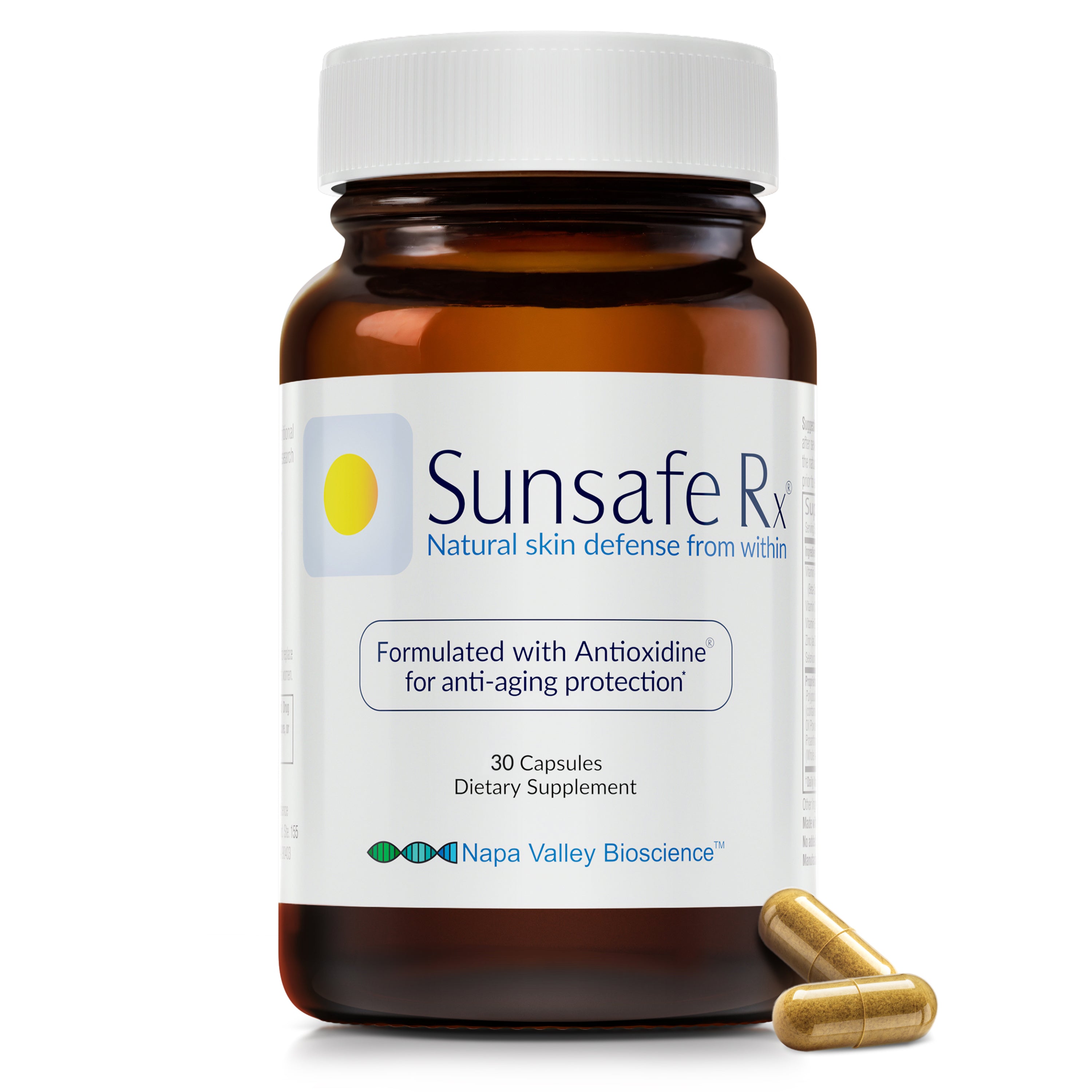
Sunsafe Rx: Natural Anti-Aging Protection
Sunsafe Rx is made with ingredients clinically proven to protect your skin and eyes. One capsule per day provides natural, anti-aging protection and improves the appearance of your skin. Empower your skin from within—while supporting the health of your whole body. This is next-generation skincare. This is Sunsafe Rx.
Vitamins A, C, and E — the foundational antioxidant trio that the body uses to defend nearly every tissue, including skin. Research on vitamin C and skin health supports its central role in collagen synthesis, regeneration of vitamin E, and direct free-radical scavenging in the dermis. Research on vitamin E and UV photoprotection shows that tocopherols help stabilize skin-cell membranes against UV-driven lipid peroxidation, while vitamin A (and its carotenoid precursors) supports normal skin-cell turnover and pigment regulation.
The minerals zinc and selenium — essential cofactors for the body’s own antioxidant enzyme systems. Selenium is required for glutathione peroxidase activity, and PubMed research on zinc, selenium, and skin antioxidant defense supports their combined roles in skin-barrier integrity, wound healing, and reducing the oxidative stress generated by daily UV exposure. Both are common micronutrient gaps in modern diets, which is one reason they are included as standard ingredients in comprehensive oral sun-support formulas.
Grape seed extract, vitamin C, vitamin E, zinc, selenium, mixed carotenes, and omega-3 fatty acids round out the supporting cast. The most comprehensive oral sun-support formulas combine many of these into a single capsule.
Foods That Support Internal Sun Defense
A nutrient-dense diet provides the foundation that any supplement is layered on top of. Foods worth focusing on include:
-
Brightly colored vegetables and fruits — carrots, sweet potatoes, leafy greens, berries.
-
Tomatoes and tomato products — concentrated lycopene.
-
Fatty fish — salmon, sardines, mackerel for omega-3s and astaxanthin.
-
Green tea — daily source of EGCG.
-
Citrus and bell peppers — vitamin C.
-
Nuts and seeds — vitamin E, zinc, selenium.
Be careful about misinformation in this space. There is no shortage of nutrition lore that does not survive a closer look — see common nutrition myths for a useful corrective.
There is also a structural problem with relying on diet alone: the antioxidant content of modern produce is often lower than it was decades ago. The data on declining nutrient levels in produce makes a strong case for combining a careful diet with targeted supplementation rather than depending exclusively on either one.
Lifestyle Factors That Matter
Beyond diet and supplements, several daily habits meaningfully affect how your skin responds to UV exposure.
-
Hydration — well-hydrated skin barriers repair faster from UV-induced damage.
-
Sleep — most skin repair happens overnight; chronic sleep deprivation slows it.
-
Sugar intake — chronically elevated blood sugar drives glycation, which compounds with photoaging.
-
Smoking and excessive alcohol — both deplete antioxidants and accelerate skin aging.
-
Movement and energy balance — overall metabolic health correlates with skin repair capacity.
On the sugar piece specifically, see this read on sugar’s role in weight loss and health. On the energy and movement side, how many calories you’re burning is a useful primer.
Conditions Where Internal Antioxidant Support Matters
Several skin conditions are either caused or worsened by UV-induced free-radical and inflammatory damage. Internal antioxidant support is a meaningful complement — alongside dermatologic care — for:
Pigmentary disorders such as vitiligo, where damaged melanocytes contribute to depigmented patches and oxidative stress is part of the underlying mechanism. A lack of protective skin pigment makes internal protection from antioxidants even more important.
Photoaging signs broadly — fine lines, sagging, uneven tone, sunspots, leathery texture — all of which are downstream effects of cumulative UV-induced oxidative stress.
Recovery support after sustained UV exposure, where the goal is to give the skin maximum antioxidant capacity to limit ongoing damage and accelerate repair.
Sun Protection Across Seasons
A common mistake is treating sun protection as a summer concern. UV exposure happens year-round — through clouds, off snow, through car windows. Cold weather skin care tips is a good reminder that winter sun, especially at altitude or near reflective surfaces, can cause meaningful UV damage. Daily oral antioxidant support is most effective when it is genuinely taken every day — not only on beach trips or summer vacations.
Building a Daily Oral Sun-Protection Routine
A practical, sustainable routine looks like this:
-
Take a comprehensive oral antioxidant supplement every morning with breakfast.
-
Eat a colorful, antioxidant-dense diet most days.
-
Apply broad-spectrum topical sunscreen of SPF 30 or higher to all exposed skin daily, and reapply during sun exposure.
-
Use a wide-brim hat, UV-blocking sunglasses, and protective clothing during peak UV hours.
-
Stay hydrated.
-
Prioritize sleep.
-
Limit smoking, excessive alcohol, and chronic high sugar intake.
No single piece of this is sufficient on its own. Together, they form a layered defense that addresses sun damage at every level — from the photons hitting the skin to the cellular repair processes that determine how the skin recovers — and promotes healthy skin from the inside and outside.
What the Research Supports
For a wider survey of the published literature on oral antioxidants and UV-induced skin damage, the PubMed search results for oral antioxidants and skin photoprotection provide a good entry point. Individual ingredients (polypodium, astaxanthin, lycopene, lutein, EGCG, grape seed) all have peer-reviewed evidence for measurable effects on UV-related skin metrics. Combined, they form the basis of comprehensive oral sun-support formulas.
Key Takeaways
- Oral sun protection supports the skin from the inside out by helping neutralize the free radicals and inflammatory damage caused by UV exposure.
- Internal antioxidant support is designed to complement — not replace — topical sunscreen, protective clothing, and shade.
- UV exposure damages the skin through DNA injury, oxidative stress, inflammation, collagen breakdown, and pigment disruption, all of which contribute to photoaging over time.
- Research-backed ingredients like polypodium leucotomos, astaxanthin, lycopene, EGCG, lutein, zeaxanthin, omega-3s, vitamins C and E, zinc, and selenium may help support the skin’s natural defense systems against UV-induced damage.
- A nutrient-rich diet featuring colorful fruits and vegetables, fatty fish, green tea, nuts, and seeds provides foundational antioxidant support for healthier skin.
- Daily habits like hydration, quality sleep, balanced nutrition, and avoiding smoking or excessive alcohol can significantly influence how well the skin repairs itself after sun exposure.
- Oral antioxidant support may be especially beneficial for concerns linked to cumulative UV damage, including photoaging, uneven skin tone, and oxidative stress-related skin conditions.
- Consistency matters most. A year-round routine combining oral antioxidants, SPF, healthy nutrition, and sun-safe habits creates a more complete approach to skin protection.
About Sunsafe Rx
Sunsafe Rx is a daily oral antioxidant supplement built around the proprietary Antioxidine® complex — 13+ powerful, clinically-researched ingredients in a single capsule. The complex includes an array of antioxidants, at efficacious doses, including polypodium leucotomos extract, EGCG (green tea), grape seed extract, lycopene, astaxanthin, lutein, zeaxanthin, and omega-3 fatty acids, supported by Vitamin C, Vitamin E, zinc, selenium, and mixed carotenes. Research shows the ingredients in Sunsafe Rx support the skin’s natural defenses against environmental damage, help neutralize free-radical activity in skin and eye tissue, and fight the appearance of photoaging from the inside out.
Sunsafe Rx is manufactured in the USA in an FDA-registered, NSF-certified facility, and is trusted and recommended by dermatologists around the world, with a long track record of clinical use.
Note: Sunsafe Rx is not a sunscreen and cannot make disease claims. It is an internal skincare solution, and should always be used in combination with topical sunscreen lotion for external protection during sun exposure.
Frequently Asked Questions
Q: Does oral sun protection actually work?
Research shows the ingredients in well-formulated oral antioxidant supplements support the skin’s natural defenses against UV-induced free-radical and inflammatory damage. They are not sunscreens, but multiple peer-reviewed trials show measurable effects on UV-related skin metrics like erythema, oxidative stress markers, and skin moisture and elasticity.
Q: Can I get adequate oral sun protection from food alone?
A high-quality, antioxidant-dense diet is the foundation. In practice, eating enough lycopene, EGCG, polypodium, astaxanthin, lutein, zeaxanthin, and selenium every day to match clinical doses is impractical. A daily oral antioxidant supplement provides a more reliable baseline.
Q: Should I take an oral supplement year-round or only in summer?
Daily, year-round use is generally recommended. UV exposure happens in every season, and most ingredients in oral antioxidant supplements need consistent intake over weeks to reach steady-state tissue levels. Plus, these natural ingredients have many other health benefits for the whole body.
Q: Can oral antioxidants help with skin conditions, not just prevention?
Research shows the ingredients in oral antioxidant supplements support the skin during and after UV exposure. They are a complementary tool, not a treatment for any specific condition. For active skin conditions, see a dermatologist for diagnosis and treatment.
Q: When is the best time of day to take an oral antioxidant supplement?
Most oral antioxidant formulas, including Sunsafe Rx, are designed to be taken once a day with breakfast. Taking your capsule with a meal that contains some healthy fat improves absorption of the fat-soluble carotenoids (lycopene, astaxanthin, lutein, zeaxanthin) and tocopherols. Consistency matters more than exact timing — pick a moment in your morning routine that you can stick to every day, year-round.
Written by Sunsafe Rx Team |
- Published:
- By:
- Sunsafe Rx Team
- Category:
- Oral Skin Protection
- Tags:
- antioxidants, skin, sun protection
Sunsafe Rx
Natural. Healthy. Powerful. This isn’t just skincare. This is the ultimate anti-aging product.

Great Skincare Goes Beyond The Surface.
Discover Sunsafe Rx—a daily antioxidant supplement designed to support skin health from the inside out. And so much more.
Subscribe and save 10% · Free shipping · Skip or cancel anytime · 60-day money-back guarantee
