


Dark spots and uneven skin tone are most commonly caused by UV-induced hyperpigmentation — and no topical product can fully address oxidative damage that originates deep in the dermis. This article covers what drives hyperpigmentation, which topical ingredients have real clinical backing, what to avoid, and how internal antioxidant support through ingredients like EGCG, lycopene, and astaxanthin addresses skin tone from the inside out.
Dark spots, uneven skin tone, and hyperpigmentation are among the most common skin concerns worldwide — and the skin whitening and lightening industry has grown into a multi-billion dollar market in response. The problem is that a large portion of what is sold in that market either does very little or carries genuine safety risks.
What actually works comes down to understanding what causes uneven skin tone in the first place — and addressing it at the source, not just on the surface.
This article cuts through the noise: what skin lightening is, what drives hyperpigmentation and dark spots, which approaches have real evidence behind them, and how supporting your skin from the inside out with targeted antioxidant nutrition plays a meaningful role in achieving genuinely brighter, more even-looking skin.
What Is Skin Lightening?
Skin lightening — also called skin brightening, skin whitening, or depigmentation — refers to the process of reducing excess melanin in specific areas of the skin to even out skin tone, fade dark spots, or achieve a more uniformly radiant complexion.
Melanin is the pigment that gives skin its color. It is produced by melanocytes — specialized cells in the outer layer of the skin. Melanin production is a natural and protective response, but when it becomes uneven or excessive in localized areas, it creates the dark patches and spots that most people are trying to address.
The goal of skin lightening is not to alter natural skin color, but to address uneven pigmentation — the kind caused by sun damage, hormonal changes, inflammation, or aging — and restore a more balanced, healthy-looking complexion.
What Causes Uneven Skin Tone and Dark Spots?
Understanding the root causes of hyperpigmentation is essential for choosing effective solutions.
UV-induced hyperpigmentation is the most common cause. When UV radiation damages skin cells, melanocytes respond by producing more melanin. Over years of sun exposure, this process becomes uneven — melanin accumulates in irregular deposits that appear as sun spots, age spots, and areas of uneven skin tone. This type of hyperpigmentation deepens with continued UV exposure and is the primary driver of visible skin aging related changes in skin tone.
Post-inflammatory hyperpigmentation (PIH) occurs when skin inflammation — from acne, eczema, a cut, or any skin injury — triggers localized melanin overproduction as part of the healing response. The result is a dark mark that persists after the original blemish has healed.
Melasma is a hormonally influenced form of hyperpigmentation that creates larger patches of darker skin, typically on the face. The AAD provides detailed guidance on melasma for those dealing with this condition. It is strongly associated with pregnancy, hormonal contraceptives, and sun exposure, which significantly worsens it.
Intrinsic aging gradually affects the distribution of melanin in the skin, contributing to uneven skin tone over time.
Of these causes, UV-induced hyperpigmentation is both the most prevalent and the most preventable. UV radiation is the primary driver of melanin overproduction — which is why any serious skin lightening strategy must include measures to prevent new UV damage from occurring. (See also: common myths about sun exposure.)
Skin Lightening Approaches: What the Research Supports
Topical Ingredients with Clinical Evidence
Vitamin C (ascorbic acid) is one of the most well-researched topical brightening ingredients. It inhibits the enzyme tyrosinase — a key step in melanin synthesis — and provides antioxidant protection to skin cells. Consistent use of stable, well-formulated Vitamin C serums (10–20% concentration) produces measurable improvements in skin brightness and hyperpigmentation over 8–12 weeks.
Niacinamide (Vitamin B3) reduces the transfer of melanin from melanocytes to surrounding skin cells, producing a gradual brightening effect. It is well-tolerated by most skin types, including sensitive skin, and has anti-inflammatory properties that make it particularly useful for post-inflammatory hyperpigmentation.
Alpha hydroxy acids (AHAs) — particularly glycolic acid and lactic acid — accelerate the shedding of pigmented surface skin cells, improving skin tone and texture. They are most effective as part of a consistent skincare routine and require diligent daily SPF use, as they increase UV sensitivity.
Retinoids (vitamin A derivatives including retinol and prescription tretinoin) accelerate cell turnover and inhibit melanin synthesis. They are among the most evidence-backed ingredients for photoaging-related hyperpigmentation. Prescription-strength retinoids show the strongest and fastest results. Retinoids also require consistent SPF use and are not appropriate during pregnancy.
Kojic acid, azelaic acid, and tranexamic acid are additional topical ingredients with growing research support for hyperpigmentation, each working through slightly different mechanisms on the melanin production pathway.
What to Avoid
Hydroquinone remains a controversial ingredient in skin lightening. It is effective at inhibiting melanin synthesis, but concerns exist around long-term safety, including potential skin irritation and a condition called ochronosis (paradoxical darkening with prolonged use) in some individuals. It is prescription-only in several countries and its use should be supervised by a dermatologist.
Mercury-containing skin lightening products are illegal in many countries but still found in some imported formulations. Mercury is a serious health hazard — causing kidney damage, neurological harm, and systemic toxicity. Never use any skin lightening product that does not list all ingredients clearly.
Aggressive bleaching creams without medical supervision can damage the skin barrier, cause chemical burns, and produce long-term pigmentation problems worse than the ones they were intended to treat.
Internal Antioxidant Support: How To Brighten Skin from the Inside Out
Topical products work at the skin's surface. But the oxidative stress and cellular damage that drives much of the excess melanin production behind hyperpigmentation — particularly UV-induced dark spots and photoaging — originates deep within the dermis, beyond the reach of any cream or serum.
This is where oral antioxidant supplementation like Sunsafe Rx plays a genuinely meaningful role.
Research shows the ingredients in Sunsafe Rx fight the appearance of photoaging, support healthy skin cell function, and help neutralize free-radical activity in skin tissue — addressing the internal drivers of the uneven skin tone and dark spots that topical products alone cannot fully reach.
Polypodium leucotomos (PL) extract is the foundational ingredient in the Antioxidine® complex in Sunsafe Rx. PLE is a tropical fern extract that has been studied extensively for its role in supporting skin health. Research published in the Journal of the American Academy of Dermatology (JAAD) shows the ingredients significantly reduce UV-induced erythema and DNA strand breaks in human skin following oral supplementation. A 2017 JAAD clinical study further confirmed the molecular and photobiologic benefits of oral PL extract administration. This ingredient's ability to support the skin's natural defenses against oxidative damage at the cellular level makes it particularly relevant for addressing the deep-dermal processes behind hyperpigmentation and uneven skin tone.
EGCG (green tea extract) has been studied across multiple peer-reviewed journals. Research on EGCG and UV-induced DNA damage and its anti-inflammatory effects in skin tissue both confirm measurable activity. This anti-inflammatory activity directly supports more even melanin distribution by reducing the inflammatory signals that trigger excess melanin production.
Lycopene, studied in peer-reviewed research including work published in the Journal of Nutrition, shows the ingredients were associated with up to a 40% reduction in UV-induced erythema in clinical trials. By reducing the UV-induced oxidative stress that triggers hyperpigmentation at the cellular level, lycopene supports a more even skin tone over time. It also accumulates in skin and decreases the appearance of uneven skin pigmentation, skin tone, and skin blotchiness.
Astaxanthin, studied in peer-reviewed journals including a 2017 clinical study and research in Acta Biochimica Polonica (2012), shows the ingredients improve skin moisture, elasticity, and the overall appearance of skin — with measurable reductions in oxidative stress markers that drive premature aging and uneven tone. (Further reading: studies show astaxanthin makes you more attractive.)
Grape Seed Extract (OPC): Deeper Research Dive — Grape seed extract delivers oligomeric proanthocyanidins (OPCs), which peer-reviewed research has identified as some of the most potent free-radical scavengers in nutritional science. Published clinical work on grape seed proanthocyanidins shows the ingredients help neutralize oxidative stress, protect collagen and elastin structures from enzymatic breakdown, and support the skin's resilience against environmental damage — all of which contribute to a more even, radiant complexion over time.
Omega-3 Fatty Acids (DHA and EPA) — The omega-3 essential fatty acids DHA and EPA, sourced from marine algae and fish oils, are widely studied for their role in skin health and systemic anti-inflammatory activity. Peer-reviewed research on omega-3s and skin shows the ingredients help moderate inflammatory pathways that drive post-inflammatory hyperpigmentation, support skin barrier integrity, and contribute to the structural lipids that keep skin looking supple and even-toned. Omega-3s also play a broader role in cardiovascular and cognitive health — making them a cornerstone of any whole-body wellness and anti-aging strategy.
Vitamins A, C, and E — These three antioxidant vitamins work synergistically to support skin health from within. Clinical research on dietary antioxidant vitamins and skin shows the ingredients help neutralize free radicals generated by UV exposure and environmental stressors, support collagen synthesis (Vitamin C), preserve cell-membrane integrity (Vitamin E), and promote healthy skin cell turnover (Vitamin A, as beta-carotene and mixed carotenes). Together they provide foundational antioxidant defense that complements the more specialized ingredients in the Antioxidine® complex in Sunsafe Rx.
The Minerals Zinc and Selenium — Zinc and selenium are essential trace minerals that act as cofactors for the body's most important antioxidant enzymes, including superoxide dismutase (SOD) and glutathione peroxidase. Research on zinc, selenium, and skin health shows the ingredients support the skin's enzymatic defense against oxidative stress, help regulate inflammatory responses tied to uneven pigmentation, and contribute to healthy wound healing — which matters significantly for reducing post-inflammatory hyperpigmentation. Both minerals are included in the Sunsafe Rx formula at supportive daily levels.
Full clinical research behind each ingredient is available on the Antioxidine® Formula Research page.
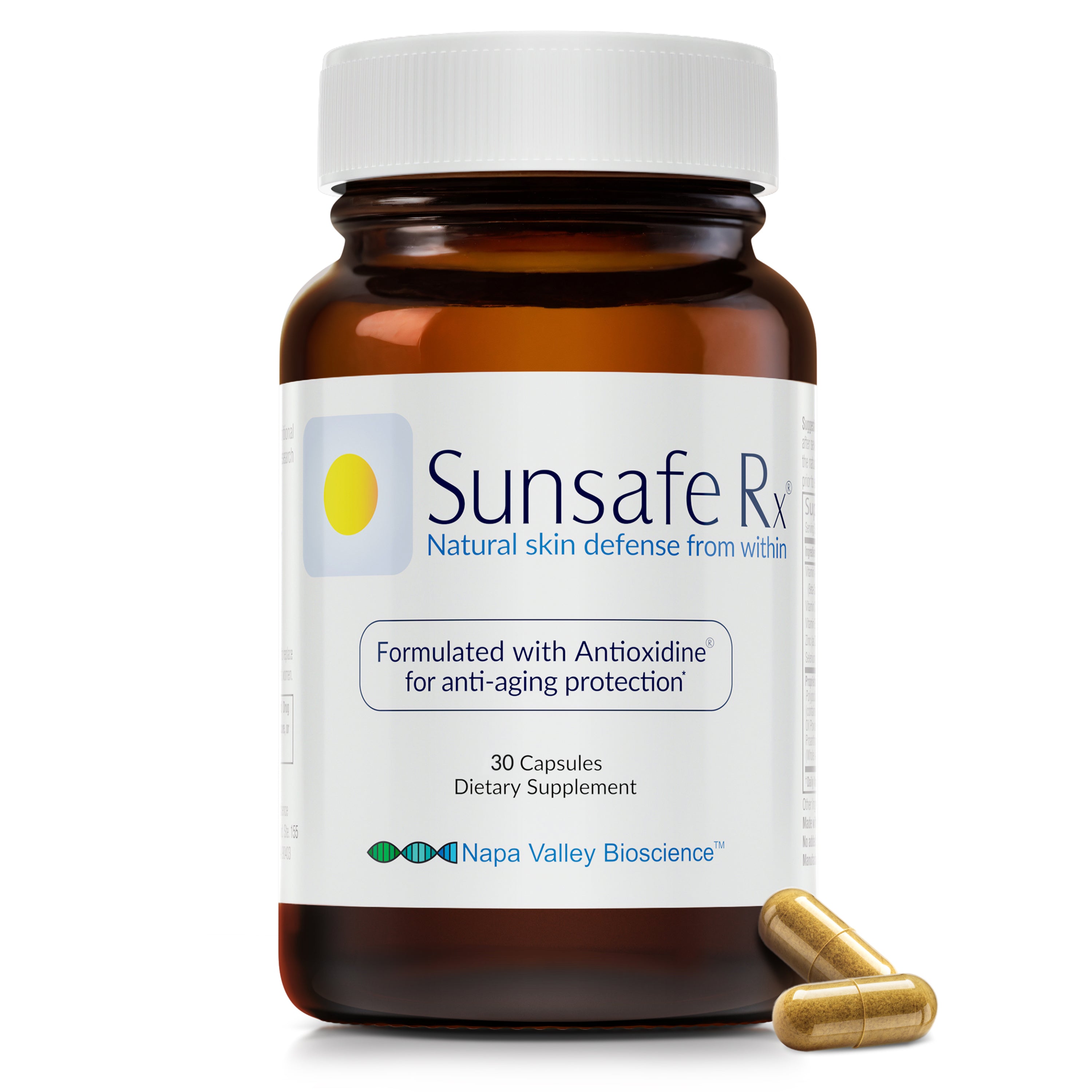
Featured Product
Sunsafe Rx: Natural Anti-Aging Protection
Sunsafe Rx is made with ingredients clinically proven to protect your skin and eyes. One capsule per day provides natural, anti-aging protection and improves the appearance of your skin. Empower your skin from within—while supporting the health of your whole body. This is next-generation skincare. This is Sunsafe Rx.
About Sunsafe Rx
Sunsafe Rx is a daily oral supplement built around the proprietary Antioxidine® complex — a formula combining the most clinically researched antioxidant ingredients for skin health in one capsule taken once daily.
The Antioxidine® complex includes polypodium leucotomos extract, EGCG from green tea, grape seed extract (OPC), lycopene, astaxanthin, lutein, zeaxanthin, and omega-3 fatty acids (DHA and EPA). Also included in the Sunsafe Rx formula: Vitamin C, Vitamin E, zinc, selenium, and Vitamin A from mixed carotenes — all working together to support skin health from the inside out.
Research shows the ingredients in Sunsafe Rx support the skin's natural defenses against environmental damage, fight the appearance of skin aging, improve the overall appearance of skin, and help neutralize free-radical activity in both skin and eye tissue. Explore the full benefits of Sunsafe Rx.
Why Sunsafe Rx stands apart. Many oral skincare supplements on the market rely on a single active ingredient — most commonly polypodium leucotomos extract alone (for a deeper comparison of single-ingredient formulas versus multi-ingredient complexes, see Fernblock vs Antioxidine®). Sunsafe Rx delivers 13+ clinically researched ingredients, each with independent supporting research, addressing multiple skin health pathways simultaneously. Sunsafe Rx is manufactured in the USA in an FDA-registered, NSF-certified facility and has a long track record of being dermatologist-recommended — a trusted name in premium internal skincare.
Sunsafe Rx is not a sunscreen. We cannot describe Sunsafe Rx as a sunscreen or SPF, or make any disease claims. Sunsafe Rx should be used as an internal skincare solution and always used in combination with topical sunscreen lotion and protective clothing for external protection during sun exposure.
Prevention: Stopping New Dark Spots Before They Form
Every skin lightening strategy — whether topical, internal, or both — is significantly more effective when combined with consistent prevention of new UV-induced pigmentation.
Daily broad-spectrum SPF 30 or higher is the single most impactful step for anyone dealing with UV-induced hyperpigmentation. It's also worth understanding the drawbacks of relying on topical sunscreen alone, and why internal antioxidant support provides a meaningful additional layer of defense. Without daily SPF, any progress made by topical brightening agents or antioxidant supplements is continuously undermined by new UV damage stimulating fresh melanin production. Apply every morning — including on cloudy days and indoors near windows, since UVA rays penetrate glass. (For a seasonal routine, see our summer sun protection tips.)
Protective clothing and hats provide reliable UV defense for the face, neck, and hands — the areas where hyperpigmentation most commonly appears and where consistent sunscreen application is most frequently missed.
Avoiding peak UV hours (10 a.m.–4 p.m.) and seeking shade reduces the total UV load that reaches the skin on any given day — compounding meaningfully over weeks and months.
When to See a Doctor
Many cases of mild, UV-induced hyperpigmentation respond well to consistent topical care and daily SPF. However, some situations warrant professional evaluation.
See a dermatologist if:
-
Hyperpigmentation is spreading rapidly, changing in appearance, or accompanied by other symptoms
-
You suspect melasma — this condition benefits significantly from professional diagnosis and prescription-level treatment
-
Over-the-counter products have not produced results after 3–4 months of consistent use
-
You are considering prescription-strength retinoids or hydroquinone
-
Any pigmented lesion looks irregular, raised, or has changed in size or shape — a dermatologist should rule out anything requiring medical attention
Conclusion
Achieving genuinely brighter, more even skin requires addressing hyperpigmentation at its source — not just applying products on top of it. The most effective approach works on two levels: topical ingredients that inhibit melanin synthesis and accelerate pigmented cell turnover at the surface, combined with internal antioxidant support that neutralizes the oxidative stress and UV-induced cellular damage that drives excess melanin production in the first place.
Research shows the ingredients in Sunsafe Rx deliver whole-body antioxidant support that fights the appearance of photoaging, supports healthy skin cell function, and helps improve the overall appearance of your skin from within. Paired with a thoughtful topical routine and daily SPF, the ingredients in Sunsafe Rx can be a meaningful part of a complete skin brightening strategy.
Sunsafe Rx is manufactured in the USA in an FDA-registered, NSF-certified facility. It has a long track record of being dermatologist-recommended and successfully helping a lot of people. We cannot describe Sunsafe Rx as a sunscreen or SPF, or make any disease claims. Always use topical sunscreen and other protective measures during sun exposure. This article is for informational purposes only and does not constitute medical advice.
Frequently Asked Questions
Q: What is the difference between skin whitening and skin lightening?
The terms skin whitening and skin lightening are often used interchangeably, but both refer to reducing excess melanin in the skin to even out skin tone, fade dark spots, and achieve a more uniform complexion. The goal is not to alter natural skin color but to address uneven pigmentation caused by sun damage, inflammation, hormonal changes, or aging.
Q: What causes dark spots and uneven skin tone?
The most common cause is UV-induced hyperpigmentation — where years of sun exposure create uneven melanin deposits that appear as sun spots and age spots. Other causes include post-inflammatory hyperpigmentation from acne or skin injuries, melasma triggered by hormonal changes, and general skin aging. Of these, UV-induced hyperpigmentation is both the most common and the most preventable.
Q: Which topical ingredients are most effective for skin lightening?
The most evidence-backed topical ingredients for skin lightening include Vitamin C (inhibits melanin synthesis and provides antioxidant protection), niacinamide (reduces melanin transfer to skin cells), alpha hydroxy acids like glycolic and lactic acid (accelerate shedding of pigmented cells), retinoids (accelerate cell turnover and inhibit melanin production), and azelaic acid or tranexamic acid. Consistent use combined with daily SPF is essential for any topical approach to work.
Q: Can an antioxidant supplement help with skin lightening and dark spots?
Research shows the ingredients in antioxidant supplements — including EGCG from green tea, lycopene, astaxanthin, and grape seed extract and others — support healthy skin cell function, fight the appearance of photoaging, and help neutralize the oxidative stress and UV-induced cellular damage that triggers excess melanin production. These ingredients can also even skin tone. Sunsafe Rx contains these ingredients as part of its 13+ ingredient Antioxidine® formula. We cannot describe Sunsafe Rx as a sunscreen or SPF, or make any disease claims. It should always be used in combination with topical sunscreen for external protection during sun exposure.
Q: Is skin whitening safe?
Skin lightening using evidence-backed topical ingredients — Vitamin C, niacinamide, AHAs, retinoids, azelaic acid — is generally safe when used as directed. Products to avoid include those containing mercury (a serious health hazard found in some unregulated imports) and high-concentration hydroquinone without medical supervision. Always choose products from reputable brands with clearly listed ingredients, and consult a dermatologist if you are unsure about a product's safety.
Q: How long does skin lightening take to show results?
Most topical skin lightening approaches require consistent use over 8–12 weeks before visible improvements in hyperpigmentation appear. Results vary based on the depth and type of pigmentation, the specific ingredients used, and how consistently daily SPF is applied. Deeper or longer-standing hyperpigmentation typically takes longer to respond than recent post-inflammatory marks.
Q: Why is daily SPF important when trying to lighten skin?
Without daily broad-spectrum SPF, UV radiation continuously stimulates new melanin production — which counteracts any progress made by topical brightening agents or antioxidant supplements. SPF is not optional in a skin lightening routine; it is foundational. Even on cloudy days and indoors near windows, UVA rays reach the skin and can trigger further pigmentation.
Q: How does Sunsafe Rx support skin appearance?
Research shows the ingredients in Sunsafe Rx fight the appearance of photoaging, support healthy skin cell function, improve the overall appearance of skin, even skin tone, and help neutralize free-radical activity in skin tissue — working from the inside out in ways that topical products cannot reach. These ingredients, quite simply, help your skin look more radiant, while also being healthy for your eyes and your whole body in general. Sunsafe Rx is the ultimate internal skincare solution. Please note we cannot describe Sunsafe Rx as a sunscreen or SPF, or make any disease claims.
Written by Sunsafe Rx Team |
