


Introduction
Every year, the Environmental Working Group (EWG) publishes its Guide to Sunscreens — a report that rates thousands of sun-care products on ingredient safety and UV protection, and one that regularly sparks debate between consumer-safety advocates and dermatologists. If you've seen headlines about "toxic" sunscreen ingredients or products that supposedly failed the EWG sunscreen guide, it's worth understanding what the guide actually measures, what the current science says, and how to make an informed choice — without swinging too far in either direction.
What Is the EWG Sunscreen Guide, Really?
The EWG sunscreen guide is an annual report from the Environmental Working Group, a nonprofit research and advocacy organization, that reviews thousands of SPF products sold in the U.S. and rates them on a scale reflecting both UV efficacy (how well they protect against UVA and UVB rays) and ingredient safety, based on EWG's own review of available toxicology and exposure data. The guide has been published for 20 consecutive years and has become one of the most-cited consumer resources on sunscreen ingredients — though, as detailed below, it's also one of the most debated.
What This Year's EWG Guide Found
In its 2026 guide, EWG reviewed 2,784 SPF products and found that only about 550 — roughly 20% — met its combined standards for ingredient safety and balanced UVA/UVB protection. The report also highlighted a longer-term trend: the share of sunscreens containing oxybenzone, a chemical UV filter linked to hormone-disruption concerns in some studies, has dropped from about 70% of products 19 years ago to around 5% today, as manufacturers have shifted formulations. (EWG · CNN)
Understanding "Hazard" Ratings — What the Science Actually Says
This is the part of the EWG sunscreen conversation that deserves the most context.
The FDA currently classifies only two sunscreen active ingredients — zinc oxide and titanium dioxide — as "Generally Recognized as Safe and Effective" (GRASE) under its current review. The other twelve chemical UV filters approved for use in the U.S., including oxybenzone, octinoxate, and homosalate, remain in a regulatory category where the FDA has said it needs more safety data to make a final determination — which is different from those ingredients being proven unsafe. (CNN)
The most important point first: wearing a chemical sunscreen lotion is definitely still better than skipping sun protection and getting sunburned. The risks of unprotected UV exposure are well established and serious, and clinicians have rightly raised concern that ingredient-safety headlines can discourage consistent use altogether. But "more data needed" is not a clean bill of health either, and the specific findings behind those open questions are worth stating plainly. Oxybenzone has been linked to hormone-disruption signals in multiple studies, and FDA-sponsored research found it absorbed into the bloodstream at levels well above the agency's own safety threshold after only a few days of typical use, with detectable levels persisting for weeks after stopping. Homosalate shows similar endocrine activity and ready absorption. Octocrylene can degrade into benzophenone, a possible carcinogen, as a product ages. Avobenzone breaks down under sunlight without stabilizers, and that breakdown can generate free radicals in the skin rather than neutralizing UV exposure cleanly. And unlike a mineral filter that sits on the skin's surface, these ingredients penetrate into the skin and bloodstream — once absorbed, they are not something you can simply wash or rinse off. (Medscape)
The reasonable takeaway: EWG's guide highlights real, legitimate gaps in long-term human safety data for certain chemical filters, and its push for better UVA protection standards has driven real reformulation across the industry. No sunscreen lotion should be skipped over hazard-rating headlines — the one you wear correctly and reapply consistently will always beat the one you avoid. But where you do have the choice, zinc oxide, ideally in a formula built on natural carriers, remains the safest and best option. It sits on the skin's surface rather than being absorbed into it, it is already classified as GRASE, and it sidesteps the open questions surrounding the chemical filters entirely.
Safe Options: How to Choose a Sunscreen You Can Trust
Whether or not you specifically seek out an EWG-rated or EWG-verified product, these criteria apply broadly:
-
Broad-spectrum labeling — protects against both UVA and UVB rays.
-
SPF 30 or higher for daily use; SPF 50 for extended outdoor exposure.
-
Zinc oxide as your first choice — ideally in a formula built on natural carriers. Along with titanium dioxide it is one of only two actives the FDA currently classifies as GRASE, and it remains the safest and best option.
-
Water resistance rating appropriate for swimming or sweating.
-
A texture and finish you'll actually reapply — the most "hazard-free" sunscreen on paper is only effective if you use it consistently.
Beyond the Bottle: The Inside-Out Complement
No topical sunscreen — regardless of its EWG rating — protects skin that isn't covered, or skin after the product has worn off or washed away. That's why many dermatologists recommend pairing consistent topical sun protection with a layered approach to skin health. Research shows the ingredients in oral antioxidant supplements can support the skin's natural defenses against environmental and UV-related damage, complementing — never replacing — a topical sunscreen routine.
Ingredients studied for this kind of internal antioxidant support include:
-
Polypodium leucotomos extract — studied in a peer-reviewed trial published in the Journal of the American Academy of Dermatology evaluating its effect on the skin's response to UVB exposure.
-
Astaxanthin — studied in a randomized, double-blind, placebo-controlled trial published in Nutrients, showing measurable protection against UV-induced skin deterioration.
-
Lycopene and lutein — evaluated in a study published in the British Journal of Dermatology, which found molecular evidence that oral supplementation helps protect skin against ultraviolet radiation.
-
EGCG from green tea — studied for its role in protecting cellular DNA from UV-induced damage. (PubMed)
-
Grape seed extract — a concentrated source of proanthocyanidins (OPCs), polyphenols with strong antioxidant activity studied for their role in supporting collagen and elastin and inhibiting DNA damage.
-
Zeaxanthin — works alongside lutein in both the eye's macula and the skin, studied for antioxidant support against light-related oxidative stress.
-
Omega-3 fatty acids (DHA and EPA) — required nutrients most readily available in cold-water fish, supporting skin barrier function and overall cellular health.
-
Vitamin C — a required cofactor for collagen synthesis and a water-soluble antioxidant that helps neutralize free radicals before they damage skin cells.
-
Vitamin E — the skin's primary fat-soluble antioxidant, working synergistically with vitamin C to regenerate its antioxidant capacity within cell membranes.
-
Zinc and selenium — trace minerals that form the active centers of the antioxidant enzymes superoxide dismutase and glutathione peroxidase, respectively, which help protect the body — including skin — from oxidative damage.
Building a Complete Sun-Safety Routine
-
Choose a broad-spectrum sunscreen lotion, SPF 30+, built on zinc oxide where possible — ideally with natural carriers. If a chemical formula suits your skin or routine better, wearing it is still far better than going unprotected.
-
Apply generously and reapply every two hours, and immediately after swimming or sweating.
-
Seek shade and cover up during peak UV hours.
-
Support your skin's defenses from within with a daily oral antioxidant supplement, taken consistently.
-
Don't let ingredient-safety debates become a reason to skip sunscreen altogether — the research-backed risk of unprotected sun exposure is well established.
Sunsafe Rx, built around the proprietary Antioxidine® complex of 13+ clinically researched antioxidants, is one example of a supplement formulated for this kind of daily, inside-out support.
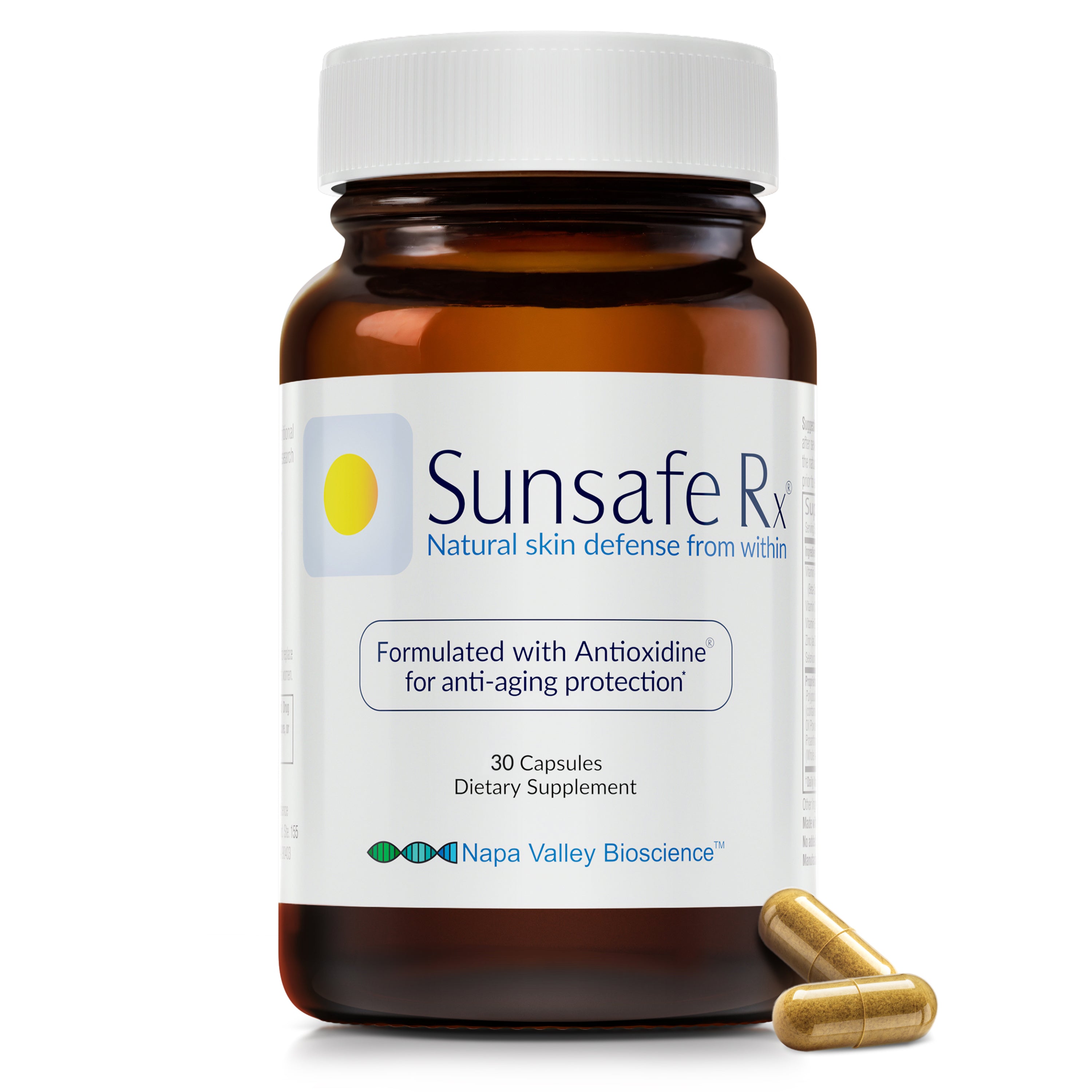
Featured Product
Sunsafe Rx: Natural Anti-Aging Protection
Sunsafe Rx is made with ingredients clinically proven to protect your skin and eyes. One capsule per day provides natural, anti-aging protection and improves the appearance of your skin. Empower your skin from within—while supporting the health of your whole body. This is next-generation skincare. This is Sunsafe Rx.
What This Guide Is Not
This article is general education about the EWG sunscreen guide and current sunscreen ingredient science, not medical advice. It is not a recommendation to avoid FDA-approved sunscreen ingredients, and oral antioxidant supplements — including Sunsafe Rx — are not a sunscreen and should never replace topical sun protection.
Also Read: How to treat sunburn?
The Bottom Line
The EWG sunscreen guide has pushed real, positive change in the industry — including the sharp decline in oxybenzone use — and it raises legitimate, still-open questions about long-term data on certain chemical UV filters. Skipping sun protection entirely is definitely the bigger risk — but an open data gap is not a clean bill of health either, and several chemical filters carry documented concerns including hormone-disruption signals, absorption into the bloodstream, and photo-reactive breakdown in the skin. When choosing a sunscreen, zinc oxide (alone or paired with titanium dioxide) remains the safest and best option, offering reliable broad-spectrum protection without the stability and safety concerns tied to many chemical filters. Choose a zinc oxide-based sunscreen lotion you'll actually use consistently, and consider pairing it with a daily oral antioxidant supplement — like Sunsafe Rx's Antioxidine® complex — for more complete, inside-and-out support.
About Sunsafe Rx
Sunsafe Rx® is a daily oral antioxidant supplement made by Napa Valley Bioscience, built around Antioxidine®, a proprietary complex of 13+ clinically researched antioxidants from natural food and plant sources — including Polypodium leucotomos extract, EGCG, grape seed extract, lycopene, astaxanthin, lutein, and zeaxanthin. Sunsafe Rx is manufactured in the USA in an FDA-registered, NSF-certified facility, is recommended by dermatologists, and has a long-standing track record since 2010.
Disclaimer
We cannot describe Sunsafe Rx as a sunscreen or SPF, or make any disease claims. Sunsafe Rx should be used as an internal skincare solution and always used in combination with topical sunscreen lotion for external protection during sun exposure. These statements have not been evaluated by the FDA.
Frequently Asked Questions
Q1.What is the EWG sunscreen guide?
The EWG sunscreen guide is an annual report from the Environmental Working Group that rates thousands of SPF products on UV protection efficacy and ingredient safety, based on the organization's review of available research.
Q2.What does EWG consider the best sunscreen?
EWG's "best" recommendations generally favor broad-spectrum, mineral-based sunscreens (zinc oxide and/or titanium dioxide) with balanced UVA/UVB protection and minimal use of ingredients EWG flags for insufficient long-term safety data.
Q3. Is the EWG sunscreen guide reliable?
The EWG guide is a widely cited resource that has influenced real reformulation in the sunscreen industry, but its hazard ratings are debated by dermatologists, who note that data gaps on certain ingredients don't equal proven harm, and that avoiding sun protection altogether carries well-established risks. That said, the open questions on several chemical filters are real, which is why zinc oxide in a natural formula remains the safest and best option where you have the choice.
Q4. Are EWG-rated "safe" sunscreens more effective than others?
Not necessarily more effective — EWG's ratings combine ingredient-safety scoring with UV-protection scoring, so a lower-hazard rating doesn't automatically mean stronger sun protection. Broad-spectrum labeling and SPF level are the most direct efficacy indicators.


