


Mineral Sunscreen Guide: Ingredients & Safety Tips
"Walk down any sunscreen aisle today and mineral formulas dominate the shelf — brands lead with 'reef-safe,' 'clean,' and 'for sensitive skin' on nearly every label. That popularity has sparked a specific, oddly common question: since the active ingredient in most mineral sunscreens, zinc oxide, is also found in everyday multivitamins, could it be safe to take orally too? It's a fair thing to wonder, and it opens up a bigger conversation about what's actually in these formulas, how they compare to chemical sunscreens, and where real internal skin support comes from."
This guide breaks down what mineral sunscreens are, what's actually in them, key safety considerations, and how to think about choosing the best mineral sunscreen for your skin — plus where internal, inside-out approaches fit into a complete sun-care routine.
What Are Mineral Sunscreens, Really?
Mineral sunscreens (also called physical sunscreens) use two active mineral ingredients — zinc oxide and/or titanium dioxide — to create a physical barrier on the skin's surface that reflects and scatters UV rays. This is different from chemical sunscreens, which use carbon-based compounds that absorb UV radiation and convert it to heat.
Because mineral sunscreens sit on top of the skin rather than being absorbed into it, they typically start working immediately upon application, rather than requiring a 20–30 minute waiting period common with some chemical formulas.
Benefits of Mineral Sunscreens
-
Broad-spectrum protection: Zinc oxide, in particular, protects against both UVA and UVB rays.
-
Gentler on sensitive skin: Mineral sunscreens are less likely to cause irritation and are commonly recommended for sensitive skin, rosacea-prone skin, and young children.
-
Immediate protection: No waiting period after application, unlike some chemical formulas.
-
Reef-conscious formulations: Many mineral sunscreens avoid oxybenzone and octinoxate, chemical UV filters that have raised environmental concerns for coral reefs.
-
Photostability: Zinc oxide and titanium dioxide don't break down in sunlight the way some chemical filters can.
Ingredients Breakdown
Most mineral sunscreens are built around a short list of core ingredients:
-
Zinc oxide — the most common active mineral ingredient, providing broad-spectrum UVA/UVB protection.
-
Titanium dioxide — often used alongside or instead of zinc oxide, primarily effective against UVB and shorter UVA wavelengths.
-
Natural carrier ingredients — many mineral sunscreen formulas use plant-based oils and butters (such as shea butter, coconut oil, or jojoba oil) as a base to help the mineral actives spread evenly and moisturize skin.
-
Non-nano vs. nano particles — some mineral sunscreens use "non-nano" zinc oxide or titanium dioxide (larger particle sizes), which some consumers prefer due to ongoing research on nanoparticle absorption, though current regulatory guidance considers approved mineral actives safe for topical use at their approved concentrations.
Safety Considerations — and a Common Myth, Addressed
Mineral sunscreens are widely considered a safe, well-tolerated option for topical sun protection, including for children and sensitive skin.
One common point of confusion: because zinc oxide is a naturally occurring mineral — and because zinc (in a different, food-grade form) is a common ingredient in multivitamins — some people wonder whether a "natural" mineral sunscreen could theoretically be eaten. It's an understandable question, but the answer is no. A finished topical sunscreen product is formulated with additional ingredients, preservatives, and concentrations that are tested and approved for use on skin — not for ingestion. The zinc oxide used in a multivitamin is manufactured and dosed specifically as a food-grade ingredient; that doesn't transfer to a topical lotion, even one built around otherwise "natural" carriers like shea butter. Topical sunscreen, mineral or otherwise, should never be ingested.
What is real, however, is a separate and well-researched category: plant- and food-derived antioxidants that are specifically studied and formulated for oral consumption, and which research shows can support the skin's natural defenses against environmental and UV-related damage — from the inside out. This is a genuinely different approach from "eating sunscreen," and it's where internal, oral antioxidant support comes in.
The Inside-Out Complement to Mineral Sunscreen
Topical mineral sunscreen protects the areas of skin it's applied to — but it only works where it's applied, and only for as long as it hasn't worn off, washed off, or worn away from sweat and water exposure. Research shows the ingredients in oral antioxidant supplements can support the skin's natural defenses against environmental damage more continuously, complementing (never replacing) a topical mineral sunscreen routine.
Ingredients studied for this kind of internal, whole-body antioxidant support include:
-
Polypodium leucotomos extract — studied in a peer-reviewed trial published in the Journal of the American Academy of Dermatology evaluating its effect on the skin's response to UVB exposure.
-
Astaxanthin — studied in a randomized, double-blind, placebo-controlled trial published in Nutrients, showing measurable protection against UV-induced skin deterioration.
-
Lycopene and lutein — evaluated in a double-blinded, placebo-controlled, crossover study published in the British Journal of Dermatology, which found molecular evidence that oral supplementation helps protect skin against ultraviolet radiation.
-
EGCG from green tea — studied for its role in protecting cellular DNA from UV-induced damage. (PubMed)
How to Choose the Best Mineral Sunscreen for You
There's no single "best mineral sunscreen" for everyone, but these criteria can help you evaluate options:
-
Broad-spectrum labeling — confirms protection against both UVA and UVB rays.
-
SPF 30 or higher — the generally recommended minimum for daily use.
-
Zinc oxide as a primary active — offers the broadest UV coverage among mineral actives.
-
Water resistance rating — important if you'll be swimming or sweating.
-
Texture and finish suited to your skin type — mineral formulas vary widely in whether they leave a white cast, feel matte, or feel moisturizing.
-
Reapplication practicality — choose a formula you'll actually be willing to reapply every two hours during extended sun exposure.
Building a Complete Sun-Safety Routine
-
Apply a broad-spectrum mineral (or chemical) sunscreen generously, and reapply every two hours during sun exposure.
-
Seek shade and cover up with clothing and hats during peak UV hours.
-
Support your skin's defenses from within with a daily oral antioxidant supplement, taken consistently.
-
Avoid relying on any single product — topical or oral — as complete protection on its own.
Sunsafe Rx, built around the proprietary Antioxidine® complex of 13+ clinically researched antioxidants, is one example of a supplement formulated for this kind of daily, inside-out support.
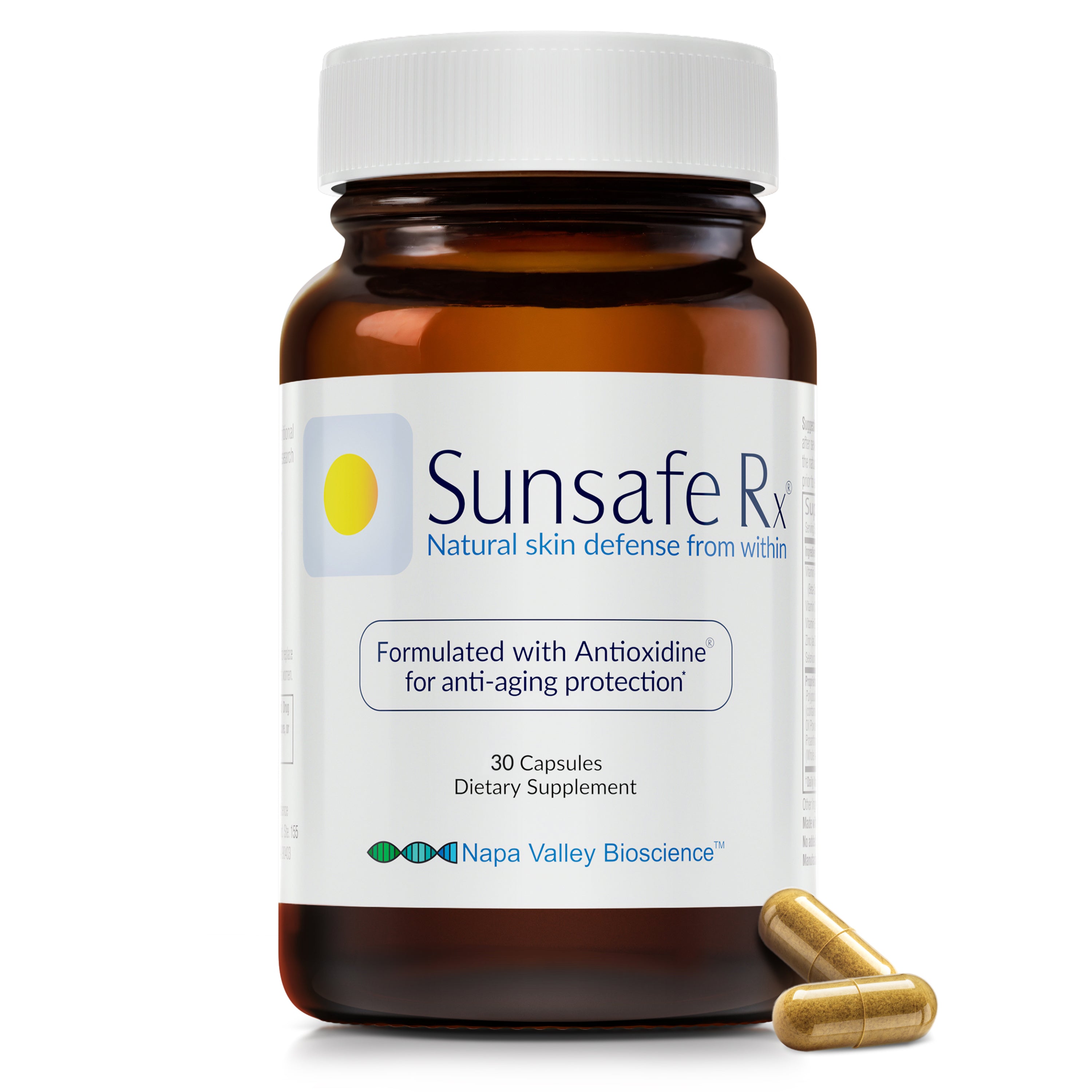
Featured Product
Sunsafe Rx: Natural Anti-Aging Protection
Mineral sunscreens are a smart choice for safe sun protection. Pair yours with Sunsafe Rx for daily antioxidant support that helps defend your skin and eyes from within.
What This Guide Is Not
This article is general education about mineral sunscreen ingredients and safety, and is not medical advice. It is not a recommendation to ingest any topical sunscreen product, and oral antioxidant supplements — including Sunsafe Rx — are not a sunscreen and should never replace topical sun protection.
The Bottom Line
Mineral sunscreens remain one of the best-studied, most broadly tolerated options for topical sun protection, thanks to ingredients like zinc oxide and titanium dioxide. But no topical product — mineral or otherwise — should be eaten, and none can reach every layer of protection your skin and body need. Pairing a well-chosen mineral sunscreen with a daily oral antioxidant supplement built on ingredients like Polypodium leucotomos extract, EGCG, grape seed extract, lycopene, astaxanthin, lutein, and zeaxanthin offers a more complete, inside-and-out approach to skin health.
About Sunsafe Rx
Sunsafe Rx® is a daily oral antioxidant supplement made by Napa Valley Bioscience, built around Antioxidine®, a proprietary complex of 13+ clinically researched antioxidants from natural food and plant sources — including Polypodium leucotomos extract, EGCG, grape seed extract, lycopene, astaxanthin, lutein, zeaxanthin, DHA, EPA, and specific vitamins and minerals. Sunsafe Rx is manufactured in the USA in an FDA-registered, NSF-certified facility, is recommended by dermatologists, and has a long-standing track record since 2010.
Disclaimer
We cannot describe Sunsafe Rx as a sunscreen or SPF, or make any disease claims. Sunsafe Rx should be used as an internal skincare solution and always used in combination with topical sunscreen lotion for external protection during sun exposure. These statements have not been evaluated by the FDA.
Frequently Asked Questions
Q1. Can you eat mineral sunscreen since zinc oxide is also in multivitamins?
Ans: No. A finished topical sunscreen — even one made with zinc oxide and natural carriers like shea butter — includes other ingredients and concentrations that are formulated and tested for skin use, not ingestion. The zinc oxide in a multivitamin is a separate, food-grade form and dose. Never eat topical sunscreen.
Q2. What is the best mineral sunscreen?
Ans: The best mineral sunscreen depends on your skin type and needs, but look for broad-spectrum protection, SPF 30 or higher, zinc oxide as a primary active ingredient, and a texture you'll actually want to reapply every two hours.
Q3. Are mineral sunscreens safer than chemical sunscreens?
Ans: Mineral sunscreens are generally well-tolerated and are often recommended for sensitive skin, rosacea, and young children, but both approved mineral and chemical sunscreen ingredients are considered safe and effective when used as directed.
Q4. Do mineral sunscreens work as well as chemical sunscreens?
Ans: Yes — when applied generously and reapplied regularly, broad-spectrum mineral sunscreens provide comparable protection to chemical sunscreens.
Q5. Can oral antioxidant supplements replace my mineral sunscreen?
Ans: Not completely. Research shows the ingredients in oral antioxidant supplements support the skin's natural defenses against environmental damage, but they should always be used alongside — never instead of — topical sunscreen lotions during excessive sun exposure.
Q6. How often should I reapply mineral sunscreen?
Ans: Generally every two hours, and immediately after swimming, sweating, or towel-drying.
- Published:
- By:
- Sunsafe Rx Team
- Category:
- Sunscreen Lotion
- Tags:
- sun damage, sun protection
Sunsafe Rx
Natural. Healthy. Powerful. This isn’t just skincare. This is the ultimate anti-aging product.

Great Skincare Goes Beyond The Surface.
Discover Sunsafe Rx — a daily antioxidant supplement designed to support skin health from the inside out. And so much more.
Subscribe and save 10% · Free shipping · Skip or cancel anytime · 60-day money-back guarantee
